How I Write A Book – In Pictures

This is my tried and tested process

The fastest I have ever written a first draft is four weeks, which broke my previous record of six weeks. Now, these are the easy books – the ones that burst into your head fully formed and simply require some dedication and slightly unhinged addictive typing to get written. My average time to write a first draft is three months. It’s also important to point out that I am not one of those writers who edits as I go. I don’t. I rarely even read over what I wrote the day before. I just let it tumble out in a gloriously clumsy, scruffy, and undoubtedly ugly splurge. The real hard work, the editing and rewriting comes after and that can take me a few years!

But here’s how I get that first draft out of my head and into a book form.

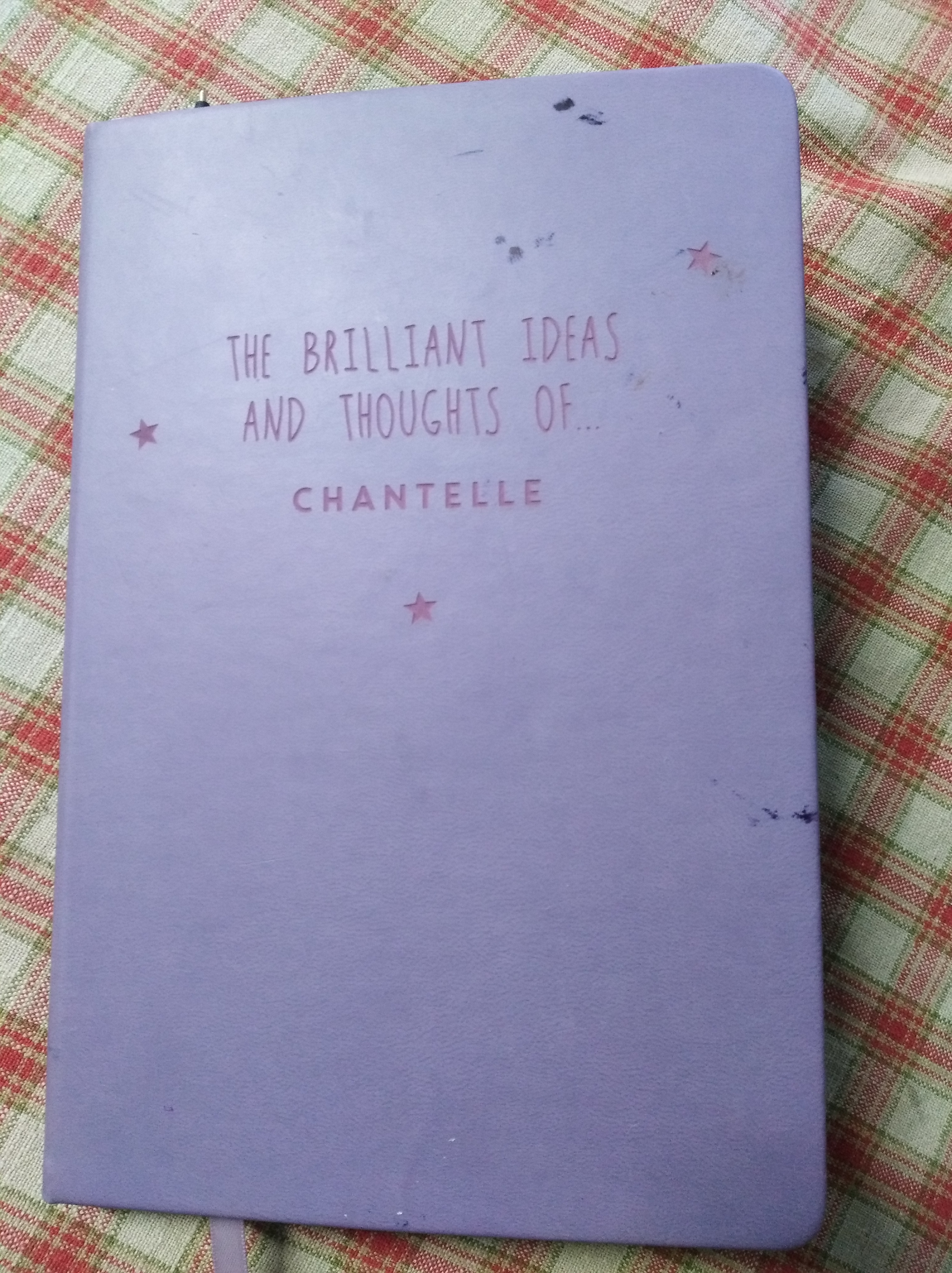
Step 1: you need a notebook! Image is mine

Step 1: Yep, it’s as simple and as old-fashioned as that. I get a notebook and allocate it to the book idea. The ideas are crowding my head now and need to be written down. It won’t be particularly organised. Other than pages for character bios and plot ideas, the initial writing will be an outpouring of what has been building in my head. I highly recommend the notebook approach. I know its tempting to do it all online or on Word, or whatever you use, but there is something scary and clinical about that crisp fresh new document blinking back at you and it can feel intimidating, even impossible to get started. A notebook is far friendlier and you can carry it about with you. No one has to see it. It’s private, just for you. It’s a way in. An open door. Now, anything can happen.

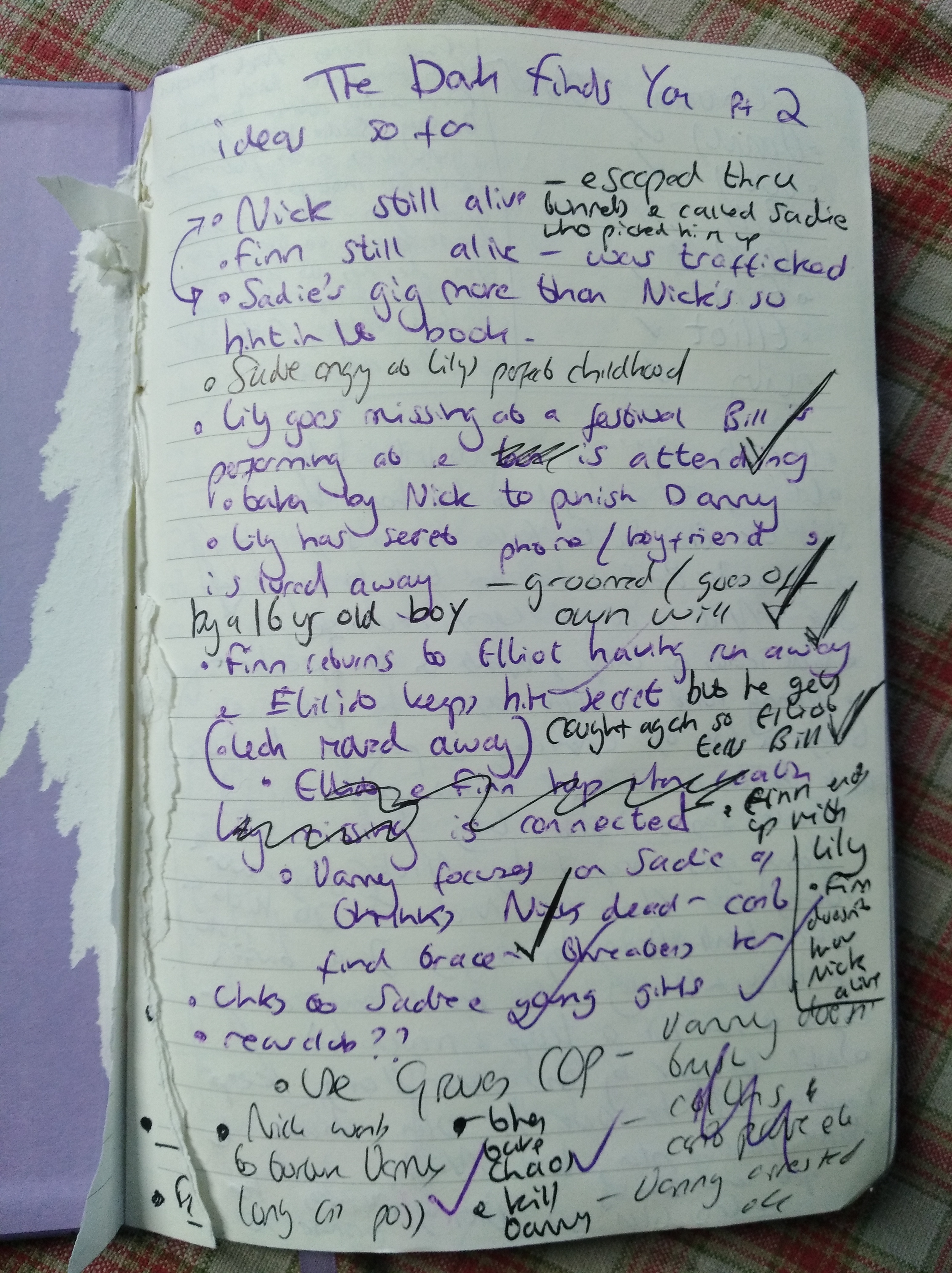
Step 2: First page of notebook: ideas explosion! Image is mine

Step 2: The next thing that happens is an ideas explosion. Mind-maps or brainstorms are good too, but I like to just list my ideas and then later when chapters are being written I have the satisfying job of going back and ticking off what I’ve done. These ideas won’t be in order, by the way. And a lot of them won’t make it into the book. New ideas and sub-plots will inevitably muscle their way in too.

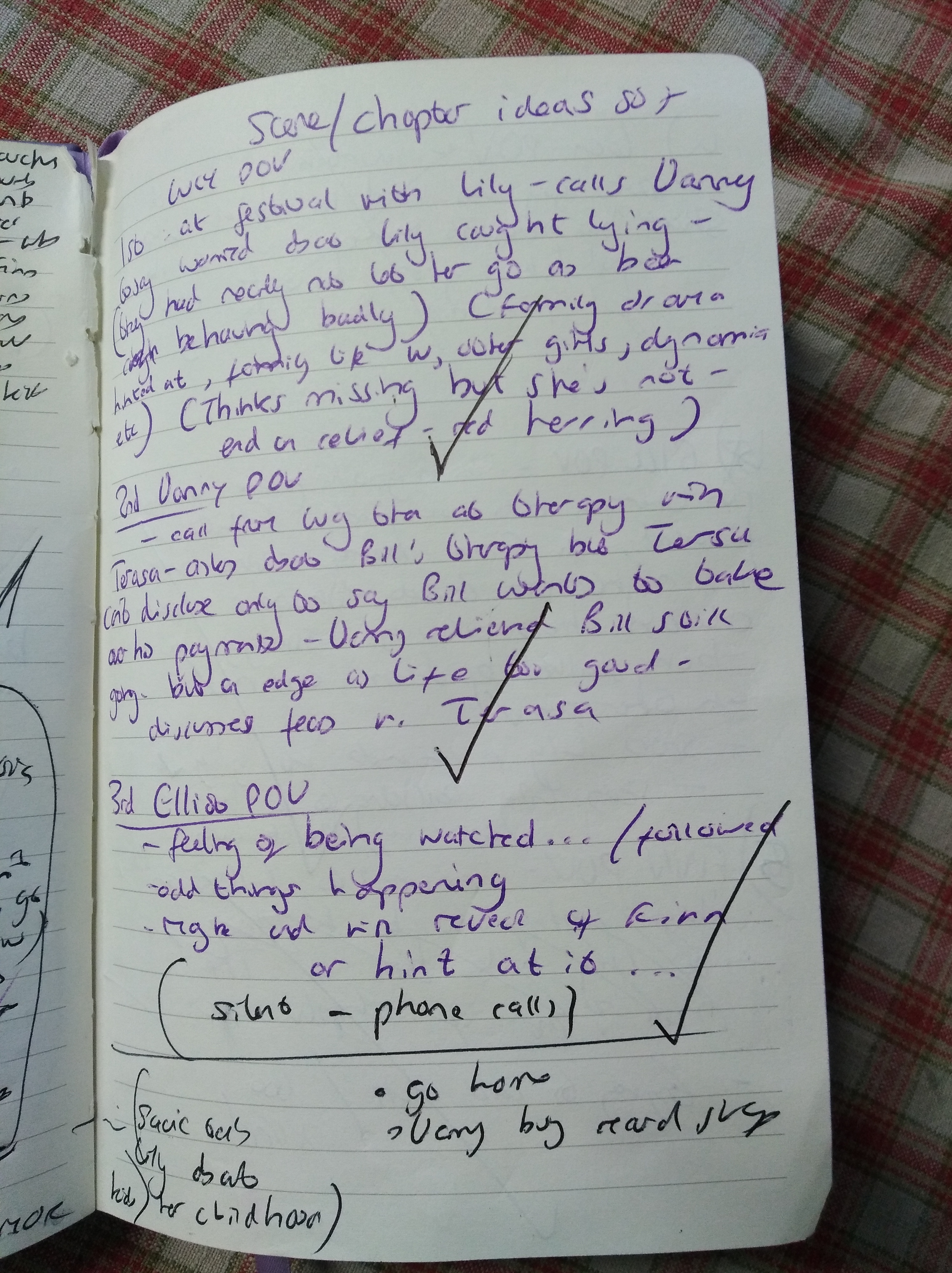
Step 3: chapter outlines! Image is mine

Step 3: The next step is chapter outlines. This is easier if the whole book has leapt into your head the way this one did in mine, but it can be achieved with less as well. I often find that starting chapter outlines gets me really far into the book, and often ends with me plotting the entire thing. Outlining one chapter, for example, very often leads you into the next.

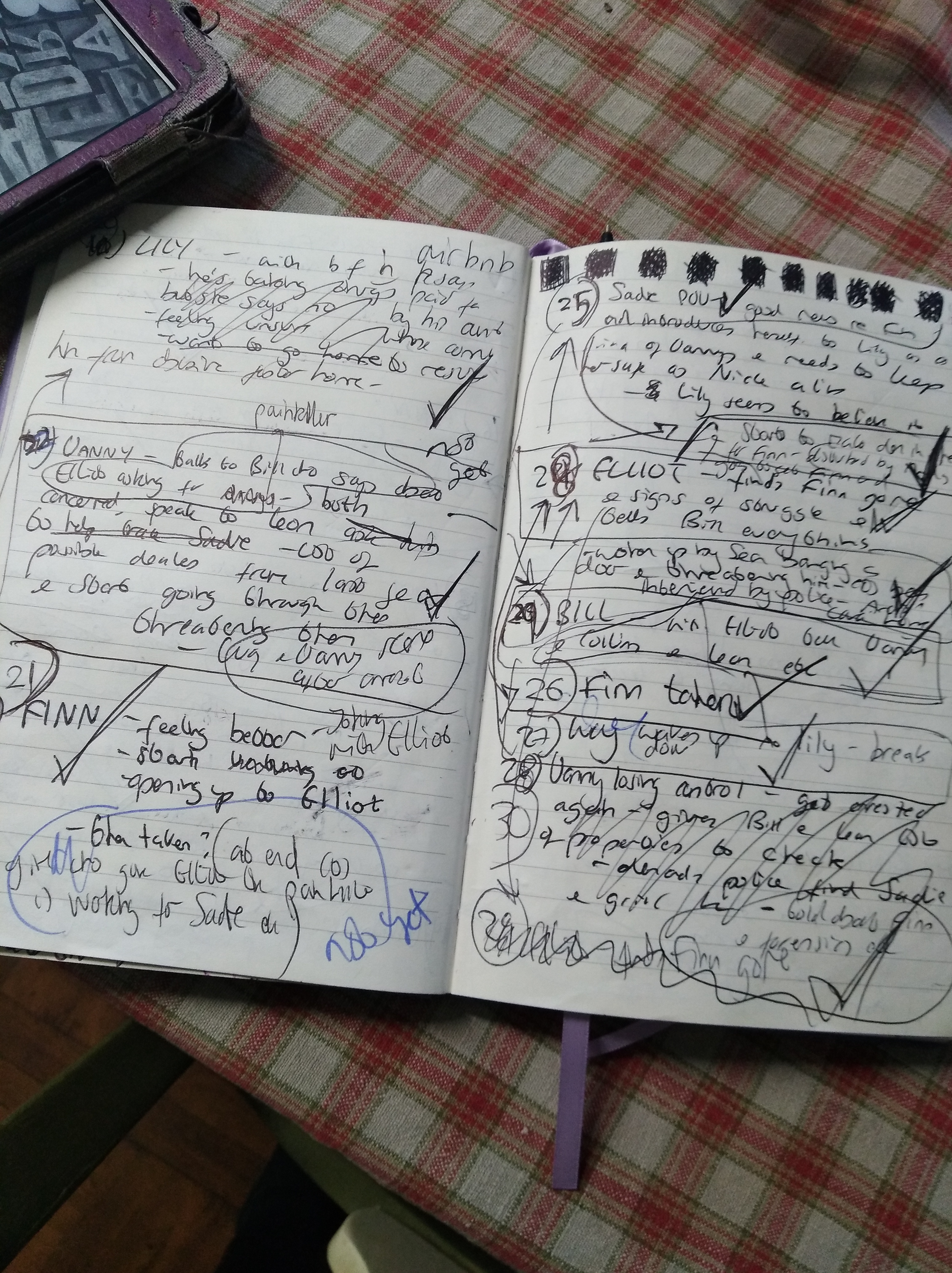
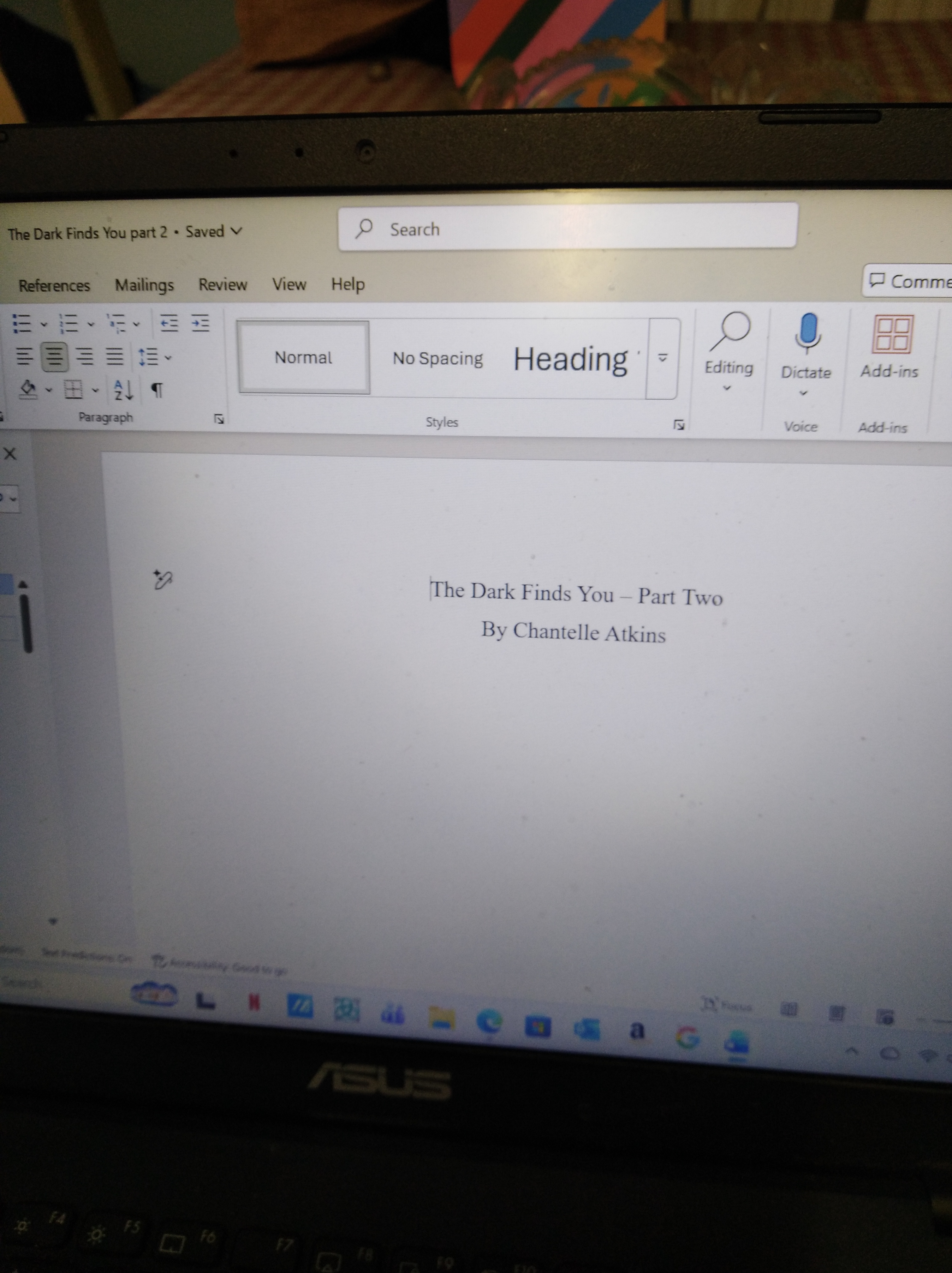
Step 4: Start writing the book on your laptop. I prefer Word for many reasons. The notebook of chaos runs alongside the writing. The notebook is indeed now very chaotic! New chapters have pushed themselves in between the original chapter outlines, and I end up with circles and crosses and arrows all over the place. No one else would be able to make sense of it, but I can, and that’s all that matters. Why still use the notebook? Why use one at all? I’ve already mentioned my own reasons for writing a book this way but there has also been a lot of research lately that concludes that all our brain is active when we handwrite, whereas only part of our brain is active when writing on screens. In other words, writing by hand makes us think more! I often wonder if my books would be different if I planned, plotted, outlined and wrote all of it on the screen.

Step 5: Using the notebook of chaos to guide you, ticking things off, circling ideas, crossing things out, now, you write the book! And how do you do this? It’s easy. YOU JUST DO IT. I can’t explain it any better. You just sit down at the keyboard and write. You make a habit and stick to it. Go for walks when you get stuck. Keep going. One word at a time until it is done. There is no secret formula, no magic spell. YOU JUST WRITE IT.

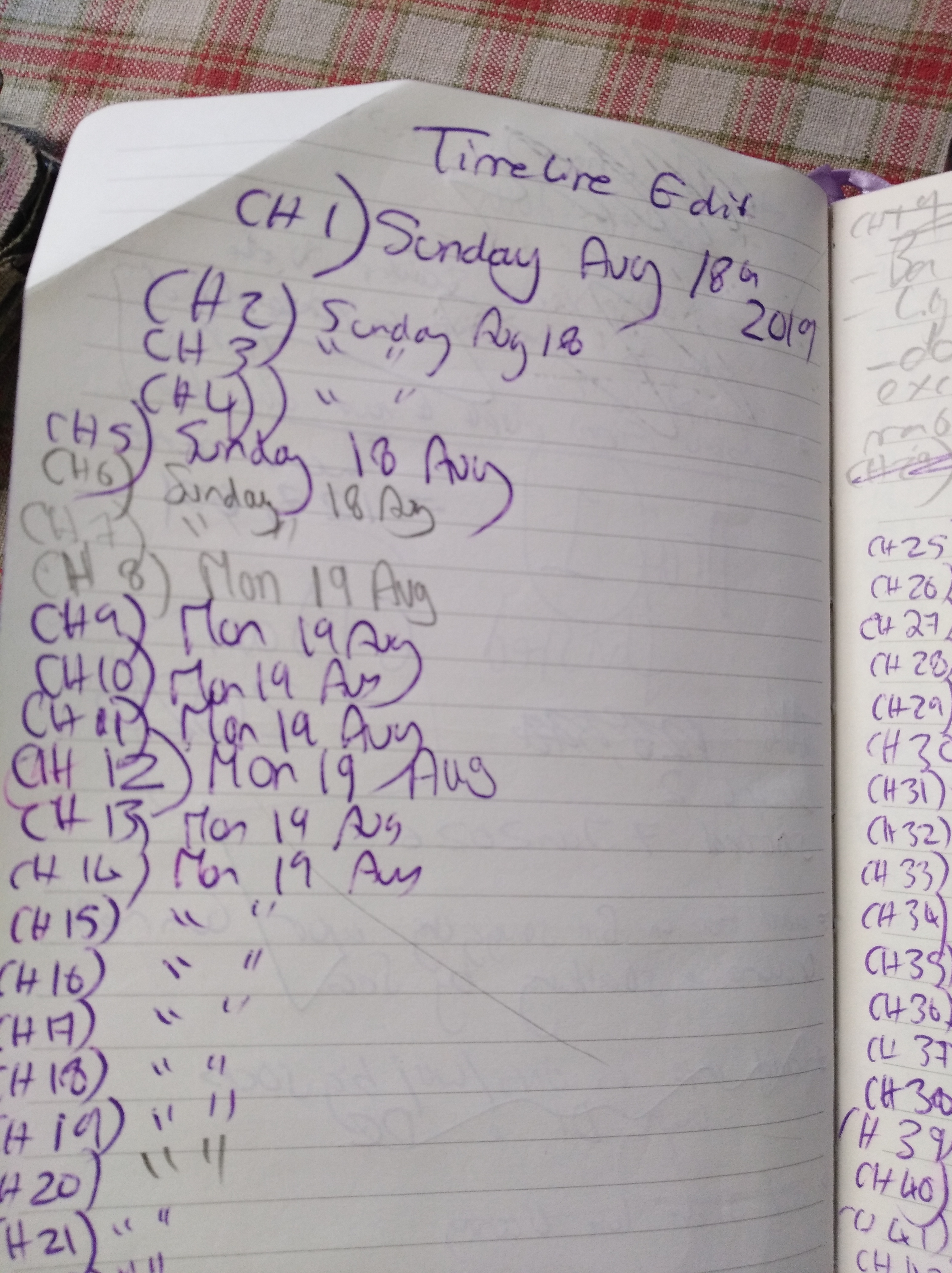
Step 6: 2nd draft is the timeline edit! Image is mine

Step 6. The book is now written in the first draft. I go back to the start and read through and at the same time I make note of a timeline in the notebook. I should do this when I am writing the first draft but I nearly always neglect to. For me, the purpose of a second draft is to read through what just happened, as I often don’t remember, and to apply the timeline so there are no date based plot holes or inconsistencies. I will also make changes and amend typos etc if I see them.

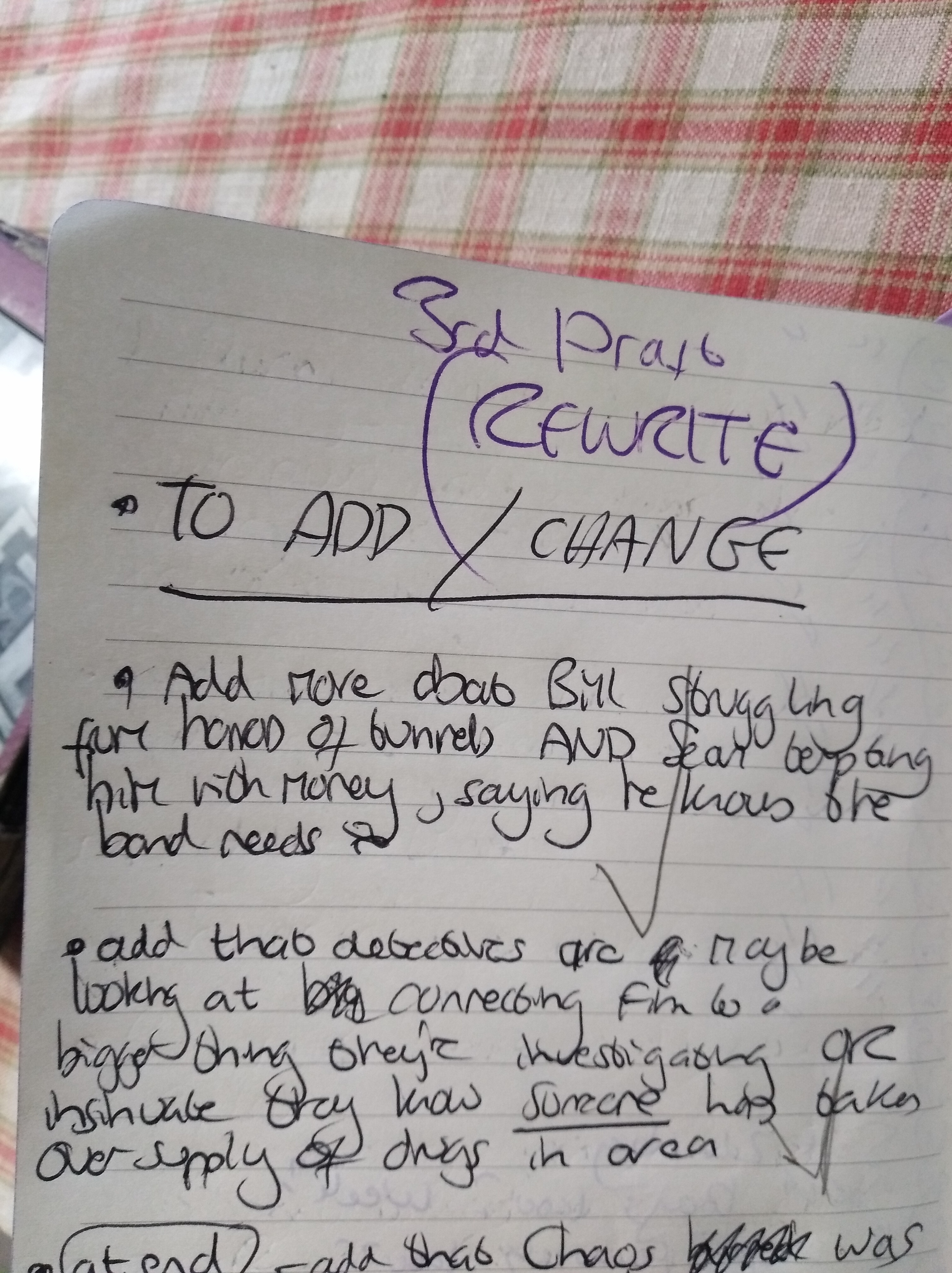
Step 7: the third draft is the first rewrite! Image is mine

Step 7. The third draft is the first rewrite! By rewrite I mean that I’ve found plot holes or changed my mind about sub-plots, or have decided to cut down some POVs, or change something fairly major. This involves more actual writing rather than editing typos. This is more time consuming than the second draft but much quicker than the first!

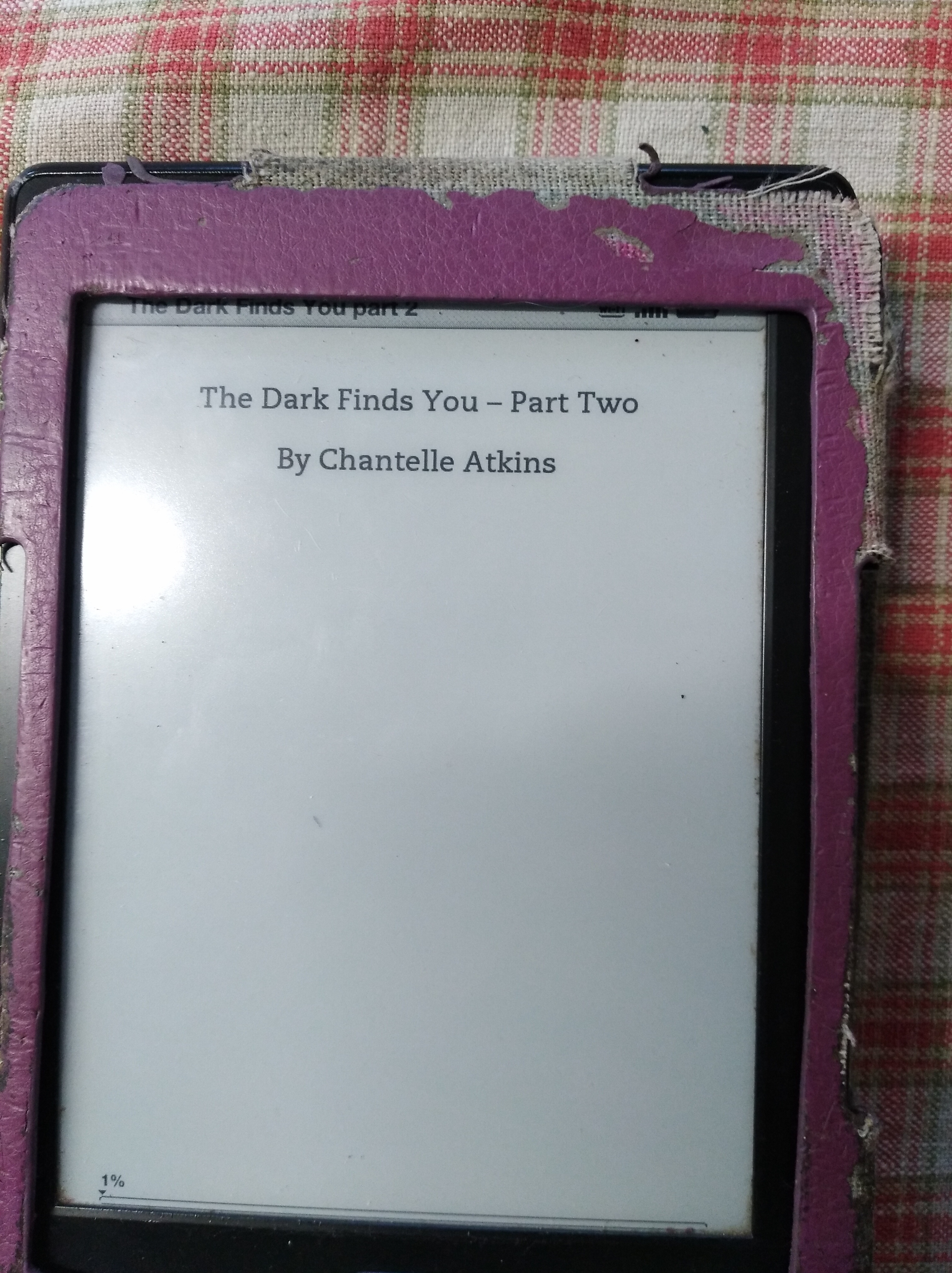
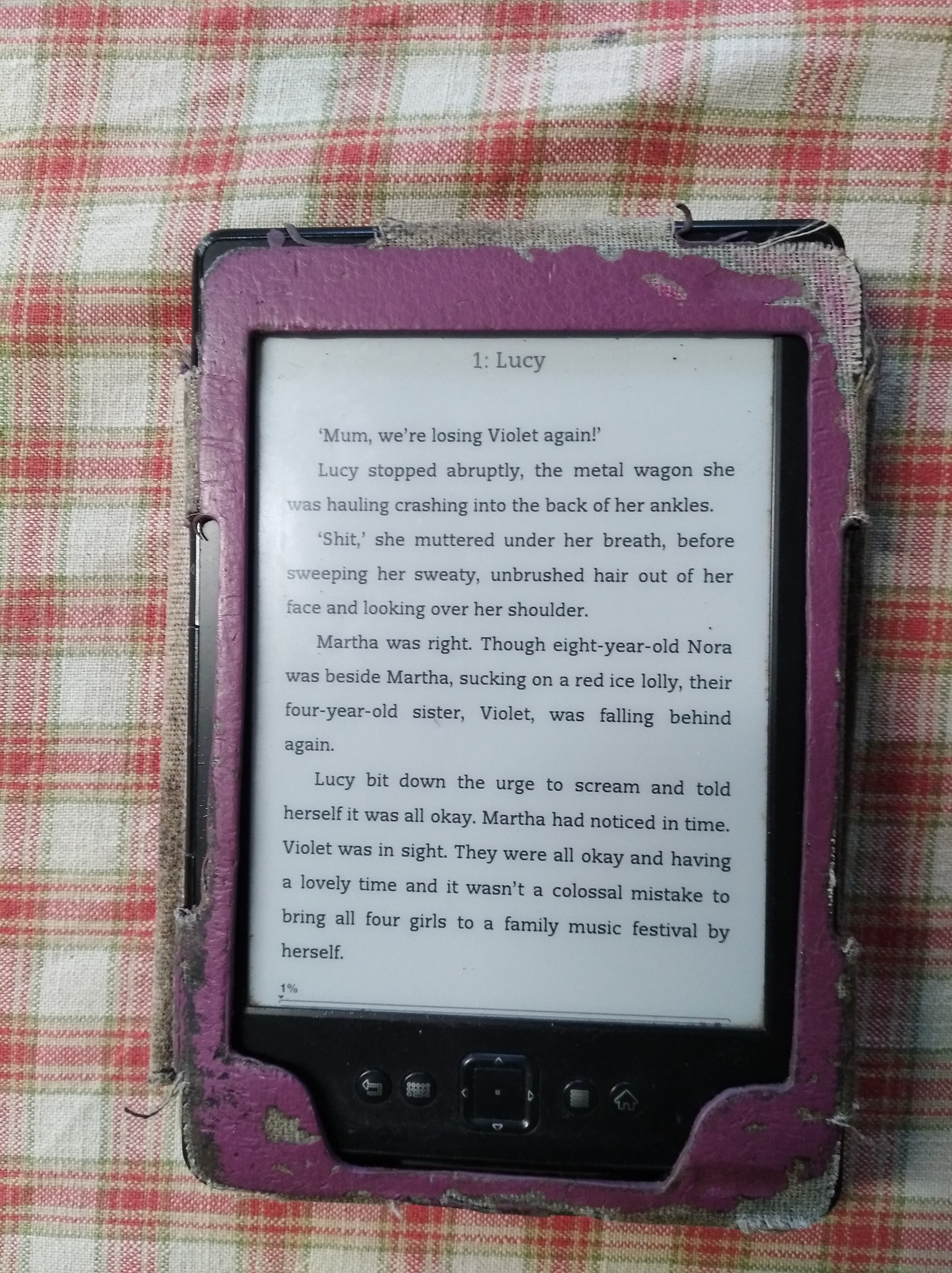
Step 8: The fourth draft is the Kindle edit! Image is mine

Step 8 is what I call the Kindle edit. I’ve written the book, applied the correct timeline and rewritten bits I didn’t think worked. Now I need to step back and read it as a reader. I send it to my Kindle and with a notebook on the go to pick up typos, repetitive words etc, I get going. I am mostly assessing how the book reads. Is it too fast or too slow? Are there parts that are in any way repetitive? Are my characters nodding or shrugging too much? (Yes, they always are.) Are my characters well written? Is the dialogue realistic? I am highly critical when doing this edit. Mostly I want to assess how much I enjoy reading the book!

my kindle edit – image is mine

Step 9: The fifth draft happens next. I go back to Word and fix anything the Kindle edit picked up. This might be quick if everything went well, or it might involve another rewrite if I wasn’t happy with the book!

Step 10: What happens next? The sixth draft. Another Kindle edit. Another draft. Then off to my editor. Do the editor’s edits. And so on….

So, there you have it. And to summarise, my top tips for writing a book?

  • a notebook
  • plan as much as possible before you start
  • THEN JUST WRITE THE BOOK

How To Handle A Long To-Write-List

I’ve blogged before about how to juggle multiple writing projects at the same time. For me, it’s almost impossible to work on one thing at a time and I used to worry about this. I don’t anymore. There is always a priority project, one that is the closest to being ready for publication, and that’s the one I work on first every single night. However, new ideas spring up all the time, and if I don’t write them down I run the risk of forgetting an important detail. Also, when I’m stuck in a long editing/rewriting/revising process for a written book, my mind craves fresh, new exciting writing. I decided long ago to just go with it and accept that it’s always going to be this way. At the moment, for example, I’m editing/revising my 4-book YA post-apocalyptic series The Day The Earth Turned. This should be the final edit before it goes to the proofreader and as all four books are completed and almost ready, there is no fresh, new writing involved anymore. I’m also going through the same process with the YA trilogy I’ve co-written with Sim Sansford. Book one is with the proofreader and we’re getting the other two books ready to go after that. These two projects are the priority, but I want to write new stuff as well!

But having a lot of ideas, or a long -to-write-list can be distracting. New ideas can derail you from current projects, and at the same time, if you ignore new ideas until you’ve got time for them, you could easily forget important details or forget the whole idea entire entirely!

When a new idea comes along, it can feel so bright and exciting, that it becomes tempting to quit or ‘rest’ your current WIP and jump to the new one. Young writers do this a lot, and so they should – writing should be vibrant and exciting and I think young minds should respond to the influx of ideas they’re getting. However, if you’re a published author, you need to stick to your goals and work through them one at a time, or it can all become a bit of a mess.

My 8-book to-write-list

So, this is how I handle it. I prioritise one project until it is published, but also allow myself to work on something new a few times a week, and jot ideas down in notebooks for future books. Currently, I’m working on the first draft of what will stand as a spin-off book to The Boy With The Thorn In His Side series. (Working title, At Night They Played In The Road.) I’m at chapter twenty-three and only write it every now and then, but it’s constantly on my mind and will definitely be the next one to bump up to priority position. I am also scribbling a diary style story into a notebook every now and then. This is my Zombie apocalypse story which is honestly just a bit of fun at the moment, and a long way down the list to take seriously. I can’t resist adding to it every now and then though.

The other day I decided to organise all my future book ideas into a sensible to-write-list. You can see in the image that I have eight future novels outlined. I’m not exactly sure of the order these will be prioritised in. Sometimes books at the end of the list get louder and push their way forward, shoving others out of the way as they do. I just hope I don’t get any more ideas, as this list is plenty to keep me going for several years! I’ve listed them below in the order I THINK I will tackle them and added a brief description of the book idea and how far developed it is at the moment.

Working title: At Night They Played In The Road. A spin-off to my 5-book series The Boy With The Thorn In His Side. Written 23 chapters so far and characters are developing well. Notebook contains plot ideas and structure, character bios, and chapter outlines so far.
The Mess Of Us: The long awaited sequel to my debut YA novel The Mess Of Me. Written about half of it in first draft. Know exactly what’s going to happen. Notebook contains ideas for the plot, chapter outlines so far and half of a hand-written first draft.
We Hate The Cool Kids: (working title) I wrote this a few years ago! The first draft is done, except the ending needs some sorting out. It came out of nowhere and just wrote itself into a notebook, longhand. I haven’t gone back to it yet because it jumped the queue and I wanted to concentrate on publishing The Holds End trilogy and The Day The Earth Turned series. It will be great to get back to this soonish as it is basically done and ready for it’s 2nd draft! It’s a YA psychological thriller. Notebook contains character bios, plot ideas and structure and chapter outlines, as well as almost the whole book written in longhand.
I’ve popped it here in the list but it might jump the queue a bit and it should get done fast as two of us will be writing it! A year ago Sim and I started writing a YA supernatural trilogy together and it’s now done and each book is heading one by one to the proofreader. Once we’ve done final, final edits on that, we will start this together! It sprung from a short story I wrote. The idea grew and grew and it’s definitely one Sim and I could make work. It’ll be another YA. Post-apocalyptic/dystopian, possibly?? Notebook contains the short story the idea came from, character bios, plot ideas and a possible introduction.
A few years ago me and my son were writing fanfiction together when I had the idea for an ‘IT’ style horror series about unlikely young heroes battling evil in their strange little town. We drew an intricate map of the fictional town and I started writing plot ideas and character bios. My son then lost interest and I tucked it all away for another day. This story has grown a lot since then and its one I am really excited to start! I’d say Black Hare Valley will be a YA supernatural/paranormal/horror series. Notebook contains a huge fold-out map of the fictional town, character bios, ideas for the plot and research on local folklore and legends.
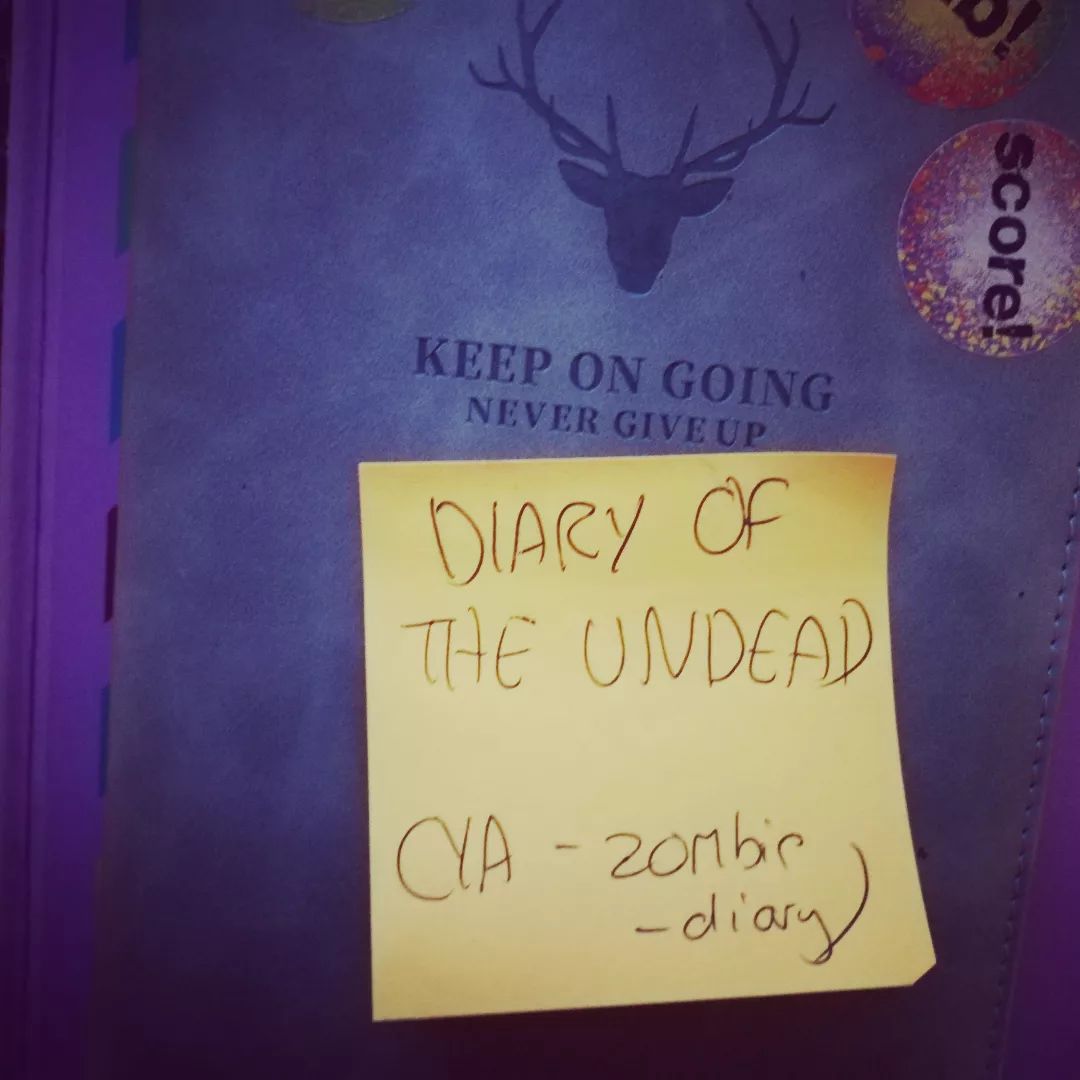
Diary Of The Undead came about thanks to my obsession with The Walking Dead, which started a year ago when I first watched it! A few months ago I got the idea for a diary style book from the POV of an unlikely teen hero and couldn’t resist starting it. I’ve nearly filled an entire notebook but it will be some time before I treat this one as a priority. I will continue to add to it when I feel like it. It’ll be a YA horror series. Notebook contains character bios and plot ideas and almost a whole notebook of the first draft in longhand.
This image has an empty alt attribute; its file name is 271812543_4674392729263890_6121548804389490490_n.jpg
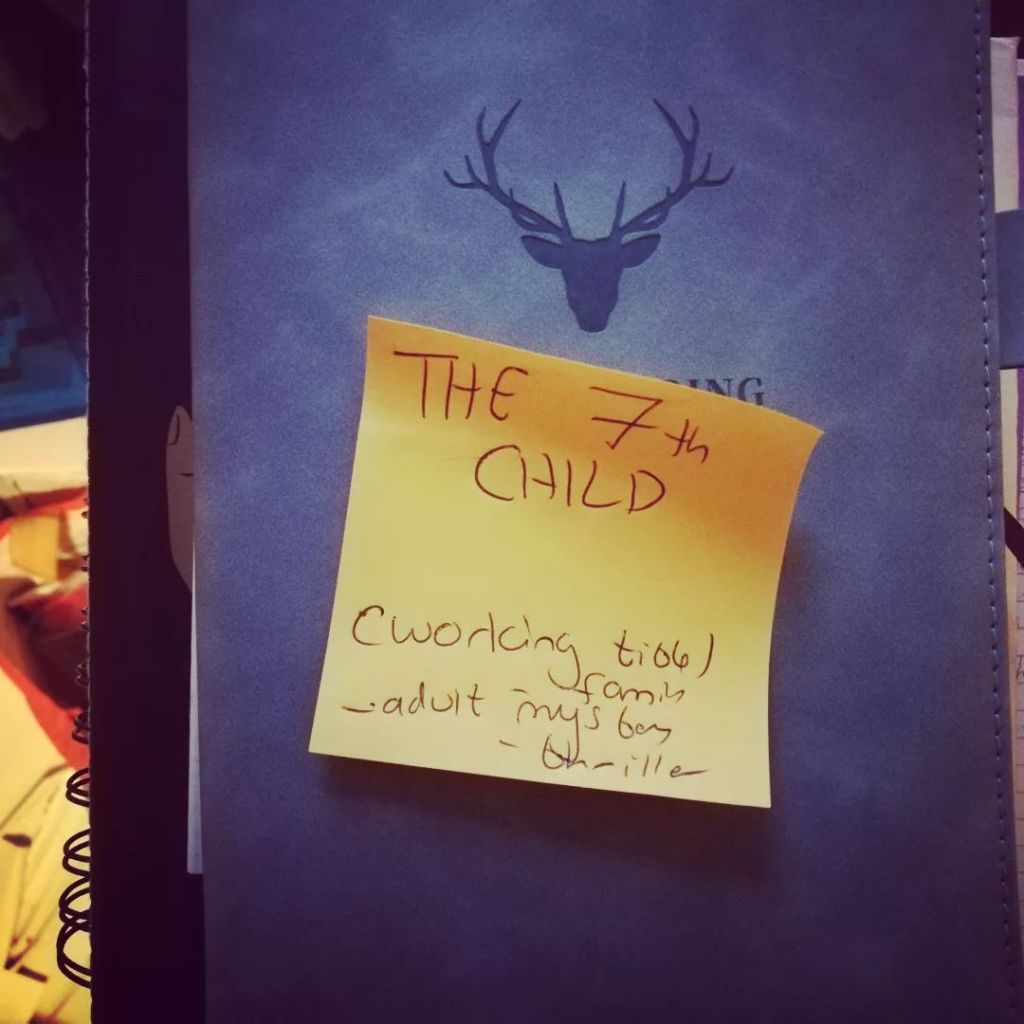
This book has been growing in my mind for a few years, but all I ever really had was a large, dysfunctional family and the death of a child. I have a lot more than that now so it got it own notebook the other day and I’ve started adding character bios already. I came up with the title quickly the other day but it will probably change. It’ll be some years before this one gets written! It will be a psychological thriller/family mystery aimed at adults. Notebook contains basic plot idea, ideas to explore, structure ideas and a few character bios.

This image has an empty alt attribute; its file name is 271785787_4674392725930557_4293487203447839916_n.jpg
This is last on the list as it’s calling to me the least but who knows? It might climb higher. This is an idea based on a book I almost finished writing when I was in my late teens. It didn’t have a title back then but was essentially about a terrible crime and the revenge that follows. I’ll use the same characters I had back then and the basic storyline, but it will flick between the past and the present now and will probably fit the adult thriller market. Notebook contains character bios and basic plot ideas I had from back then.

Sorting each book idea out like this has really helped me feel in control. Not all of them had notebooks and some of them were just ideas and characters floating around in my head. I feel like I’ve contained them somewhat now! And the good thing is, I can add to these notebooks any time I get ideas for plot, character or dialogue. This means that when each book finally gets its turn, it will feel like getting in touch with an old friend. Everything will be in place to get going.

Do you have a long to-write list? How do you take care of future ideas? Feel free to comment and share!

The Only Writing Advice You Ever Need

Google the term ‘writing tips’ or ‘writing advice’ and you will soon find yourself drowning in things you should and should not do as a writer. Write every day. Write when you feel like it. Self-publish. Don’t self-publish. Know your audience. Write for yourself. Write what you know. Write what you like. Other writers will give you advice, and people who don’t write will give you advice. There are infinite amounts of websites and author services dedicated to giving you advice.

And of course, a lot of this advice is important and valuable. If you are new to writing, of course you should seek advice, ask for help, ask for feedback and be prepared to listen to those who have gone before you. The trouble is so much of the advice is contradictory, because what works for one writer will inevitably not work for another. The trick is forging your own, individual path through all that advice and all those tips.

Image by Pexels from Pixabay

Take what you need from the writing advice websites and articles, and ignore what you don’t. Because above all else, you have to remember that one size does not fit all. Some writers plan and plot to an excruciating degree before they ever start writing, and that’s okay. Some writers don’t plan or plot a thing, they just start writing and see what happens and that is also okay. Some writers get the concept first and have to create the characters to fit the idea, and some writers get the characters first and have to create the plot to fit them. Both are totally okay. Some writers write every day. Some writers only write when they feel like it. It doesn’t matter what type you are.

The only writing advice I personally think you ever really need is this.

Do what you want.

You can interpret that any way you like. Find your own path. Create your own journey. Do whatever makes you happy. Do whatever the hell you want.

Because above all else writing should make us happy and passionate. We should feel happy and excited and passionate about our writing. It should be, above all else, our happy place. The thing that makes us feel like ourselves. The thing that makes us feel free. And yes, further down the road, you might want to think about audiences, and readers, and markets and blurbs and selling…but before you ever get close to those things, you have to love what you write. You have to love to write. You have to be totally and utterly in love with the act of writing because quite simply, the act of writing is for you. It’s yours.

Its your escape. Your freedom. Your way of interpreting the world. Your way of figuring out how you feel and what you think. Your way of speaking up and being heard. Your way of leaving some kind of imprint on this world. Your way of being you. That’s how writing feels for me. And every time I try to please anyone else, it all gets messed up.

Writing is mine. And I do what I want.

I’ll leave you with this poem, one of many from Charles Bukowski that for me sums up how I feel about writing. Please note, this poem does not sum up how everyone feels about writing! Other writers may not relate to this at all, and that is okay! I just love this poem so much and I feel like Bukowski only ever did exactly what he wanted.

“So you want to be a writer


if it doesn’t come bursting out of you
in spite of everything,
don’t do it.

unless it comes unasked out of your
heart and your mind and your mouth
and your gut,
don’t do it.

if you have to sit for hours
staring at your computer screen
or hunched over your
typewriter
searching for words,
don’t do it.

if you’re doing it for money or
fame,
don’t do it.

if you’re doing it because you want
women in your bed,
don’t do it.

if you have to sit there and
rewrite it again and again,
don’t do it.

if it’s hard work just thinking about doing it,
don’t do it.

if you’re trying to write like somebody
else,
forget about it.

if you have to wait for it to roar out of
you,
then wait patiently.
if it never does roar out of you,
do something else.

if you first have to read it to your wife
or your girlfriend or your boyfriend
or your parents or to anybody at all,
you’re not ready.

don’t be like so many writers,
don’t be like so many thousands of
people who call themselves writers,
don’t be dull and boring and
pretentious, don’t be consumed with self-
love.
the libraries of the world have
yawned themselves to
sleep
over your kind.
don’t add to that.
don’t do it.

unless it comes out of
your soul like a rocket,
unless being still would
drive you to madness or
suicide or murder,
don’t do it.

unless the sun inside you is
burning your gut,
don’t do it.

when it is truly time,
and if you have been chosen,
it will do it by
itself and it will keep on doing it
until you die or it dies in you.

there is no other way.

and there never was.”

Indie Author of the Month – Mick Williams

Hi everyone!

I hope you are all doing well. I have not blogged myself for a while due to all the guest posts I was lucky enough to receive for the pandemic collection. More on that another day! I’ve also neglected to highlight any indie authors lately too, but I’m putting that right today with a special interview. Mick Williams is an author I’ve followed for some time on social media and recently I had the pleasure of reading his latest book, Final Clearance. Mick must be the most versatile author I have come across, with romantic comedies, mysteries, action and adventure and more all under his belt. He is well worth checking out for that reason alone. You are sure to find something that appeals to you. Here he tells us all about his new book, (a dark comedy about a serial killer with a heart) his writing process, proudest moments and what to expect from him next! Enjoy!

1. You seem to be a very versatile author – what genres have you written in so far?

I think I’ve covered most of them! Some of my books seem to be a combination of genres, which makes it difficult to categorise, so it’s probably easier to say that I haven’t tackled historical drama, auto-biography or, as my sister would say, witty-woo stories!! Everything else is probably in at least one of my books. Every one of them has a sprinkle of romance, tons of action and humour and a strong female character.

2. Is there any genre you wouldn’t consider trying and if so, why not?

Yep – witty woo. My Mum reads my books and I’d never dare show my face if she read something overly racy in one of them. I think I’m still her little angel. All of my books have at least a sprinkling of romance in them, and some of my characters might get sexy ideas, but I tend to steer away from being graphic with that stuff and let the readers use their imagination. They probably have a much better time that way, anyway.

3. What comes to you first, the characters or the plot?

This has worked both ways (and a few others, too). For A Reason to Grieve, I had the Doris character in mind from the get-go and wanted to work her into the story. She’s still one of my favourite characters. The Old Farts Club is based on a group of men I saw sitting in a fast-food restaurant one morning: a group of military veterans ranging from men well into their sixties, to a forty-something. They had to have a story (Exodus) and have now become their own series! Location is also something that gives me ideas. The forest in Whatever it Takes is here in Kentucky and loads of the scenes in Exodus came from a trip to Jamaica.

4. Do you imagine what audience would like your book before or after you write it?

Honestly, neither! Writing in different genres is probably holding me back, in that I’m not able to promote myself in one particular area, but all of my books have plenty of action, twists, comedy and a touch of romance. I’d like to think that the people that read my books now come to expect that but, truthfully, I write what comes to mind and hope that people like it.

5. Where did the idea for Final Clearance come from?

I got tired of reading ‘write what you know’ and finally considered what I know! I’ve worked and trained in retail and customer service for decades and thought about that. Then, I saw a video of an obnoxious woman berating and insulting a store worker who, fearing for her job, just stood there and took the abuse. Chances are that the same meeting in a bar or a car park would have resulted in the woman getting a bloody nose! Brody takes it a step further (well, a few steps!) but it served to set him up as a conflicted good guy who can’t stand bad guys and resolves to do something about it. Going back to question three, I bought a sofa in a store like Brody’s, and the location for the end of the book is about a mile from where I live.

6. How did you come up with a complex character like Brody Coulson?

Bit by bit! I didn’t want a stereotypical ‘nice guy turned evil’ kind of character. Brody is just a regular man working a job he doesn’t enjoy, whose patience runs out and he impulsively does something bad. To balance his bad deeds, I needed him to be a caring soul too, which is where Javier and Anita come in. I’d like to think we’re all trying to ‘do our part’ for the people around us, and I thought it would be fun to have a character that would do that – only to extremes. How would he justify murder, and how would he go from killing someone to going home to babysit a ten-year old?

7. What is the hardest part of writing a book for you?

Finding the time – I don’t know how you do it! I still work a full-time job and have a family, so it’s a hard balancing act to accommodate everything. The only way I manage it is to create time and write when I can, which is not conducive to continuity!! There are times I have to re-read what I’ve previously written before I can get going again. I also go back and forth between completely outlining a story and just writing to see what happens, and I spend way too much time procrastinating and trying to decide what to do! I think (or at least hope) that I’ve managed to get my stories told either way with some degree of success.

8. What is the easiest part of writing a book?

The Words. Once I manage to sit and write, the words normally come easily. Some days I can hammer out a couple of chapters and actually have them make sense.

9. What methods do you employ to market your books?

Not enough. Marketing is my downfall. Every time I complete another book, I tell myself that this will be the one I promote properly – blog tours, interviews, signings (at least in the ‘old world’), ad campaigns, emails. Then, I sit down and write the next one instead. Book number eight is with my publisher as I type this, and I’ve just released Final Clearance, and it seems as if I’m releasing them into the ether since, if I don’t let people know they’re there, no one is going to read them. It’s a frustrating vicious circle, and the part of this whole writing malarky that I don’t particularly enjoy. I have an author website (www.mickwilliamsauthor.com) which my much more talented son takes care of. I intend to start a blog on it to give readers something new to look at, and I promise I’ll get to it. After this. Or the next thing! I also have a Facebook page (also Mick Williams author) which I don’t interact with anywhere often as I should, and I also have an Instagram page which has the wrong name on it! I’ve given up with Twitter since, in the few months I had it, it got hacked four times.

10. Where do your ideas usually come from?

Everywhere. I have too many ideas and too little time. As I mentioned earlier, a location can be enough to give me an idea, or an overheard conversation. I read Wired magazine and generally get a few ideas out of every one of those. The most unusual event to give me a solid idea was a dream. I once woke at around three in the morning, fresh from a dream, and jotted down almost the entire plot for Callie’s Eyes – I even had her name and her family. If that could happen once every few months, I’d be able to retire and just write!

11. Do you suffer from writer’s block and if so, how do you tackle it?

Not writer’s block, as such, but I do sometimes reach a point in a scene where I’m not sure where to go next. When this happens, I either save my progress so far and attempt a different scene that I can add later or, if the sun is shining, I’ll go for a walk and mull it over. That’s helped me a few times. And back when I was young and healthy, way back, I’ve gone to the gym and done the same thing. It’s weird how stepping aside to do something else will let my mind wander and get me back to where I need to be.

12. Are you inspired by any particular books, films or TV shows?

To my detriment, yes. I’ve watched plenty of TV where something will happen that triggers an idea that I want to write RIGHT NOW, and I have to fight the urge and just make a note that I may get back to in the future (although it never seems to burn as bright by then). Reading books, to me, is writer homework. I love to read, and it’s another time sapping habit that takes away from the writing time. I’ve read Stephen King’s books since I was a teenager, and love all but one of his stories (I tried and tried to get into Delores Claiborne), but I find that, when I sit to write, his voice is still in my head and I end up writing in his style. I don’t realise it until I read back what I’ve written, and it’s glaringly obvious and I have to go back and rewrite it!

13. What are you working on next?

Two things at the moment, both sequels. My best reviewed book is A Reason to Grieve. It was my first story and I love the characters. I didn’t write it with a view to making it a series, but the characters have never left me so I’m about halfway through A Reason to Breathe, which picks up a few months after the first book ended. One of these days, I’m hoping to add a third, A Reason to Leave, to round out the story and give the characters some closure.

I’m also a few thousand words into the next Old Farts Club story. The first, Exodus, was well received and the second, Dark Target, is with my publisher right now awaiting edits. The third will be another stand-alone story with the same group of characters, and I have a vague outline for number four in that series that I keep dipping into. As I said – not enough time!

14. Do you have a favourite character from your books, if so who and why?

I’ve already mentioned Doris from A Reason to Grieve. As much as I love her, I think all the characters in that book are likeable; probably why I’m going back to them. The banter between them still makes me smile.

The same can be said for the guys in The Old Farts Club. I think that, by the time I reach the end of a book, I get to love all my characters. It’s like they’re my children, but I’m sharing them with the world – if that’s not too weird!

Callie from Callie’s Eyes is a lovely person, and I really enjoyed the chemistry between Cory and Ashley in Whatever it Takes. Hope and Charlie from Hope’s Game are two characters that really intrigue me, and that book was left with an open ending that will be revisited in the future. And Paul and Sabrina from A Guy Walks into a Bar also fascinate me, so much so that I have an idea for A Girl Walks into a Bar which will bring them back against some old adversaries. Again, I just enjoy the chemistry they share, it’s infectious and a lot of fun.

And then there are Brody and Javier from Final Clearance – they’re like my new-borns! They’re only a few months old, so they’re still dear to me. That being said, I THINK their story is told. But, you never know.

15. What’s been your proudest writing moment so far?

I’m fortunate to have a few.

Collaborating with my dear friend, Craig Ostrouchow, on a book (Hope’s Game) and releasing something I’m very proud of that did justice to a vision he created.

Winning the Imadjinn Best Thriller Novel award for Exodus- my first award, that sits by my laptop to remind me that I really can do this!

And every time I open the box of a set of new books. The thrill of seeing months of work formed into an actual book that other people can read never gets old.

If my answers have intrigued you, please stop by on Facebook, or at my website http://www.mickwilliamsauthor.com and say hello! If you mention this interview, I’ll be honoured to send you a free e-book version of either A Reason to Grieve or Callie’s Eyes.

For news and incredibly infrequent and non-rambling emails (see above answer on marketing!) sign up on the contact page, it really would be lovely to hear from you.

And thank you, Chantelle, for giving me this opportunity – it’s been fun!

A huge thank you to Mick Williams for agreeing to the interview! His links are below if you are interested in his books and as he mentioned above, if you contact him and mention reading this interview, he’ll send you a free ebook!

About

https://www.facebook.com/mickwilliamsauthor/

https://www.goodreads.com/author/list/13254873.Mick_Williams