Writer’s Block is Really Your Friend (and you should listen to it)

Writer’s block is a horrible term I don’t even like to use. I think most writers hate the term and loathe the reality. We dread getting writer’s block but what does writer’s block even mean? How does it feel to be ‘blocked’ and what, if anything, is the ‘block’ trying to tell us?

I am very fortunate because writer’s block is not something I usually suffer from. I tend to have too many ideas, and too many projects on the go and my main problem is not enough time to do it all in! But recently the dreaded writer’s block struck and in fact I now realise it was with me for some time.

So, what is writer’s block? I think it can manifest itself in different ways. There is a block to ideas, when a writer quite simply can’t think of anything to write about. These writers tend to have big gaps between writing projects while they wait for the muse to show up again. There are blocks that happen mid-flow – one minute you are tapping away at the keyboard and then suddenly it all runs out. Your mind goes blank and you cannot conjure up the next words. There is also what I call plot blocks. Basically, you get stuck. You don’t know what to do next with the plot. Maybe you had it all planned out but now can’t figure out how to do it, or maybe you were winging it from the start and just ran out of steam. I’m not sure what type of block is the worst but I am more than familiar with the dread of sitting down and staring at a blank Word document.
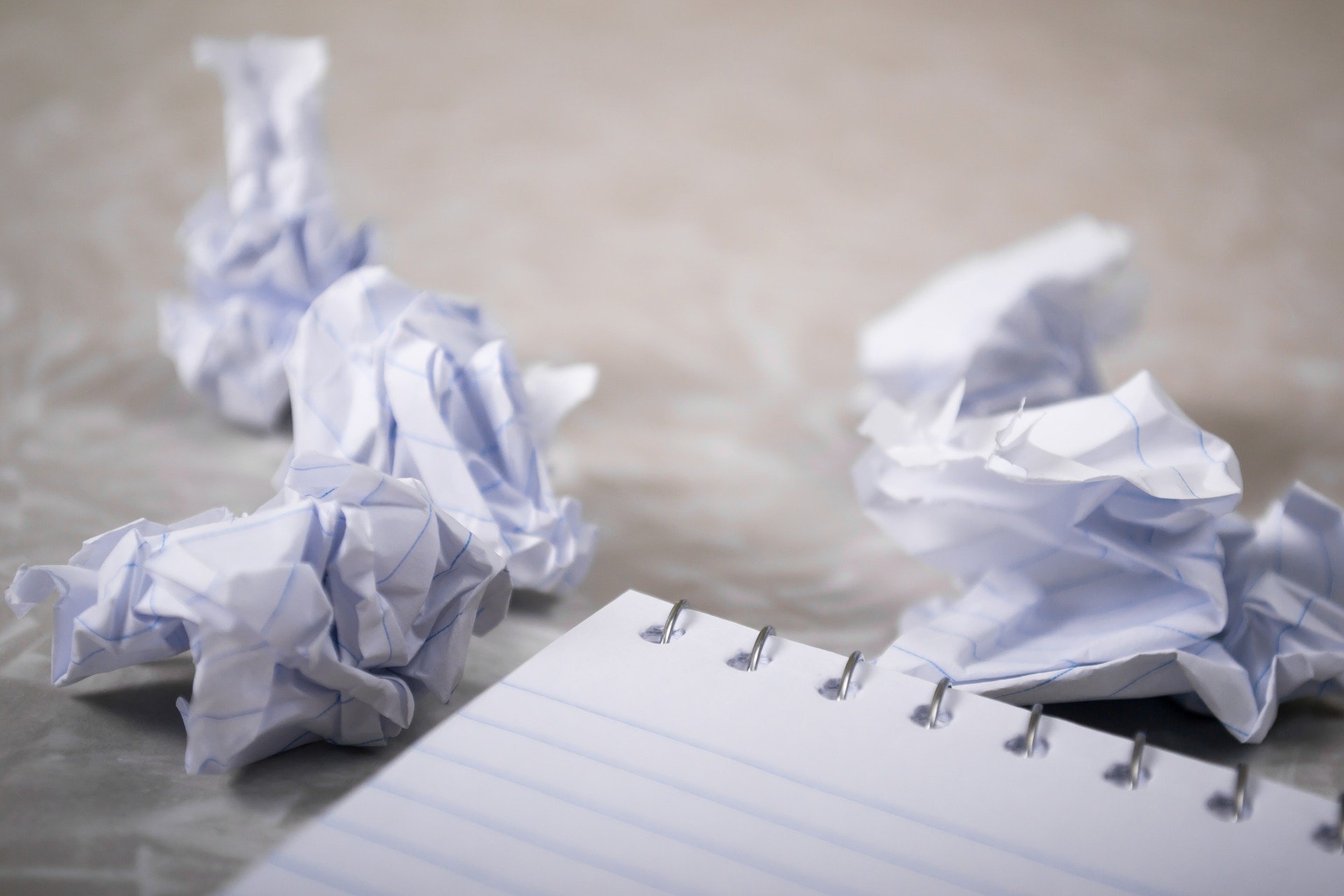
Image by Steve Johnson from Pixabay

The block I’ve been suffering from was none of the above, not really. My current work in progress is a four book YA post-apocalyptic series. I had the idea a few years ago and it had to wait its turn. During that time I started a little notebook of themes, ideas and character bios. I always knew this one was going to be a challenge. I love the post-apocalyptic genre as you might already know from my post here: https://chantelleatkins.com/2021/07/02/post-apocalyptic-fascination/. From the start, I had this feeling that the series was a good idea but someone else would be able to do a better job with it than me. I don’t normally feel like that about my book ideas. I’m usually hugely protective and obsessed with them so I would never consider offering or suggesting the idea to someone else. But this one niggled from the start.

I started book one about a year ago but had to keep stopping to get other books finished and published. I was initially quite surprised with how well it went. The first chapters flew out of me effortlessly and were exactly what I wanted. I genuinely think the first few chapters of book one are excellent and I’m proud of them. It got harder after that. It became a slog!

And that’s the difference between these books and my others. Aside from my YA dystopian The Tree Of Rebels, all of my books follow a familiar pattern. I get the character first, they suggest the plot, back story, dilemma and so on. It builds in my head and everything flows from the characters until my head gets so noisy it feels like it will explode. By the time I get around to writing it it almost writes itself because I know it all so well. It’s not hard. It’s fun. It’s addictive and exciting. I normally cannot wait to sit down at my desk and tap away. Sure, I get stuck here and there and some parts are trickier than others, and first drafts are always a clumsy affair, but I still love it and believe in it.

With these books it has been hard work. I’ve forced myself to write a chapter a night most nights and with that work ethic I have managed to write the first two books and even get them to fourth draft stage. I am now nearing the end of the first draft of book three. I know what will happen in book four so it is all getting there. But it is so painful! When I say I force myself, I really do. I stare at the screen for ages. I nearly always get distracted by my phone, checking social media or emails or playing a game. Because it’s hard and I don’t like it being hard!

The trouble has been not understanding why it has been so hard and the other day I finally worked it out. As I mentioned earlier the only other book I had this trouble with was The Tree of Rebels. And there are similarities with this series – The Tree Of Rebels came from a concept first. I had the idea and then built the characters around it. The other similarity I only just realised was that I started writing that book and this series with an audience in mind. I knew The Tree Of Rebels would be a YA dystopian. It was great knowing that because then I’d know who to market it towards. Normally it’s a struggle to figure out what genre my books are! With this series, I knew it would be YA post-apocalyptic and with both The Tree Of Rebels and this series I wanted to aim them at 12-14 year olds. That’s the younger YA age bracket to my other books. I have some books aimed at adults and some aimed at 14 years and up. With The Tree Of Rebels I wanted to write a book my children could read at the time and with this current series I wanted to write a book the children who attend my writing clubs could maybe enjoy…

And that was the trouble! That was the block! When I realised it was like this light bulb eureka moment! Now I can’t believe it took me so long to figure it out!

Having the idea before the characters was a problem but the main problem was deciding who to aim it at before I even started writing. It’s like having someone watch over your shoulder the whole time and it totally changes the experience for me. I start thinking about what elements are expected in that genre and what things are suitable or appropriate for the age group. It ruins the process. I feel like I am writing a book to order, writing for someone else, and that just doesn’t work for me.

I realised that the age group was a real problem. There is a big difference between books aimed at ‘tweens’ and books aimed at older teenagers. I didn’t feel I could swear in this series and it’s just not as gritty or hard hitting as my other books. It’s just not me.

But all that is going to change. Once I figured out what was causing the writer’s block I made a decision. I’m now going to aim the series at the older YA audience and I am going to do what I normally do. Let rip, let them swear, go as dark and gritty and edgy as I like! I am going to write these books for me and no one else because that is the only way it works for me.

It’s amazing but since I realised all this, the chapters have started flowing again. It feels different. It feels exciting and a bit naughty! I have already wandered into darker territory. I am going to finish book three in this vein and carry on into book four. Of course, then I need to go back and rewrite everything I have done so far. I do think that was partly what prevented me from admitting what was wrong – knowing how much work I’d have to do to correct it! But I’m looking forward to it now. There will be more character development, some extra chapters and lots of rewriting in each book but I think it will all be worth it. And I will keep one thing in mind the entire time until these books are ready to publish – I am writing this series for ME. I am writing the books I want to read.

That should work!

And I suppose the moral of the story is always listen to writer’s block because it’s just trying to tell you something. For that reason, writer’s block is actually your friend. You just need to figure out what it’s telling you.

Do you ever suffer from writers’ block? If so, what kind? And what do you do to push through it?
We Write…

We write to remember

We write to forget

We write to find ourselves

We write to connect

We write to reach the truth

We write to construct lies

We write to create worlds

We write so we can hide

We write to make new friends

We write to have control

We write so we stay young

We write so we never grow old

We write to find out what we think

We write to find out how we feel

We write to discover what we believe

We write perfect moments to steal

We write to imagine the future

We write to understand the past

We write to record the now

We write so that we will last

We write to be seen

We write to be heard

We write to have a voice

We write to find the perfect word

We write to speak for the voiceless

We write to see ourselves in others

We write to express our pain

We write because we suffer

We write to be free

We write to hold on

We write to let go

We write to live on

Post-Apocalyptic Fascination

Ever since I watched Maximum Overdrive when I was a kid, I have been fascinated by post-apocalyptic fiction and drama. Developed from a short story by Stephen King, Maximum Overdrive explores how a group of survivors come together after machines start turning on the humans who made them. Not your usual post-apocalyptic concept, but it still explored how a small group are left when everyone around them has perished. I remember pretending it was real when I walked my dogs around the fields where we lived. I’d pretend I was the only soul left alive in the area and I’d pretend to be grossed out by dead bodies and gruesome finds, while I plotted in my head how I would continue to survive in this new world.

Image by George Tudor from Pixabay

As a huge Stephen King fan I inevitably went on to devour The Stand – a thumping great book about an apocalypse caused by a virus. I found it so fascinating I read it twice! Everything about it intrigued me. From the outbreak of the virus and the horrific details of how quickly it spread and decimated the population, to the individual stories of the people who survived and how they came together, to the rise of good people and bad people and the ultimate battle between them.

Currently, I am watching The Walking Dead for the first time and I am almost at the end of season 10. I’m utterly addicted! A zombie apocalypse is an even more gory and frightening one, but again, it is the human stories that fascinate me – from survival of the early outbreak, to the hopes and fears of groups trying to find safe places and barricade the walkers out, to the inevitable bad humans who are arguably more revolting and dangerous than the walkers, to the fascinating survival skills the humans pick up or develop along the way. I genuinely feel like should a real end-of-the-world situation arise, I would be better prepared thanks to watching this TV show!

I am also currently writing my own post-apocalyptic series and it’s been great fun but also incredibly challenging. I have delved into dystopia before, with The Tree Of Rebels set far in the future after wars have nearly obliterated the human race, but this is the first time I have attempted post-apocalyptic fiction that starts as the tragedy unravels. It’s challenging because it’s been in my head for so long and I have read and watched so many post-apocalyptic books and films, that I feel a bit intimidated. I so want to get it right that sometimes I struggle to write it at all!

I have however written the first two books and I am half way through book three. Because there is a good chance I will want to go back and alter things I am not releasing any of them until all four books are ready. But writing it, and watching The Walking Dead got me thinking – what is it about this particular genre that fascinates us so much? It’s hugely popular – you only have to look at the various Walking Dead spin-offs in action or in the pipeline, to see that the end of the world as we know it is a big business. Here are a few reasons I think the genre is so popular:

  1. Dissatisfaction with this world – I don’t think anyone would swap this world for one over-run by walkers, deadly viruses, or rampaging robots, but even so, I do think a dissatisfaction and anxiety about the society we live in fuels our interest in post-apocalyptic fiction. Characters in post-apocalyptic dramas tend to find a new way of doing things. Once they have survived long enough to start rebuilding, they tend to rebuild in a different way as if they have learned from the mistakes of the past, and I think we are curious about this. If everything was razed to the ground and we had to start again, what kind of society would we work to build? I think most of us would opt for a kinder, fairer more environmentally friendly one and that’s interesting to think about.
  2. Curiosity about how we would react – they say you never truly know how you would react to extreme danger, pain, fear, or the threat of death. We simply have no idea whether we would die easily or become a true survivor. Would we hide away crying, or would we come out fighting? In post-apocalyptic fiction and drama, the weak don’t tend to last long. Characters make stupid mistakes and fall victim to all kinds of terrible deaths. We like to think we would do better. We would be smarter, faster, stronger and more adaptable, but would we? Wondering about this fuels our need to watch and read the genre.
  3. Fascination with survival skills – in a post-apocalyptic world, characters are forced to go back to basics. Walking instead of driving, using horses instead of cars, building shelters, hunting animals for food, fishing, setting traps, filtering water so it’s safe to drink and so on. In our modern lives we don’t need to do any of these things and we tend not to worry about food or oil running out, but maybe we should. We used to be better connected to nature and we used to do all those things to survive. Things are far too easy for us now and we are softer because of it. Watching post-apocalyptic shows and reading the genre makes us more aware of the need for such survival skills. Anyone with these skills is going to have a better chance of survival and I think we enjoy picking up a few tips, just in case!
  4. Boredom – I think to a certain extent us humans grow bored of the society we live in. Once you are in the never ending circle of work, pay bills, work, buy food, work, work, work, you wonder if a different kind of life is possible. In post-apocalyptic situations, the characters are freed from the drudgery of the work/money hamster wheel and they can do whatever they like. Life might be dangerous, but it’s certainly never boring.
  5. Disillusion with the human race – now, I would obviously never advocate population control or the mass death of humans! But like a lot of people, I am endlessly disappointed with the human race. I am frustrated and saddened that they continue to vote for selfish, rich people who continue to wreck the planet. I hate to see our wildlife being decimated, our continuous consumption pushing the planet to the brink. If we are not careful, we’ll have a post-apocalyptic situation on our hands sooner than we think. Human beings can be wonderful, but they are also frustratingly stupid and selfish. I see this more and more around me and I weep for what we are doing to Mother Nature. I can’t help thinking she would be better off without us here. I think we enjoy the genre for this reason too. In books and films where the majority of the population have perished, we get to see what the world would be like without most of here, without us wrecking and polluting, using and abusing it.
  6. The need to go back to basics – I’ve blogged before about my strange desire for a far more basic life. If I could, I would withdraw from society almost completely. If I could live in a little house or cabin far away from humanity, with woods and fields and a stream around me, I would go in a shot. I would go off-grid and get back to nature. I enjoy watching and reading this aspect in post-apocalyptic shows and books. People living basic lives, at one with nature, far away from anyone else.
  7. Preparation for the future – sadly I think this might be one of the main reasons the post-apocalyptic genre is so popular. We are faced with climate change disaster and ecological disaster, not to mention soil disaster, and the possibility of more pandemics. Wow – sometimes I wonder how any of us get up and get through the day with all that hanging over our heads! It plays on my mind constantly. I have no idea what will happen but I have very little hope that the powerful people in charge will do the right thing. I think millions of us will suffer and die as things get worse in the coming years and for young people, the situation is even more dire and depressing. Maybe we are fascinated with the genre because we are trying to prepare ourselves for what may be coming our way.

What about you? Are you a fan of post-apocalyptic fiction and drama or is it something you avoid? Do you have a favourite post-apocalyptic TV show, film or book? Let me know in the comments!

New Book Babies

It might sound a bit odd when authors compare their books to babies, but I think it sort of makes sense. You spend years putting the work into a book, moulding it, shaping it, nurturing it and encouraging it to grow and evolve at the right pace. And then at some point, when it’s ready, you let go of it and release it into the world. It’s similar to child-rearing in that way. Plus, authors are so connected to their books and often so in love with their own characters, that it just feels right to call them your babies.

Just lately I’ve been releasing a lot of babies that were cooking for a long time, so it felt right to blog about it. My blog posts for a while now have been taken up by wonderful guest posts. More on that and where it’s heading next another time! But for now, it’s really nice to climb back behind the driving seat of The Glorious Outsiders to update you all on my new babies.

Over a year ago I released the first in a YA trilogy, A Song For Bill Robinson. Here is a post I wrote at that time about where the idea for the book originally came from and how it later grew into a trilogy. https://chantelleatkins.com/2019/11/08/10-fun-facts-about-my-new-book/ After releasing the first book, I continued working on the second and third books, but I was also finishing up The Boy With The Thorn In His Side series – another mammoth amount of babies! And because Emily’s Baby finishes with a cliff-hanger, I decided I would hold back its release until the third book, The Search For Summer was also ready. I planned to release the final two books within a month of each other and that’s exactly what I’ve done.

If you are interested in a dramatic, gritty YA series about an unsolved murder, a neighbourhood feud and a self-destructive teenage singer, then A Song For Bill Robinson and Emily’s Baby are available now in ebook and paperback and on multiple platforms and The Search For Summer is available to pre-order and will be released on Friday 30th April.

It feels really good to have another series completed and released. Obviously writing a series of books is a huge challenge and extremely time-consuming and there is always a massive feeling of relief when the final one is out there!

At the same time, you feel a bit strange and a bit bereft. The characters have been with you for so long by this point that you feel lost without them. The good news is I am already in the middle of another series of books, plus I am co-writing a series with author Sim Sansford. So that is more than enough to keep me busy!

My new book babies are a YA post-apocalyptic series of which I have just finished book two. There will be four books in this series. And the series I am co-writing is a YA supernatural series and there will be three books.

After all of that I will be looking forward to writing a standalone book! And funnily enough, I already have one on the go. I’ve written some chapter outlines, character bios and some very rough chapters for a standalone which is actually a spin-off book from The Boy With The Thorn In His Side series. Two brothers are introduced as secondary characters in the final book of the series and I enjoyed writing them so much, I decided to give them their own book. I can’t wait to share news of that with you in good time.

But for now, it’s back to the massive book babies and getting another two series complete and released!

I hope I did my job the best I could and I hope they do well out there!