Indie Author of the Month – Sim Alec Sansford

It’s time to celebrate another indie author and this month I am welcoming Sim Alec Sansford to The Glorious Outsiders. Sim was one of the masterminds behind last years very first Blandford Literary Festival – a fantastic literary event I was honoured to be a part of. Sim has also just released his debut novel, Welcome To Denver Falls. Here, Sim tells us how it feels to finally be a published writer, how music is a massive inspiration and how supportive and welcoming he has found the writing community to be.

  1. Tell us about your latest release. What is it about and who is it aimed at?

My latest release is my debut novel, Welcome to Denver Falls.

The story follows photography student, Harper Andrews, who leaves the comfort of her college campus behind, and ventures to the mysterious town of Denver Falls. Plagued by haunting dreams and unsettling visions, Harper faces a race against time to unlock secrets of the past in order to save her future.

There is a lot of suspense and a little romance, but it is really a tale about friendship and self-belief. That’s the message I hope resonates the most with readers.

2. Tell us about your publishing journey so far.

My first experience with publishing was in November 2019, when I published my first short story, The Storm, online. Growing up, as a young writer, I found it difficult to know where to turn for support. This prevented me from sharing my work. In early 2019, I heard about a local writing group in my town and decided to put my fears and anxieties aside. I took my short story along with me, and the reaction from the other writers was an incredible confidence boost. I was fortunate to make some great friends who ultimately talked me through the process of publishing my work online. It was a mountain to overcome the fear of sharing my work but, it is most definitely the best thing I have ever done.

3. When did you first know you wanted to be a writer?

To be completely honest, I can’t remember a time that I didn’t want to write. There was something about books that I found absolutely magical and I knew right away that I wanted to be part of that magic. Whether I was writing, editing or even publishing, I knew someday, somehow, I was going to be part of that world… and I guess now I am, and that’s a really amazing feeling.

4. What is your typical writing day like?

To sum it up in one word: emotional.

I don’t think I have experienced anything else in my life so far that can cause such a whirlwind of emotions. For the most part, my writing days are pretty exciting. I love nothing more than escaping into the mind of my characters and quite often they will end up surprising me by taking things in a different direction than intended. Then there come the nagging thoughts… that sentence doesn’t sit right… But if that character does that it will change this?… Does that sound like something they would say?… How would a reader respond to this?… And so on. On a good day, I can just sit for hours typing away on the keys and before I know it the story has written itself. The trick is to not sweat the small things, just write. The rest comes later in editing.

5. What is your writing process? (how do you plot a book, come up with characters, find motivation etc)

Usually, it starts with an image. Just a quick snap shot or a short scene played out in my head. Quite often triggered by music which is something I rely on quite heavily when I need to set the tone for a story or a character. My latest release began as a small scene in a daydream; a young girl in a forest alone, then a man appeared and asked her if she was lost. It was only a small image, but from that I found myself asking a hundred questions… Who is this person? What is she doing in the forest? Is she good, evil, both? Where is the forest? Who is the man? What are his intentions?…

From there I slowly map out a plot in my head and create a playlist of songs that help capture the mood of the story. These songs then help me add new scenes, be it by interpretation of the lyrics or the way they make me feel. I tend to map most things out in my head starting with a beginning, middle and end. For the rest of the story, my way of expanding plot is just to write. I see where the story takes me and slowly over time new ideas and characters are added.

6. What has been the most positive thing about your publishing journey so far?

Definitely the connections I have made with other writers, readers and creatives. I have met some incredibly talented people that I am proud to call my friends. Their knowledge and experience have been invaluable to me and I am able to provide them with new perspectives that perhaps they have never considered. It really is a fantastic community to be part of.

7. What has been the most negative thing about your publishing journey so far?

Being self-published comes with a lot of challenges, mostly financial. Without the push of a major print, it can be expensive to promote your work, and it is often disheartening if you spend a lot of time and money on an ad campaign that returns few results. The important thing to remember is one new reader is one more than you had before. You have to stay positive and stick at it.

8. Who is your favourite character from your own books and why?

Of course, I love all of my characters, but I have to say that Abigail Millar is my favourite. She first appeared in my book, The Willow, where her story serves as a prequel to Welcome to Denver Falls. It was actually only after I had written the book that I realised just how much I had in common with her. While I have not ever made three wishes on a creepy willow tree in the middle of the woods, she really resonates with me. She’s strong and determined, and I love that.

9. Where do your ideas come from?

Most of my ideas come from music. I am a big fan of reimagined songs and love the new (often creepy) twists that the artist put on them. Bands like Until the Ribbon Breaks, and Denmark + Winter do this particularly well.

10. What can we expect from you next?

Currently, I am continuing the story of Denver Falls in the form of a second book, and a weekly series on my blog titled Welcome to Denver Falls: Soul Mate.

Though I do have a few old projects that I would love to bring to life. Particularly a supernatural dystopian romance I have been working on since my teen years. I have an eclectic group of characters in that story, and I’m positive readers will love them as much as I do. However, for now, my focus is on Denver Falls.

11. Tell us three facts about you.

I would be completely lost without music.

I’m a little bit psychic.

I value friendship over everything.

12. What is the best advice you could give to aspiring writers?

JUST. DO. IT.

I waited far too long to put my work out there for fear of the reaction… Are my stories any good? My characters compelling? Will people steal my ideas? Do I need to stick to a word count? What if I never get published? The truth is, the only person standing in your way is you.

Pick up the pen. Grab your phone or computer. Whatever you have to do, but just start writing. Don’t worry about the end goal too much, just enjoy the journey.

Writing, like life, is all about growing and changing. It doesn’t have to be perfect the first time. It is your world and you’re in control.

Thank you so much to Sim for joining us on the blog today as our Indie Author of The Month. If you would like to find out more about Sim and his work his bio and links are below!

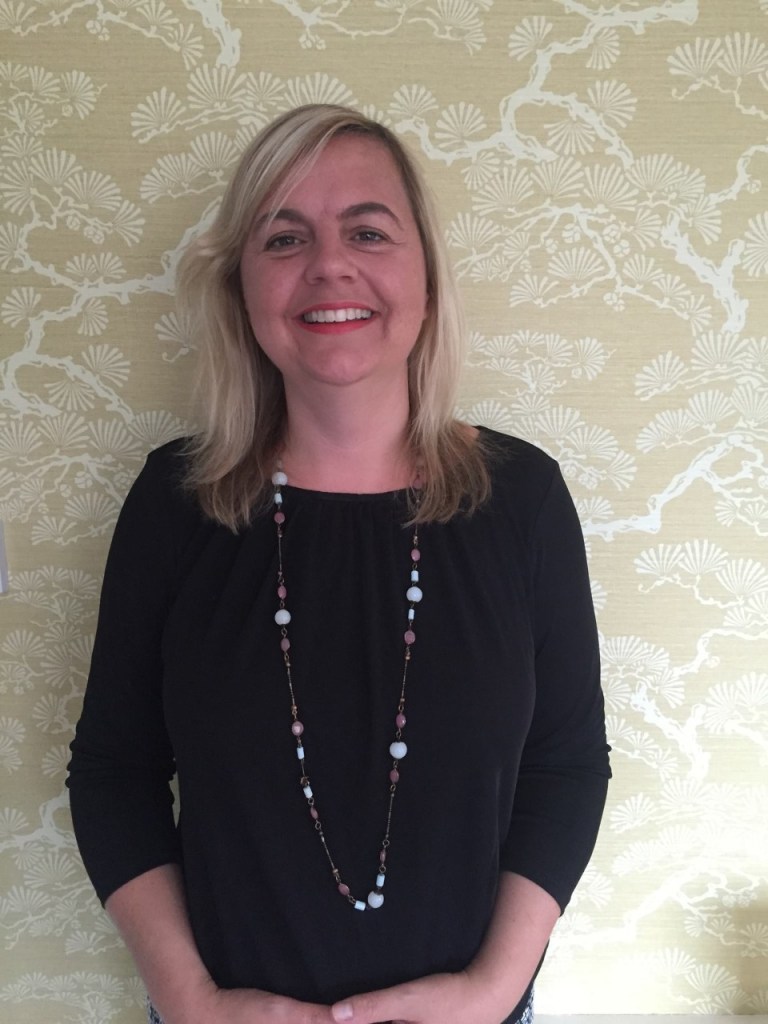
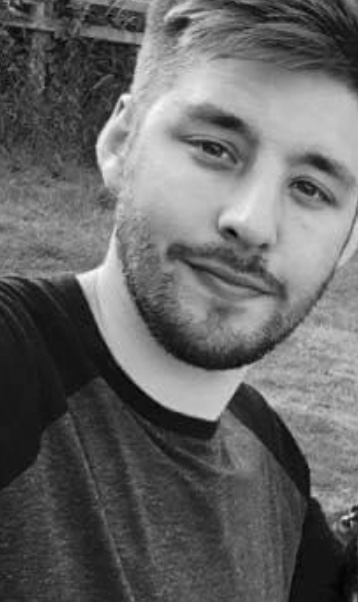
Born and raised in the county town of Dorchester, Dorset, Sim began scribbling away stories on scraps of paper since before he can remember. He spent a lot of his childhood on adventures walking the dogs in the woodland surrounding Thomas Hardy’s cottage with his family. Something about the cottage and ‘the man what wrote stuff’ who had lived there sparked a fire inside him, it was from there he began to focus on writing more seriously. 
In 2012, Sim signed up to Open University to study Creative Writing alongside working full time. He isn’t quite sure how he made it out alive, but he graduated with honours and began using the skills he had acquired to edit and redraft old work. 

http://www.simalecsansford.com
Twitter.com/simsansford 
Instagram.com/simeon_alec
Facebook.com/SimAlecSansford

Guest Post #3 – Dreaming of Another World

Dreaming Of Another World is a new feature on my blog, inspired by a piece I wrote a few weeks back. I wondered if other creatives felt the same as me, that another world could be glimpsed during lockdown and that perhaps we ought to use this unique time to change our ways. I reached out to other writers and bloggers to ask how lockdown affected their vision of the future. Has the experience changed them and if so, how? Are they going to make changes to their lives because of what has happened? This next post is from author LE Hill, a former journalist who used the lockdown isolation to finish and publish her first novel. She also runs a writing based Community Interest Company, like me! Enjoy the post and if you would like to know more about LE Hill and her novel The Girl I Left Behind, the link is at the end.

By L E Hill

Five months ago, I was sitting in the café at John Lewis in Glasgow drinking coffee and catching up with one of my close friends who I see only once or twice a year. It was almost deserted and as we chatted we realised it may be the last time we caught up for a while.

Earlier that morning, when I arrived on the early train to Glasgow, I met my brother briefly and we hugged albeit wondering if we should. I’m so glad we did – who would have thought hugging or showing affection would become so taboo. We talked about our kids and the prospect of the schools closing at Easter. Little did we know what lay ahead.

Later, I met another dear friend who by coincidence was also in town. She had flown up from London for the weekend to visit her mum and had packed a bag as her employers had advised her to work from home for the next few weeks. She ended up being back for almost four months.

I stayed with my parents that night and as I said goodbye the next day before getting the train, I wondered when I would see them again – especially as my dad has ongoing health conditions. We were all waiting the imminent announcement that we were going into lockdown.

That morning I willed the train to go faster to take me home to my own family. As I looked out of the window and watched fields flash by, I could feel the creep of anxiety begin. I felt as though I was on borrowed time and wanted to get into what would soon become my bubble.

My biggest concern was how it would affect my children – particularly the abrupt end to their academic year; cancelled exams; cancelled activities; having their freedom curtailed and having to think about things that didn’t event enter my head when I was their age. Yet I watched in amazement and with pride as they and their friends adjusted and adapted and showed great resilience despite everything in their world being turned upside down.

For the first couple of months of the pandemic I didn’t have much time to dream. My mind was hectic – too busy making sure my kids were okay, worrying about my parents and trying to juggle work. All of my freelance community work dried up overnight – as meeting places shut down and everyone stayed at home. Perhaps that lull did in some way fuel my thoughts and trigger something which had been at the back of my mind for a while. I did indeed start to dream.

I have always wanted to write books. I have written – since I was a child –. yet up until lockdown I hadn’t written very much at all for about a year. I had completely lost all confidence in my ability to write. I just didn’t feel good enough.

I know the joy that creative writing can bring – I teach it to community groups in a bid to help people share their stories and build confidence. I work with older people, those living with dementia and their carers and survivors of domestic abuse. I love watching people smile as they discover the joy of writing, sharing their story and realising that they can do it. Yet I could not.

Over the years I have written four books. Two will probably stay in a drawer forever, but over the past couple of years I have been tirelessly trying to get two novels published. I naively thought that if I signed to an agent and publishers showed interest then I was on the home straight. Not so. Despite strong interest and requested and detailed rewrites for two, the interest then faded away. I soon learned all about the term ‘being ghosted’. I lost my confidence, forgot about how much I used to enjoy writing and decided that my dreams of having my work published were pointless.

But during lockdown I thought a lot about the fragility of life. I read the devastating stories of loss and anguish and how much Covid-19 had affected so many people. I also regularly reminded myself how lucky I was that my family were well and safe.

So – I gave myself a shake. I’m not getting any younger and who knows what is around the corner. I finally accepted that I didn’t need anyone else’s approval to get my book out there. Just my own.

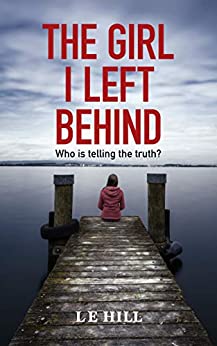
A friend designed the cover, I planned a launch date and on July 11 published my debut novel, The Girl I Left Behind.

It’s not perfect, I have loads to learn but isn’t that what life is about? I have no expectations either. I just want to write. And I have been. I have started to enjoy journaling, writing Haikus and have managed to rewrite another book which I had put away in a drawer.

I bumped into someone locally who had bought The Girl I Left Behind and she told me that my book had got her back into reading again; a friend from university – that I hadn’t spoken to for years – contacted me to tell me how much she enjoyed it.

Even my dad, who never reads anything other than the sports results, has been reading it. For me, that is what it is all about.

I keep reminding myself that I am where I am supposed to be today and things generally work out for a reason. My years of dreaming about having my work in print have finally come true.

Author Bio

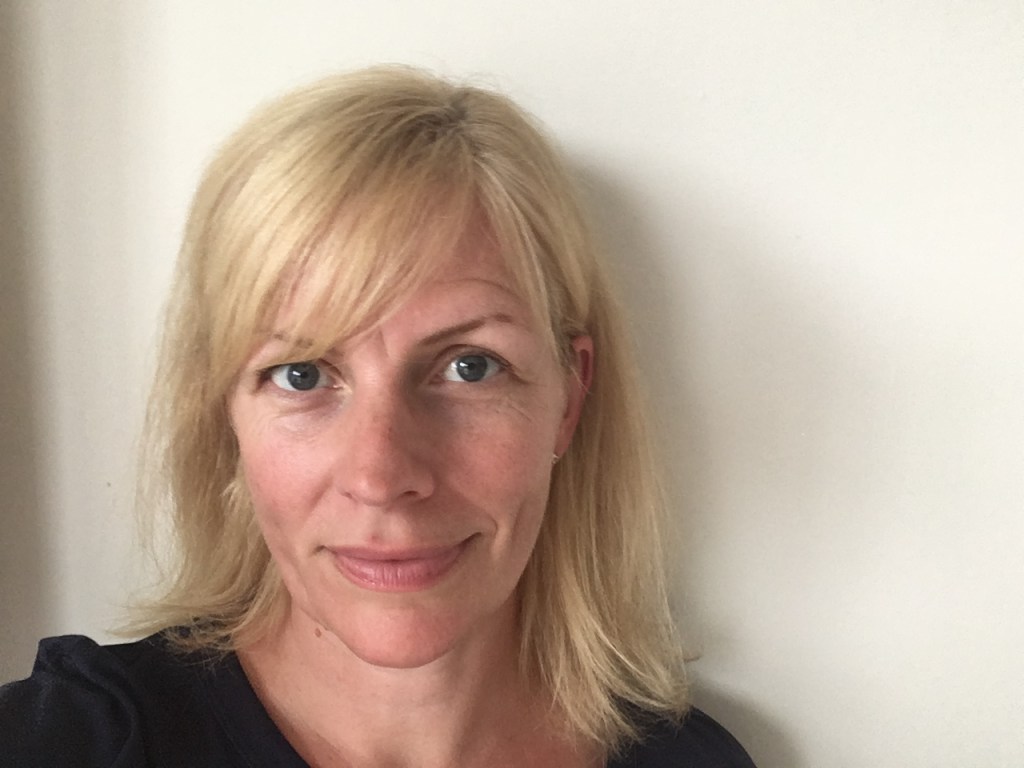
LE Hill has always loved reading and writing and her short stories and poetry have been published in various anthologies. She has been shortlisted in national writing competitions and been a writer in residence with Women’s Aid East and Midlothian. A former journalist, she spent much of her working life in Glasgow, Edinburgh and London. She has also worked in marketing and communications and has an MA in Creative Writing from Kingston University and a PhD from Stirling University.

She is particularly interested in creative writing for health and well-being and runs a small social enterprise in East Lothian, Sharing A Story CIC, using shared reading and creative writing sessions to reduce social isolation and build confidence.

Website: http://www.lornaehill.co.uk

http://www.sharingastory.co.uk

Twitter: @lornaehill

The Girl I Left Behind, available here: https://amazon.co.uk/dp/B08C

Thank you so much to LE Hill for writing this piece for my blog! I still have spaces to fill for this feature so please get in touch if you have a story, poem or non-fiction piece on the theme of dreaming of another world…

Guest Post; Dreaming of Another World

Welcome to a brand new feature on my blog; Dreaming of Another World. A regular slot handed over to fellow authors and bloggers. Following on from my post Dreaming of Another World, I wondered if other creatives felt the same as me, that another world is possible and could just be glimpsed during lockdown. I reached out to other authors, wondering what their reactions to lockdown were in terms of the future. Has it made them want something different? Has it made them change the way they are living, for instance? Do they have daydreams, like me, about a different way of life? Each week I hope to post a response to these musings from guest authors and bloggers. This could be stories, poems, essays or personal pieces. Our first piece is from author Grahame Peace. You can find out where to follow Grahame at the end of the blog post!

After months of planning, my partner and I, along with my youngest sister and her husband, had been looking forward to travelling to Nice in early April to celebrate my other sisters sixtieth birthday with her family. In May we also had plans to go to Paris with friends and realise a lifelong dream and visit Versailles. All that came to a sudden halt in late March 2020 due to the lockdown in the UK and across Europe due to Covid-19. Along with that, we had to cancel theatre trips, meeting up with friends and family, and our regular trips to the gym.

I’m sixty-two and suffer from asthma and allergies, putting me in one of the Covid-19 high-risk groups. Funnily enough, my partner and I had both been ill in late November 2019, we’d never experienced an illness like it, and as information came to light about the coronavirus, we are both convinced we had it. We had all the symptoms, although, without testing, we’ll never know. One good thing came out of that, once we were feeling better, we both rushed for flu vaccinations, and we’ll be going for another as soon as they become available in September.

None of us could predict what would happen next as the lockdown started here in the UK and across the world. I retired from my job in the National Health Service (NHS) in 2014, so I know first-hand the many daily challenges facing NHS and social care staff, how I feel for my hard-working, and often undervalued NHS and social care colleagues. It’s good to see them finally being valued and getting recognition for their work; one can only hope they get all the resources they need and are going to need in the future.

Since retiring writing has been my fulltime (F/T) occupation, and I treat it like a F/T job, working every day for several hours at my computer. The lockdown had no immediate impact on me from a work perspective. My partner was soon put of furlough but was used to working from home, so being at home every day wasn’t unusual. A positive outcome from that meant those jobs in the house and garden could now receive our full attention, not that there were many. During lockdown, my youngest sister and her husband have built two greenhouses and created a fantastic vegetable garden; they even discovered a hidden stream on their land.

Like many, I became obsessed with the news as well as trying to find out as much as I could about the virus. I was distracted and found it hard to concentrate on my writing. I still do, although I persevere. But how dire the news has been, with the daily death toll not just here in the UK but around the world. Along with awful predictions about what life could be like for years to come, and the worry for many as they lose their jobs. I still find it impossible to make any future plans, and I’m grateful to have my writing to keep me occupied; it’s also a much-needed distraction as I lose myself in imaginary worlds. I have a vivid imagination, which is both a good and a bad thing!

During the lockdown, we’ve hardly seen friends and family, but thank goodness for Zoom, what a fantastic piece of technology, it’s like something out of my favourite childhood TV programme ‘Thunderbirds’. We’ve tried to entertain ourselves with lots of reading, internet shopping, re-watching most of our extensive DVD collection and binge-watching various TV shows and series. Along with long daily walks in the countryside, even in the pouring rain, just to keep moving and get out of the house and into the fresh air. We also started shopping for our elderly neighbours. How I feel for people shielding who live on their own; they don’t see anyone for days on end as one day merges into the next.

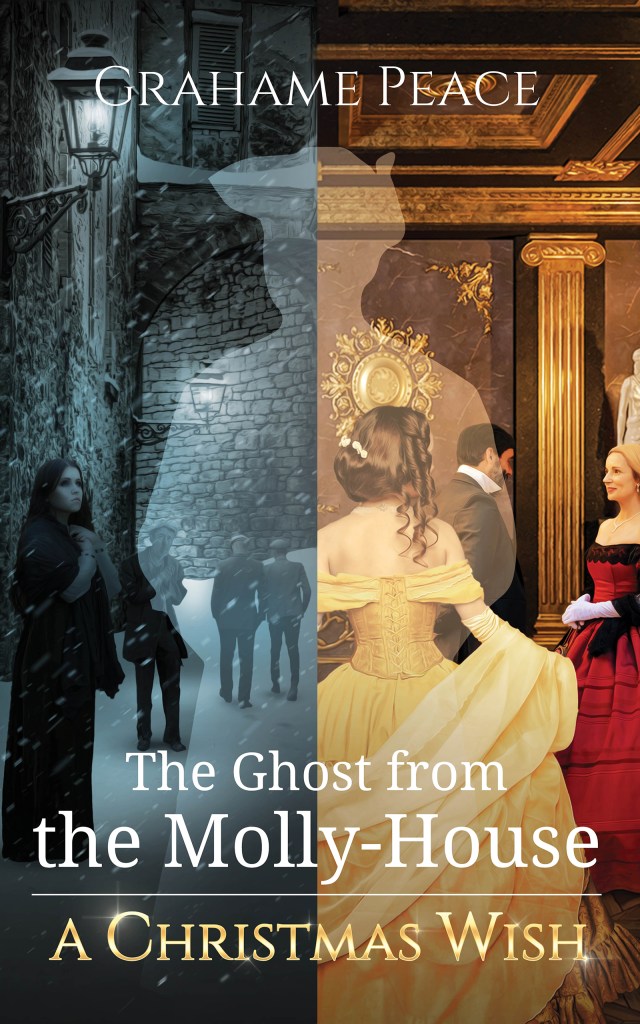
During the lockdown, I finished and published my tenth book, The Ghost from the Molly-House. A Christmas Wish, this is book seven in the series and set in 1850 in Victorian London. As with all my books, I did a lot of historical research into the period, it truly was a world of the haves and have nots. Doing all the research helped me to realise that even with a global pandemic, how lucky we are to live in 2020. Life was grim and incredibly cruel in Victorian times, but that’s history for you! I’m now busy researching and working on my next book, The Ghost from the Molly House. Lady Fenella and the Fleet Diamonds, which is set in 1937. I hope it will be out later in the year.

Life is slowly returning to some form of normality, my partner started work again on 20th July, and things are opening up again. Not that I have any desire to go anywhere or back to the gym until I see how things unfold in the coming weeks, particularly as we’re starting to see spikes of Covid-19 cases all around the world. I’ve even started cutting my own hair; and going to a supermarket feels anxiety-provoking with panic buying, social distancing, long queues, plastic screens, hand sanitiser, and now face masks; I dread it, but needs must.

For me, one of the good things about the lockdown has been nature, the wildlife in the garden, the bird song in the morning, and the considerable reduction in pollution and traffic on the roads. I’m sure that’s had a positive impact on my asthma; for a period, I even stopped using my inhalers. It also created a sense of community; our neighbours have all come together. We had an outdoor, socially distanced VE Day celebration, which turned out to be a lovely evening enjoyed by all.

One downside I’ve witnessed has been litter. As I’ve walked through the countryside and watched the news, I’ve been astounded by all the litter, and rubbish people leave everywhere. Things like drinks cans, beer and plastic bottles, garden and building waste, and, of course, fast food packaging, without a thought for the environment and the poor people who have to clear up after them, it’s staggering.

Seeing how some political leaders have behaved over Covid-19, has made me feel increasingly worried about the future. I base that opinion on their actions, political spin, and fake news. It’s not inspired confidence, just at a time when the world needs to come and work together. The pandemic has brought out the best and worst in human nature with incredible acts of kindness, but also unbelievable acts of selfishness.

They say, ‘every cloud has a silver lining’, I do hope this pandemic will prove to be a wakeup call to everyone in the fragile world we live in; we can’t live in isolation, we’re all part of a global economy and like it or not, what happens in one part of the world, has an impact everywhere else. The days of things like the British Empire are long gone. Lockdown hasn’t made me dream of a new world; it’s just highlighted the need for the world I’ve always dreamed about; a world of peace, harmony, tolerance, respect, kindness, love, consideration, and equality. But someone somewhere will always want the last fish in the sea.

Thank you so much to Grahame for writing this piece for my new feature. You can follow him via the links below! If you are interested in writing a piece for Dreaming of Another World then please get in touch. I am looking for stories, poems, essays and non-fiction on the theme of another world. Did lockdown inspire you to change your ways or even your life? Would you like to see a change in society after Covid 19? What are your hopes and fears for the future? Anything written in response to Covid 19 and/or the climate emergency will be considered! Many thanks.

Website: https://www.grahamepeaceauthor.com/ Amazon UK Page: https://www.amazon.co.uk/Grahame-Peace/e/B00JNA07HE/ref=dp_byline_cont_pop_ebooks_1 Facebook: https://www.facebook.com/gpeaceauthor Twitter: https://twitter.com/GrahamePeace

Indie Author of The Month; Jane Davis

Welcome to another Indie Author of The Month post! This time please welcome award-winning author Jane Davis to the blog. I have followed Jane for a while on social media and have read a number of her novels. I enjoyed each one tremendously. Jane has just released a brand new novel, At The Stroke of Nine O’clock, and is here today to tell us all about it, as well as her publishing journey so far, her writing process and advice to aspiring writers. Enjoy!

1.Tell us about your latest release. What is it about and who is it aimed at?

My latest release is called At the Stroke of Nine O’Clock. I haven’t perfected my elevator pitch on this yet. The short answer to the question ‘What is it about?’ is that it’s a timeless story of sex, class and murder.

My inspiration for the book was the discovery that the subjects of three biographies I read back to back each had a connection with Ruth Ellis, the last woman to be hanged in Great Britain. My fascination with Ruth Ellis stems from my teens, when I first saw the same photographs that were splashed across the front pages that spewed from the presses when production resumed in 1955 after a month-long newspaper strike. With a four-million-pound loss to recoup, the papers needed something sensational to fight back with, and Ruth’s story was newspaper gold. ‘Platinum blonde ex-model shoots racing-boy lover.’ By the end of the day, in every pub and Lyon’s Corner House, around every dinner table, on front doorsteps and over garden fences, talk was of one subject and one subject only.

The reason for my initial fascination with Ruth Ellis is almost as complicated as she herself was. It’s difficult to accuse those who paid £30 for a seat in the Old Bailey’s public gallery of treating personal tragedy as entertainment, without acknowledging something of the same motivation. At the same time there was something truly shocking about the fact that the last hanging in Great Britain took place as recently as 1965. This was the world I inherited.

For me, the tragedy of the Ruth Ellis story is that, because she admitted that she intended to kill David Blakely, the trial lawyers had little interest in why she did it, the very question that has had me gripped. To a writer, cause and effect is everything.

I didn’t want to put myself in Ruth’s head, so instead I explored some of the same issues she faced through my characters, three very different women, who all have a very personal reason to say, ‘There but for the grace of God go I’ when they learn of Ruth’s fate.

As for who it’s aimed at, one of my readers wrote, ‘Jane Davis straddles the contemporary and historical genres with grace and aplomb, while combining the very best of literary and women’s fiction.’ So my hope is that it will have fairly broad appeal.

2. Tell us about your publishing journey so far.

My publishing journey began before the advent of self-publishing, when the Done Thing for a writer was to secure the services of a literary agent. Which I did. But that agent was unable to place my first novel. (There was an offer and a contract but before I could sign the contract the publisher who had offered the terms was bought up by another publisher, so that was the end of that). There, my journey diverted. Unbeknown to my agent, I entered my second novel in a competition, the aim of which was to find the next Joanne Harris. And I won! Half Truths and White Lies was the result.

Unfortunately (as you may have guessed), I didn’t turn out to be the next Joanne Harris. Transworld published my book under their women’s fiction imprint. I didn’t challenge their decision because I was very green and had no idea of the implications of this. When I submitted my follow-up novel to them, they turned it down because it wasn’t women’s fiction.

There followed several years of trying to find homes for my next three novels. During this time people began to speak about self-publishing in hushed tones. I paid good money for the advice that no self-respecting author would even consider it. But by 2012, I was on the verge of giving up. Before I jacked it all in, I decided that I should see for myself. I booked a ticket for a self-publishing conference. The rest is history.

3. When did you first know you wanted to be a writer?

I didn’t put pen to paper until my mid-thirties. I was quite an artistic child, but I left school at the age of 16 without any idea what I wanted to do. (Being an artist didn’t seem like a very practical plan.) In those days what you did was to go to the Job Centre and say, ‘I’d like a job please,’ and they would look through their index cards to see what was available. I was sent to work in an insurance company. I enjoyed being treated like an adult and earning my own money, so I stayed put. When the time came to apply for another job, my experience was in insurance and so those were the jobs I applied for. I chased promotion after promotion but I was also busy doing all of things that you do as a young adult (buying a flat, DIY, doomed relationships). But I found that I craved a creative outlet. I had been mulling an idea around in my head for a while and, on a two bottles of wine evening, I said out loud that I was thinking of writing a book. After that, there really is no option but to do it.

4. What is your writing process? (How do you plot a book, come up with characters, find motivation etc?)

Do you know, a couple of weeks ago, I was interviewed by an eleven-year-old for a schools project and she asked me that very same question! I had to admit that I don’t have a process. Instead every book seems to require its own approach. Sometimes I start writing with only the germ of an idea. (When writing My Counterfeit Self, for example, I simply decided that I was going to write about the life of a poet, and the only reason I did that was because readers who reviewed my previous book said that my prose was poetic.) Generally, I work on the characters, put myself inside their heads and allow them to take over. Some projects seem to demand extensive research, but I tend to be aware when the research is just a form of a procrastination and it’s time to face the blank page. Several interviewers have put it to me that in XYZ novel, I was trying to get a certain message across. The truth is that, whatever my chosen subject matter, I use the process of writing to explore my feelings on the subject. That doesn’t mean that the views expressed in the book are necessarily my own. Perhaps I need: The view expressed on this novel are the views of the characters and not the author.

5. What has been the most positive thing about your publishing journey so far?

I’m extremely proud of the two awards I’ve won, which acknowledge not only the quality of writing, but self-publishing standards. (Writing Magazine’s Self-Publishing Book of the Year Award 2016 and the Selfies (best independently published work of fiction) Award 2019.) I think it’s so important that professionalism in self-published is honoured, and to recognise that self-publishing doesn’t mean DIY. A team of thirty-five people are behind my books, both professionals and unpaid beta readers who provide invaluable feedback about early drafts.

6. What has been the most negative thing about your publishing journey so far?

I must admit that it was probably having A Funeral for an Owl rejected by Transworld. But it’s a novel I’m incredibly fond of, and self-publishing enabled me to put it out there.

7. Who is your favourite character from your own books and why?

That’s like asking me to choose a favourite child! If forced, I’d have to say Lucy Forrester, my main character from My Counterfeit Self. She’s a cross between Edith Sitwell and Vivienne Westwood. I enjoyed watching her grow from childhood polio victim, from poet to political activist and, in later life, into a reluctant style icon. I was very proud when readers said that they’d Googled her and were surprised to learn that she wasn’t a real person.

8. Where do your ideas come from?

A variety of places. On two occasions now, I’ve been inspired by an episode of the arts series, Imagine. My 2018 novel Smash all the Windows came from a place of outrage. (It was my reaction to a news report.) But I also have a love of photography, and I’m regularly inspired by photographs.

9. What can we expect from you next?

I have an idea for a novel, but the other project that I’ve had on the go for the past eighteen months is the diary I kept about caring for my father who had dementia. (He passed away in April.) I am not quite sure what I should do with it yet, except that I would like to do something.

One in fifteen adults over the age of 65 suffers from some form of dementia. That’s 793,333 people. By the time you reach the age of 80, the odds increase to one in six (approximately 533,333 people). And yet talking about dementia seems to be taboo.

I have so many incredible anecdotes that might provide reassurance to those whose relatives have a diagnosis, but another approach would be to produce a more serious work of non-fiction about how little help is available for the army of unpaid carers who are looking after family members. My 81-year-old mother was my father’s full-time carer (and believe me, it was a 24-four-hour-a-day job), and was not always in good health herself. In October 2018 she was hospitalised with a very serious infection that came about because she had neglected her own healthcare needs. She should have been entitled to a carer herself for six weeks. This was never forthcoming. Instead, she was straight back into the role of caring for my father.

Here is a short extract:

14th October 2018, middle of the night. I am staying at the house because Mum has just come out of hospital. Dad up and dressed.

12.30am

Dad cutting out newspaper clippings, looks very tired.

Jane: Hello, Dad. I could have sworn I put you to bed two hours ago.

Dad: Where did you come from?

Jane: I was asleep in the bedroom at the back.

Dad: Yes, but who are you?

Jane: I’m Jane. Your daughter.

Dad: Jane? (Incredulous)

Jane: Come on, let me show you. (I take Dad to the hall and point to my photograph.)

Dad: That’s you?

Jane: That’s me. 26 years ago.

Dad: Are you sure? (Looks closely at me.) But your hair is all funny. (Tries to flatten it down.)

Jane: I expect I need to brush it.

Dad: He’s one of mine (points to Bernard). Birmingham.

Jane: To be fair, I think we’re all yours. Bernard, Anne…

Dad: Oh, Anne is very good.

Jane: Jane, Louise…

Dad: Yes, Louise. She came.

Jane: …and Daniel.

Dad: Scotland.

Jane: That’s right. Daniel in Edinburgh.

Dad: (Happy now) Shall we have a nice cup of coffee and some of the little round things? (He means biscuits.)

Jane: I think we should both go to bed. It’s the middle of the night.

Dad: I know. It’s ridiculous!

Jane: It’s very dark outside.

Dad: Because of the rain. (For the last two days, I have been telling Dad it is dark in the daytime because it has been raining. Now I regret it.)

Jane: How about it? Shall we go upstairs to bed?

Dad: Shhhh. If you have some blankets, you can still be very cosy. Come on, let me show you. (Shows me his recliner in the sitting room.) You sleep here.

Jane: How about you sit down, Dad, and I’ll do the blankets for you?

Dad: But when is the coffee?

Jane: You sit down and I’ll tuck you in and make you a nice coffee.

Dad: Oh, (nonchalant), I suppose so.

Dad is fast asleep by the time I bring his coffee.

2.30 a.m. Dad is ‘restoring’ one of his father’s self-portraits with Blu-tack.

Jane: Hello, I see you’re up again.

Dad: We have to put it in the holes. One, two three, four, five, six, seven. And we press it in and then we leave it for a few days.

Jane: Perhaps we could do that in the morning. It’s the middle the night.

Dad: Yes! (Very happy)

Jane: I really think you should try and have some sleep, otherwise you’ll be very tired tomorrow.

Dad: (Holds my head and gives me a Latin blessing). You worry too much.

Jane: I probably do.

Dad: Where is the person who makes the porridge?

Jane: Mum? I hope she’s fast asleep.

Mum: (Standing on staircase.) No, she isn’t!

Now we are all up in the kitchen and it is the middle of the night. I decide that one of us really has to go to bed so that Dad does not think we should all be up. Mum insists it is me.

Next day, Dad up bright and breezy at 6.00am. Meanwhile Mum and I are exhausted.

10. Tell us three fun facts about you

I was kicked out of the brownies for refusing to play the game of ladders on health and safety grounds. (I was right. Someone broke their ankle the following week.) I got my revenge by becoming a Cub Scout leader.

I once played James Galway’s golden flute.

My mother plays recorder on the Finger of Fudge advert. (My apologies to persons of a certain age for the earworm.) https://www.youtube.com/watch?v=nC9BBLSZZdQ

11. What is the best advice you could give to aspiring writers?

I learned so much from the process of writing my first novel, my advice is just do it!

A huge thanks to Jane for coming on the blog to talk about her new release. If you are keen to find out more, you can find her bio below followed by her book and social media links!

Hailed by The Bookseller as ‘One to Watch’, Jane Davis is the author of nine thought-provoking novels.

Jane spent her twenties and the first part of her thirties chasing promotions at work, but when she achieved what she’d set out to do, she discovered that it wasn’t what she wanted after all. It was then that she turned to writing.Her debut, Half-truths & White Lies, won the Daily Mail First Novel Award 2008. Of her subsequent three novels, Compulsion Reads wrote, ‘Davis is a phenomenal writer, whose ability to create well-rounded characters that are easy to relate to feels effortless’. Her 2015 novel, An Unknown Woman, was Writing Magazine’s Self-published Book of the Year 2016 and has been shortlisted for two further awards. Smash all the Windows was the inaugural winner of the Selfies (best independently-published work of fiction) award 2019.

Jane lives in Carshalton, Surrey with her Formula 1 obsessed, star-gazing, beer-brewing partner, surrounded by growing piles of paperbacks, CDs and general chaos. When she isn’t writing, you may spot her disappearing up a mountain with a camera in hand. Her favourite description of fiction is ‘made-up truth’.

Links and Social Media;

Books2Read Universal Link: https://books2read.com/u/brWppZ Amazon Link https://www.amazon.co.uk/dp/B08B1PCTC1 Smashwords link https://www.smashwords.com/books/view/1027278 Kobo https://www.kobo.com/us/en/ebook/at-the-stroke-of-nine-o-clock Apple https://books.apple.com/gb/book/at-the-stroke-of-nine-oclock/id1518038645 Goodreads link https://www.goodreads.com/book/show/53955188-at-the-stroke-of-nine-o-clockMy social media links are: Website: https://jane-davis.co.uk Facebook page: https://www.facebook.com/JaneDavisAuthorPage Twitter: https://twitter.com/janedavisauthor Pinterest: http://pinterest.com/janeeleanordavi/boards/