Final Draft Struggles

Last week I blogged about the difficulties I had experienced writing my YA novel The Tree Of Rebels. I was just about to dive into what I hoped would be the final edit of the book, and I was looking back on the struggles I’d had so far. There was more than one issue, but in last week’s post I was examining the difficulties of getting to know your characters. I was trying to figure out what had been bothering me about this particular novel, which had not bothered me so much in my others. At least I now felt like I knew my main character Lissie Turner better, properly, finally. So I could begin…

I’m a few days in now, and I have to report that the struggles remain. Not necessarily with the character, but with something just not being right. I have tried to think back to the final drafts of my other books. Did I feel the same about them? Is this all completely normal? It begs the question, how do you even know if it is the final draft? I guess I feel I have already done so many drafts and sent the book out to beta readers, amended it, let it sit and stew, and now know, or at least think I know, how to finally make it work. So it feels like the final draft…or is it more like the last chance?

Because over the last few days I have been plagued by the feeling that something is just not right. I thought it was the characters, and not knowing them as well as I wanted to, but now I think it is more than that. The most frustrating thing is not being able to quite put my finger on whatever it is! And how do I know if this is the book telling me something is wrong, something does not work here, or if it is simply, normal writers self doubt? Because lets face it, writers are swimming in self doubt the majority of the time! You kind of get used to it. You learn to shut it up, push it aside and keep going.

My question is; how do you know whether you are meant to keep going? How do you know whether the doubts you are feeling are justified? I mean, that it really is a massive turd of a book that no one in the world will ever want to read?

I think my issue with this book is how different it has always felt to the other books, and there are several reasons for this. So it might do me some good to clarify them right here.

1) Firstly it’s set in a dystopian future, and I have never set a book in the future before. I have used the past and the present, but never a future made up by yours truly. I guess this means I am winging it a lot more than I would be ordinarily. I have had to make up an entire world, a civilisation, a back story as to what has led to this, and so on. In theory, this was not a problem, because for the first time ever, I got the idea for the plot before I heard the characters talk to me. Which leads me neatly to my second issue.

2) I got the idea for the plot first. And that never happens to me. Ever. Like I have said before, it’s the people that fill my head. They come with stories, so it is easy for me. I just do what they say. I just offload for them. But this time, I got an idea. What if in the future Nature is banned? What if everything you need to survive is kept under massive domes and delivered to you when you need it? What if, after endless wars, a tiny amount of humans inhabit the earth, and because there is no more war, and no more fear, they are very, very grateful for the lives they have…What if a young girl who was born into this world one day finds an apple tree outside of the domes? Anyway, without giving too much away, the idea stuck and grew and grew and eventually I had to start writing it. But I didn’t really want to. I will explain why in point 3.

3)I wanted to write a book that would impress my daughters. This has never happened to me before either, because I have always written for me, myself and I. That was how it all began. I wrote the stories I wanted to read. I created the characters I wished were real. This was different, and very new, and scary. I have two daughters. One is an avid reader, who devours YA and dystopia at an impossible rate. The other is a reluctant reader unless it is Diary of a Wimpy Kid. I wanted to lure them in, force them to turn the pages and show them what I could do. I now think this was a big, big mistake! They like the book, what they have read of it anyway, but I don’t think they love it. And I think knowing I was writing for an audience has haunted me all the way through. I’ve felt like someone has been watching over my shoulder. This is the first time I have decided upon the audience before writing the book…and I am not sure it works for me.

4) There was another reason I didn’t want to write the book. Well, a few. It was outside of my comfort zone, I knew I would have to research a lot of stuff, which I am happy to admit is not my strong point or my favourite part of writing, and I already had another book chomping at the bit, wanting to jump the queue. That book was Elliot Pie, which, if you follow this blog, you will know I finished the first draft of just a few weeks ago. I had only just started The Tree Of Rebels when Elliot tried to jump the queue. Now, as tempting as it is, I don’t let them do this. They all have to wait their turn, although they do get note books and they do get little bits written down and they do get thought about constantly! So, Elliot. Once I had him, I wanted to write his story. And I think that made things harder with this book.

5)Well, point 5 kind of sums up all the above. This book was a challenge. This book happened in a very different way to all of my others. This book scared me. This book confused me. I felt impatient with it, reluctant to do it, and constantly had this niggling little voice telling me that it was not right. It’s a fantasy, right? Almost a sci-fi, and that’s not my genre, that’s not my niche. My thing is realism, down to earth, gritty, edgy, a bit dark, that kind of thing.

Now that I know all of this and can admit it here to you, the question remains, what do I do about it? Keep going with the final draft and see what happens? Hope the self-doubts will pass, and some genuine love and appreciation will return for this novel? It has happened before. As with all my books, when I am writing them I tend to think they are rubbish, and it is only when I am re-reading bits that I smile and think hey, this isn’t too bad! This is better than I thought it was! And that has definitely happened enough with this book…even in the last few days!

Luckily for me I was talking to my 13 year old avid reader about it this morning and she made several wonderful points. She reminded me that the beginning of the book cannot be as dark and edgy as I intend to make it this time around, as in the beginning Lissie does not know anything is wrong with her world. Sure, things are suggested to the reader, but on the surface, for the reader and for Lissie, this really is a perfect, easy to live in society. Things do start to get darker very quickly, as things start to unravel and there is a fast pace, as this is by far my shortest book. I had forgotten this, and she was right. She also reminded me that my other books are concerned with ‘real-life’ problems ie eating disorders, bullies, evil step-fathers and missing mothers. The Tree Of Rebels does have some family drama, of course it does. In fact you could also describe it as coming of age as Lissie makes her journey, but it does not contain the same gritty subjects I usually handle. Again, she was right. It’s just different.

I’ve made a few decisions and I will blog again when I have them clearer in my head. Hopefully by the time I post again I will be feeling better about this book. I will have listened to the doubts, dealt with them and recognised that there is nothing wrong with The Tree Of rebels…it’s just different. At least for me!


Getting To Know Your Characters

For me, writing is all about the characters. It is the characters who come to me first, with their lives and their problems. I let them set up camp in my head for a bit, try to ignore them while I am busy with other things, and then, inevitably I can’t drown them out and they get the attention they demand. They get to tell their story. By the time I start jotting down notes about them and their story, I already feel like I know them quite well. In fact I usually feel quite smug about it. I do like character led fiction, you see, and it would not be unfair to assert that The Catcher In The Rye is probably my favourite book of all time.

I’ve read it tons of times, and never get bored, yet my husband couldn’t even manage it once. Boring, he said. Nothing really happens, except he moans and worries a lot. He does concede that there is a plot of sorts, one where the character goes on a bit of a jaunt, escapes his reality for a while and goes a little bit crazy in the process, but it was not enough of a plot to hold his interest.

For me, it was a case of falling in love. Feeling like I knew Holden, because Holden was so like me, and if he was real and we met in real life, we would really get along, and he would stop thinking everyone was phony. Anyway…off on a tangent there slightly, but I was trying to explain how important character is to me in fiction. I love it. Can’t get enough of it. Action, drama, suspense and thrills are all great, don’t get me wrong, but they all fall flat without great characters. Give me a few good characters doing not much, over a page turner with unlikable and unbelieveable ones, any day.

Developing characters, making them speak and act and think, is one of the best things about writing. It’s probably my favourite part of the whole thing. Yes I appreciate descriptive prose and beautiful narratives, and yes I have respect for a page-turning plot, and action that peaks and troughs at all the right times, but the characters are everything to me. Stories come from people, without people, there would be no stories.

With me, it is the people, and the stories that come first, and everything else evolves from there. But even so, I have had to admit to myself lately that I don’t know them as well as I think I do when I get started.

I often stumble along in the first draft, making notes, hitting walls, having great writing days followed by abysmal ones, and sometimes it is really hard to pinpoint what it is I’m struggling with. This happened a lot when I was writing the very first draft of what will be my next release, The Tree Of Rebels. You see, for the first time, I had the plot idea first. Weird. Luckily for me I already had a character in my head, and a name, and she had been lingering for a while, maybe wondering where she could slot in. So I used her and got started. I had most of it planned out, but obviously there were surprises along the way as well. My main aim was impressing my daughters and writing something dystopian in nature that would hold their attention and keep them gripped.

Maybe I focused too much on this. Maybe the waiting character I slotted in was not loud enough in my head. Whatever it was, I struggled. Then I realised something. I looked back on all of my novels, even the ones where the voice of the character had come to me before any kind of plot took place, and I realised that this was normal. Of course I didn’t know Lissie Turner that well yet. That was what I was struggling with. I’d gone into it assuming I knew her, assuming I understood her, and oh how wrong I was.

The first draft, no matter how intricately you have planned and described your precious characters, no matter how many lengthy bio’s you have scripted, no matter how many images of them you have found and pinned on Pinterest; the first draft is all about getting to know them. It’s like meeting a stranger for the first time and going on a little, somewhat awkward journey with them. Do they take sugar in tea? You don’t know, so you ask. Which way to they tend to lean politically? You’d like to know, but you’re scared to ask. Do they swear? Do they have a loud, or annoying laugh? How are they going to react when you start throwing hurdles and dilemmas at them?  You think you know, but you don’t.

Realising this really helped me to relax with that awkward first draft. I decided to just get it written, because I had the plot all in place, and that was the main thing to get done. All the themes and ideas and images and so on would work themselves out, would pop up and blend in, and tie up as they often tend to do naturally. And the same would happen with Lissie, and the other characters. By the end of the first draft, I knew them better. We had formed a friendship and would definitely be travelling together again soon. But things were still a tad tense, a tad clumsy.

I jumped into the second draft and saw it for what it was. It was going deeper, getting under the skin, revealing the flaws and the fears and the motives. I had to accept that Lissie was really a stranger to me, and then allow the following drafts to entice her to become known. I had to have faith that this process would happen, and that I would feel I knew her better with every draft I completed. Looking back, this is also what happened with my other books, although admittedly it was definitely easier because the characters started shouting at me before I thought up stories for them… but more and more of them became revealed to me with each draft, edit and rewrite. Now I could easily tell you exactly how any of those characters would react in any situation. I could tell you what they would do, say, think, what their facial expressions would be and so on. To me, they are real people. That is what needs to happen before characters can make the reader believe in them too.

I am just about to dive into the final draft of The Tree Of Rebels, and I cannot tell you how excited I am. It has been a challenge, this book, for many reasons, not least the issue I just explained. I have decided to make some major changes, so the final draft may actually become more of a rewrite, than a last edit.

I am wary of the process and scared I will fail. But one thing I do feel better about. One thing I do feel confident about now. I know Lissie Turner. Finally, truly, I know her inside and out, and that is going to help make this thing work more than anything else!


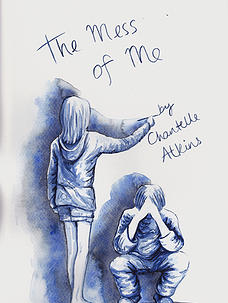
When I’m Thinner…(The Mess Of Me)

The Mess Of Me was never meant to happen. It was never a plan, or a decision that I made. I was busy rewriting my novel The Boy With The Thorn In His Side; a book and a plot which had been with me for over twenty years. It was finally, blessedly getting its time. It was happening. I was writing again. I didn’t know who it would be aimed at, and I certainly did not see myself as a Young Adult writer. No, Lou Carling was not wanted, or invited, or planned. She just showed up one day, and the funny thing was, she had lots of things to say, which were sort of similar to things I wanted to say.

I know that if I look up and see his face, then I won’t be able to say any of the things I am thinking. Is that the way it is for everyone? Or are there some lucky people who are able to voice their exact thoughts and feelings in such a way, that everyone understands them instantly?’

She was hard to ignore, but I tried for a while, because I so needed to get The Boy With The Thorn In His Side done. It had been bugging me for years.  Like a lot of the characters that end up in my books, sixteen year old Lou wouldn’t go away, or shut up. She was a persistent voice in my head during dog walks and time alone. I started listening to her more and more, and God, she made me smile.

I could be so much more, but I can’t seem to be bothered. I want to do nothing. Be nothing. Have nothing to say….I am stuck I suppose. I am jammed. I am unable to move on. I am oddly incapable of development. But I am very good at shrinking.’ 

And so I gave in. The Mess Of Me was written very quickly, during a three month period of rest from The Boy. The Boy was with one of my beta readers, and so I had a window…

Lou didn’t even give me a plot to start with. She was extremely fond of swearing, and she had a cynical, narrow-eyed way of looking at the world she lived in. Her world was small, and reminded me of the one I grew up in. Council estate, identical houses, playparks and graffiti.

I think, look at this here, this is my entire life! This is it, right here. This park, and this field, and school, and the walk over the bridge to get there, and the town, and the bus ride in, and the Priory church and a terraced house, and noisy neighbours, and the parade of shops, and everyone knowing who you are, and where you live, and the working men’s club, and the car parks and the alley ways, and the Provident loan lady and the Avon calling, and the Christmas hampers that take all year to pay for.’

The more she talked and moaned and bitched, the more of her life I could see unfolding behind her. I could see her so clearly, and knew her so well by the time I started writing the book for her. And it was for her. It was to shut her up and get her out of my head, but it was more than that. I wanted to build a plot and a world and story around her character, and the way she masked self-loathing with scorn and contempt for just about everyone and everything.

The truth is, she reminded me a lot of me at that age. How I was convinced that everything would be better when I was thinner. I would be happier, more popular, things would go right, I would know who I was and what I was doing. All of that, and more. In short, life was on hold until I got thinner, and when I did get thinner, everything would be perfect and I would know what satisfaction felt like. I would know what it felt like to look in the mirror and smile and be proud. I truly and naively believed that being thinner would solve all of my problems.

I was all grown up with kids of my own when Lou started talking to me about her problems, but right away, she brought back so many memories I had forgotten. Like her, I can remember having a ‘never again’ moment with a doughnut.

I can still remember the day I snapped. I can still remember the jam doughnut that I crushed inside my fist, instead of inside my mouth. I guess it made me feel stronger somehow, more in control, more savage. Less of a fat loser.’ 

I was house sitting for my mum’s friend, and she had MTV, which was excellent, because we didn’t. This was back in the day when MTV was just the one channel that played music videos every day. I saw the video for the Aerosmith song ‘Cryin’, the one with Alicia Silverstone in it. I remember thinking how pretty and blonde and thin and perfect she was. I sat there on the sofa, eating doughnuts, and feeling the reality of my own squidgy flesh trapping me in a body I loathed and wanted rid of. I knew it was not going to happen by thinking about it, or moaning about it, or crying about it. I had to actually do something about it. And if I did something about it, one day I could be like the girl in the video. And everything would be better when I was as thin as her…

Lou was funny and sad. She was bitter and cynical and snarling in my head, and she sounded so much like me, and she thought a lot like me too, but she was braver. She was bolder, smarter and funnier than me. When I was her age I kept my mouth shut and my feelings to myself. Lou was less likely to do this, and it was such sweet relief to let her take over for a while, to let her loose. Like me, she also allowed the words she could not say or contain inside her head, to spill out across the walls of her teenage bedroom.

Life is fucked up in broken wellies…’

As she loses more weight, Lou discovers a power she never knew she owned. It starts innocently enough, with a calorie controlled diet, and a new found enthusiasm for jogging. But as the weight begins to fall off, Lou finds it then becomes harder and harder to eat. In fact, just thinking about food grips her with fear. She starts to avoid it. She skips meals and she lies. And as she gets thinner and thinner, she experiences an increase in attention from friends, family and boys.

Her best friend Joe and his older brother Travis start to show an interest in her. They even fight over her at a drunken party. Her best friend/enemy Marianne, encourages her to lose more weight and stick to her diet.

Over the course of the summer between school and college, life unravels fast for Lou, Joe and Marianne. The drama centres around Joe’s decision to help deliver drugs for his older brothers. Leon and Travis are paying him attention for the first time in his life, which makes him risk everything in order to help them. Lou is pulled into the drama and the madness, and all the time, quietly in the background, she continues to lose weight. At one point, she catches sight of her face in the mirror and for a brief moment does not recognise herself at all.

But then I realise that it is me, it is my face I am staring back at, and how very peculiar not to recognise myself? I do not know whether to feel glad or sad, and I suppose that I feel plenty of both.’

The book starts with her lying in bed and running her hands over the bumps of her hip-bones and ribs. She wonders if she will be happy when she is as thin as she wants to be. I can remember doing the same thing at the end of the day, when the hunger was at its angriest. I would feel the lumps and bumps of bones rather than fat, and I would feel calmed and affirmed.

Like Lou, I had been a chubby youngster. I surprised myself as much as anyone else the day I said ‘no’ to pudding. But once the word ‘no’ came out of my mouth, I realised that I could say it and mean it. It became easier and easier to say. No. Would you like a second helping? No thank you. Would you like ice cream? No thanks.

The ‘no’ was my friend, and on my side. Unlike everyone else, it wanted to help me reach my goals. The trouble was, the ‘no’ voice gets louder and more insistent. The ‘no’ starts to speak up more and more and more. So that you go to prepare a healthy breakfast, and the voice says ‘no, you don’t need that’. Or you tuck into your dinner, a smaller portion than normal, of course, and straight away, the voice pipes up; no, don’t do it. No. You can’t have that. It gets harder and harder to ignore that voice.

For fans of the book, I can confirm that a sequel has been started, but is on hold while I complete other projects. I do however, know exactly what happens and the entire book is plotted out. Titled The Mess Of Us, the book is set two years on from the first book. Are Lou and Joe together, or are they still just friends? How has Joe’s personality been effected by the ordeal he suffered towards the end of the first book? Does Lou still worry about her weight?

I stand sideways and run one hand over the bumps of my ribs, and for some reason this just makes me collapse in tears, because when I look at her, when I look back, I can still see fat where it shouldn’t be.’

It would be unrealistic to suggest that Lou’s eating problems have magically vanished. Readers of the book will know that she does manage to get herself together towards the end of the book, partly due to the intervention of her mother, and partly due to what happens to Joe making her realise other things are more important.’

Like Lou, I grew up and got to grips with things. Like Lou, I never totally succumbed to my inner demons; instead I fought them off and pushed the ‘no’ voice away. Not all people who experience eating disorders are able to do this. I was lucky enough to receive help which enabled me make sense of so many things, and made me realise what I wanted out of life. Funnily enough, even at that young age, the thing I wanted most of all was to be a mother, and I knew that my ridiculous eating habits were damaging my chances to be one. I had something to work for, something to hold onto. Motherhood is explored in The Mess Of Me, and in the sequel too, but in different ways and for different reasons…

I’ve always said having kids saved me. I became in awe of my body. I was proud of it. I didn’t hate it anymore, and even more importantly than that, once I had daughters I felt a responsibility not to pass my body issues on to them. In our house, we try to focus on health and happiness, not looks. But it is hard, in this society, which still values the thinness of women so much. You only have to look at the way the media portrays women; focusing on whether they have lost or gained weight, what dress they are wearing, what haircut they have, rather than on the job for which they are famous.

I’ve had four children, and my body is not what it was. Time and child bearing have taken their toll, and rightly so. I am not hung up on it anymore, but I would be lying if the ‘no’ voice had completely gone away. Just as it would be unrealistic to expect Lou to have completely recovered between the two books, it’s unrealistic to expect anyone who has experienced eating disorders to be over them forever. Like other forms of addiction and compulsive behaviour, these things become part of you, and to a certain extent, they are always there. There are days that go badly, days when you feel down, days when you look in the mirror and that gloating little voice pops up to whisper in your ear; ‘things would be so much better if you were thinner…’

The Mess Of Me happened because Lou Carling invaded my head space and bitched about everything that annoyed her. Parents. Friends. School. Having to grow up. Everything. Funnily enough, the book jumped the queue and ended up being published before The Boy… It was ready to go, and became my debut novel in 2013. At the time I still wasn’t sure who was meant to read it, or who it was aimed at. These days, I am extremely proud to call it a Young Adult coming-of-age novel, and although I do write books aimed at adults as well, they always seem to have young people in them too. Weird.

The Mess of Me by Chantelle Atkins