Dirty Little Feet: What Followed Us Back From The Holloway (a short story)

This short story was recently posted on Medium where it sadly didn’t get a lot of reads. I thought it was a better story than a similar one I posted called Into The Green. That one got boosted and has earned me nearly £30, but I prefer this one. See what you think!

Dirty Little Feet

It was cool and dark in the Holloway – our impatient bare feet slipped effortlessly into the tracks laid down by our ancestors. Their faces were etched into the earth and the clay – their long-dead eyes followed our movements from the walls as we darted along the ancient track.

Our feet thundered upon theirs, our laughter mingled with echoes of their own as we sprang down the tunnel, splashing through cool streams, our toes curling into claggy mud. The walls of the Holloway sheltered us as we ran. This space was our fortress, our underground lair, our tunnel system, our playground. It was our link to the past.

Above us the trees linked hands; their vibrant green canopy a roof above our heads, bursts of late evening sunlight fragmented by trembling leaves. All around us, the stillness of time. We laughed and played as if time did not exist for us and down there, it didn’t. We wouldn’t grow old, we wouldn’t age or decay or die. Much like everything else that lived in the Holloway, we were eternal.

Photo is mine

But as dusk fell, we knew we were breaking a rule passed down by our parents and grandparents: don’t linger in the Holloway after sundown or you risk inviting one of the old back home with you.

To us, rules were made to be broken and returning home after sundown offered a delicious risk we could not resist. That evening, my siblings — twins, George and Arthur, Grace, the oldest and I, the youngest — stayed longer than we should.

Still, it was not quite dark by the time the old warnings infiltrated our consciences and prickled the hairs on the back of our necks. We scuttled out, hand in hand, giggling as our muddy feet raced back up the centuries old track, reaching for gnarled roots and boughs to lead us home and leaving the faces of our ancestors on the walls behind us.
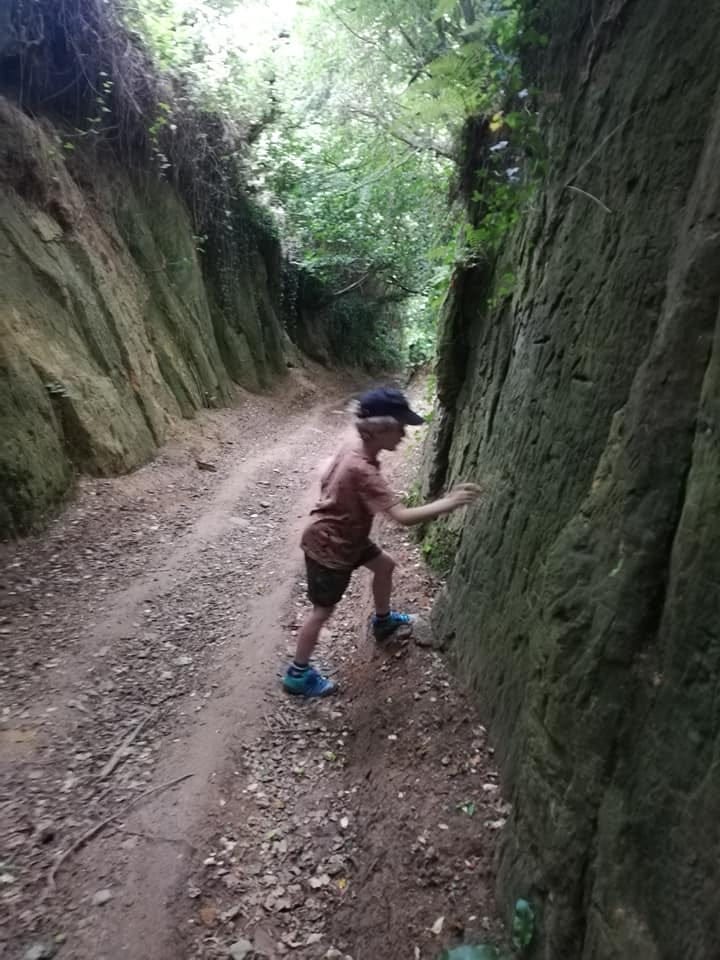
Photo is mine

We tore across the sheep field — their eyes glittering back at us in the semi-darkness, and we returned home, leaving tell-tale muddy footprints across the kitchen tiles.

Grace washed away the evidence of our childish rebellion and come morning, we all thought our indiscretion had gone unnoticed by Mother.

Not so.

She was raging as she swept her old mop across the tiles where small brown footprints could be seen trailing in from the back door and stopping in the middle of the kitchen. We denied they were ours (ours had been a criss-cross pattern made by four sets of feet…) but it did no good. We were banned from the Holloway and given arduous chores to complete to make it up to her.

Later that day we heard her scream in rage once again; the noise drawing us out of our sulking to witness yet another trail of muddied prints on her floor. Who had defied her? It was my George who pointed out that the prints were far smaller than ours. He made me, the youngest, stand next to them to prove his point. My feet were small but not that small.

Mother’s face paled.

We watched as she sank into the nearest chair and stared dully at nothing. Then;

‘You stupid, stupid children. Why didn’t you listen to us? Why can’t you ever just listen?’

We swapped guilty glances, then released a collective gasp when a childish giggle echoed gleefully around us. We all froze. I reached for Grace and gripped her hand in mine. Tears shone in our mother’s eyes.

We all heard the sudden drumming — at first like a steady heartbeat, then louder, boom, boom, boom, until it faded out into something that was closer to a soft pattering.

Footsteps.

‘You’ll never get rid of it. We’ll have to move!’ Our mother wept again, dropping her head into her hands.

We were silent as we watched her get up and solemnly slosh the mop over the footprints. Still, we didn’t fully realise what we had done, even then. The dirty little footprints came back again and again. As fast as Mother washed them away, they would reappear. Sometimes they came in from the door and just stopped. Sometimes they made circles, as if the culprit was spinning around and around. Sometimes they ran up the walls and across the kitchen surfaces.

Next came the smell.

It started in the kitchen — a musty, earthy, swampy sort of smell. Mother was in despair. She claimed the house would never be clean again. She punished us with more chores and often we would hear her on the phone begging to be rehoused. We would fall into bed exhausted every night.

And that’s when the drumming would begin.

Footsteps at first, light and gleeful, teasing, dancing. Then they would build up. Harder, faster, angrier. Tearing up and down the stairs while we huddled in our beds, our breath frozen in our chests. Our eyes met in the darkness. We had done this. This was all our fault.

The dirty little feet stomped and thumped. Up and down the stairs, across the landing, into our rooms and around our beds while we quivered under the covers, clutching hands. Cold laughter echoed through the house as it kept us awake night after night.

Then one night, I woke up, muddled and sweating from a dream where the thing that followed us from the Holloway was smiling at me from the shadows. It had black holes for eyes and a wide sneering mouth and its skin was as white as bone.

I heard something new.

A frantic pounding. The panicked drumming of tiny angry heels. I ran to my window and there it was — I saw it for the first time. I saw its feet. Small, dirty, they beat as if in a great tantrum against my window pane from the outside. Had it somehow found itself shut out again? There was a great sadness emanating from it, a lonely desperation in its incessant thudding.

‘What do you want?’ I asked it, but the feet continued to kick. I pressed my hands to the glass. I wanted to see it properly. I wanted to see what had followed us home. I wanted to know why. It refused to show its face. Only two dirty little feet were visible and when I finally flung open the window, they were gone too.

In the morning, my mother looked disheveled as she started packing up our things. We had led a simple life there in the little stone cottage and it only took a few hours to pack up our lives and move out. Us children were bereft to be leaving the place we loved.

We trooped down to the Holloway to say our goodbyes but we did not go in. Instead, we held hands at the entrance, our heads lowered in sorrow. We stared at the ancient path, created by the constant tread of endless feet and rolling cartwheels, pushed into the earth deeper and deeper over centuries of old. Our own feet had pressed into it. Our own blood had flowed into the earth and the mud. Our laughter had echoed down the track and up into the giant trees and now we had to say goodbye.

The new home was nice. Small and neat, on the outskirts of the nearest town. Our walk to school was quicker, at least. We were happy there for a year until one morning we awoke to the sound of our mother screaming.

The screams were followed by wails, which soon dissolved into hopeless sobs.

When we ran down to comfort her, we all stopped just outside the kitchen, too afraid to step in.

The kitchen floor was covered in the gleeful dancing footprints of two dirty little feet.

Thank you for reading! I’ve wanted to write a story set in a Holloway since I visited the fascinating Hell Lane in Symondsbury, Dorset, UK. West Dorset is predominantly sandstone so has several Holloways. The name comes from the anglo-saxon word ‘sunken road’ and they are believed to be at least 300 years old with some traced back to the iron age. At one point they would have been trails to drive cattle along, popular highways if you like, to move people, goods and livestock from one place to another. They would have been ground level tracks back then but eventually centuries of human and animal feet and the wheels of carts would have eroded the soft earth and widened it, with help from the water running off the surrounding land. These days many Holloways are 20 or 30 feet deep. They are mysterious and magical places, eerily silent and still and you can’t help feel a real connection to the past as you follow the ancient paths so many centuries of feet have trodden.
The Day The Earth Turned Series Is Complete!

This feels so good!

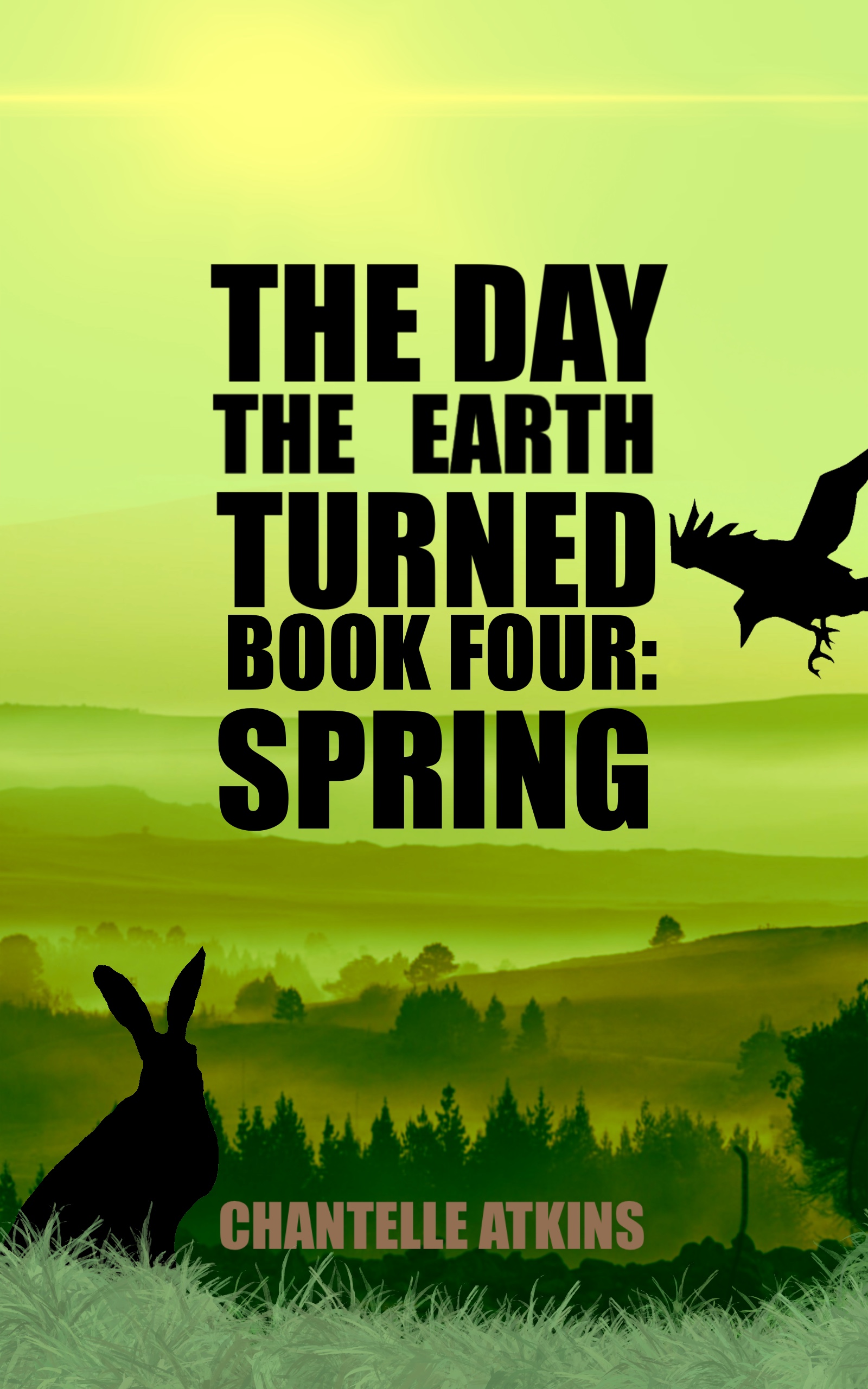
Today is publication day for The Day The Earth Turned Book 4: Spring, the fourth, and final installment in my YA post-apocalyptic/climate horror series.

It’s twice as exciting, because it’s not just the publication day for a book, it’s the completion of a series. I can now let it go (aside from marketing it) and believe me, that frees up so much space and energy in my head for other books.

I will kiss it a fond goodbye and move on, and there is so much screaming for my attention right now!

The Day The Earth Turned series started as an idea when I was very, very angry. It was about five years ago when we found out the land directly behind us was earmarked to be developed. Our landlord owns that land and a lot of land in this area, and for many years, it had been quarried. The diggers moved around from field to field, digging it up for sand, then letting it all go wild again.

When we first moved in, fourteen years ago, the land behind us was a field used for horses. There is a strip of woodland down the middle, and on the other side, more fields which were used for growing corn or wheat. Not long after we moved in, they quarried the fields right behind us. It was sad at the time to see the grass torn up, but grass does grow back quickly, and once the job was done, that’s exactly what happened. Now, years later, it’s a beautiful field surrounded by hedges and trees, and the best spot to watch the sun go down.

We often watch deer out there and when the centre floods in the winter, we get ducks and geese on the water and the sunsets are even more spectacular.

Needless to say, we were horrified by the thought of them building on it. They have now reached the last plot to be quarried and after that, the whole area is up for grabs. The landowner has made millions out of allowing it to be quarried for so long, but he obviously wants to keep milking it for more money. Rich people are just never rich enough, right?

The first idea put forward by various developers who started circling like sharks, was a fake water lagoon. It would involve digging up all the fields, pouring concrete over them and constructing a huge water park tourist attraction. Goodbye deer, badgers, rabbits, hares, voles, shrews, weasels, stoats and all the other wildlife we have spotted there over the years…

There were instant objections – the roads around here are not built to cope with that many visitors and during a local parish meeting, the council admitted that our lanes (narrow hedge-lined country lanes that loop around this land) would have to be widened to allow more vehicles and prevent the main road becoming even more congested.

I wept. I really did. Our lanes are lined with mature hedges and beautiful ancient oak trees. Like the fields behind them, they provide homes and food for so much wildlife.

I’d walk the lanes with my dogs, my eyes filling with tears as I imagined the pointless destruction. We live less than ten minutes from the beach, for Christ’s sake. Why does anyone need a fake lagoon?

The answer is, we don’t.

But people have to make money out of land, right? It can’t possibly be rewilded, left to nature, left to provide vital habitats for one of the most nature-depleted countries in the world!

Ugh. It sickened me and it still does. The good news is, another water park with a very similar design has just been approved not far from here, so there is no way now this one will go through. That just means they’ll decide to build something else on it though.

For now, it’s safe. The deer can roam through the copse and the badgers can frolic in the moonlight. For now, it’s left alone.

When we heard about the development plans, I started thinking, if only nature could fight back! If only the wildlife could develop a higher state of consciousness, thought even. They would be full of rage. They would hate us. If Mother Nature was a conscious entity, she would want revenge. She would want to cull us.

And that’s where the idea came from.

I imagined the world, the earth itself, turning on us. It would start with the adults as they’ve got the most blood on their hands. It would wipe them out with multiple pandemics, and along with that, animals and plants would start attacking us and killing us to save themselves.

I wanted to write a post-apocalyptic story and I thought it would be far more interesting if all the adults were killed and only the children were left.

How would they survive without the adults? Without food and resources, without transport, without school, without law, without medicine? Would they turn on each other or pull together? Would they be able to figure out a better way to live on this earth?

I knew early on that I wanted the animals to have their say and that’s why there are often chapters from the point of view of an animal or bird.

It wasn’t easy to write. It never is when I get the concept and plot before the characters. Notes, ideas and character bios started being added to a notebook about five years ago, and eventually that became a bigger notebook once I started writing it. It was in past tense at one point and then I switched it to present. That was tedious!

But overall, I am incredibly proud of this series. The reviews are so positive. It really seems to strike a chord with people. I hope readers enjoy the ending!

And as for seeing these characters again in the future, I’ll just say, never say never! There is a part of me that is very curious about what happened next….

But right now, there are three more books waiting to be polished up and published!

Thank you to everyone who has supported this series. From my wonderful beta readers, arc readers, fellow authors and bloggers, and to my wonderful editor/proofreader who is an absolute star. I am so grateful to you all. The indie community is a wonderfully welcoming and supportive one. Thank you also to my son, Dylan for designing the front covers for me! They’re perfect!

Here’s the series link if you’re curious about diving in and finding out what happens to young people without adults when the very land beneath their feet is turning on them: https://www.amazon.co.uk/dp/B0CBW3D8VL?binding=kindle_edition&ref=dbs_dp_rwt_sb_pc_tkin

Maybe Music Can Save Us All

Image by Pexels from Pixabay

It’s a beautiful, scary, angry, desperate world.

But music can make everything better. Music can save us all.

My extra long school run due to road closures and floods was made better this week by music. As long as I have music, I know I’ll be okay. One day driving along, a teenage girl caught my eye. She had headphones on and was singing as she walked, moving her hands around, grinning, making the odd little dance move in pure joy. She didn’t care about the line of traffic passing her or about anyone else around. She had her music. So everything was all right.

This morning, driving back, I saw a teenage boy doing the same thing. He was also alone, (though, not really) with his chunky headphones on and I could see his mouth moving with the words he was singing out loud. His forehead was furrowed, his lips turned up, his hands made movements. He looked so happy.

I’m sure it made their walk to school far more tolerable.

And then there’s me in my car crawling through traffic with the music so loud I can’t hear myself singing along. My heroes John Squire of The Stone Roses and Liam Gallagher of Oasis released an album together last week, so of course I bought the CD and the long school runs have given me the time to fall in love with it. Stand out track for me is ‘Raise Your Hands’.

Raise your hands,

I can see you

We’re aliiiiiiiiiiiive……!

And music reminds us that we are. Our hearts like beating drums inside our chests, our feet desperate to tap and move, our lungs open and ready to be filled with enough oxygen to belt those tunes back out into the world.

In our house, the music never stops. My daughters are away at university but whenever they are home, I hear their Spotify playlists following them around. They both have such eclectic tastes ranging from hip hop, to Abba, to anything from the 90s, to Glass Animals and Mother Mother. Their musical minds are way open. Meanwhile, my 16 year old son is a 90s devotee at heart, with his record player and his growing vinyl collection of Nirvana, Oasis and Radiohead albums. He was thrilled to see Blur last summer in London and he’ll be seeing Liam Gallagher this June in London. I am so jealous! He’s discovering new bands too, which I love, because we can’t allow ourselves to only live in our musical past. There is still so much out there to discover!

My 9 year old son is obsessed with music. The Clash are his favourite band, but he adores Blur, Oasis, Weezer, The Black Keys, Beck, Tom Waits, Talking Heads, The Beach Boys, Nick Cave and so much more. He talks about music non-stop. He will even pause his PlayStation game if he hears me playing music in the kitchen, to run in and ask what band it is and what song. He goes to sleep with his CD player beside him, listening to his favourite songs, just as I did as a kid.

Aside from writing, there is nothing else that gives me such joy and makes me feel so glad to be alive. If I ever wake up in a bad mood, I only need a few songs in the car to get me going again and the bad mood is shifted.

Every Saturday I have a long bath with a glass of wine and then cook dinner in the kitchen while blasting out my playlists. I sing along, don’t care how loud I get or who can hear me, and I dance around the kitchen. It just feels so good…

We need music more than ever.

It has such a unifying power. You know that feeling when a good song comes on the radio and you look at the person next to you and your eyes light up at the same time? And then you both sing along, laughing and yelling, caught in that moment together. Or when you’re feeling low and it feels like everything is going wrong. You don’t need silence to compound your fears. You need music. Sad songs, happy songs, slow songs, fast songs, whatever it takes. You need to know that someone else felt the same way as you and wrote a song about it. Music gives us a sense of belonging, of not being alone.

Enjoying the same songs unites us, but we also feel less alone thanks to the songwriter and the musicians that put it together. We feel like they are on our side, that they see the world in the same way, that they have struggled too and that we too can come out on the other side, still singing.

Music gives us something to live for and look forward to. I can’t keep up with the new albums I want to buy at the moment, or the gigs I would love to go to. It keeps you excited, it keeps you feeling young, knowing there is always more to come, that hope it never lost. That the music never stops.

Music takes our hands and leads us through the dark. It explores the dark with us, it allows us to suffer and feel loss and sorrow, but it always leads us back out the other side, back out into the light where we too can shine.

Music gives us something to look up to. It lifts us up. It forces our eyes from the ground. It blurs the dullness of our days and numbs the hopelessness of the future. It shines and sparkles and blinds us. It means so much. It explodes inside of you and sends shivers up your spine.

Music soundtracks your existence. Nostalgia batters you when you listen to songs from your youth, or even from last year. Remember this was the song that was playing when we first met? This was the song we first kissed to! This was the song I played when we broke up. This was the song we played to help the baby go to sleep. This song played at the kids first music festival. This song reminds me of that summer and that time the car broke down. This song always, always, makes me think of you!

Thank you, music!

Music gives us something to move to. You feel better when you are moving around, throwing up your hands, leaping up and down, letting your body move in the way the music dictates. You feel free. You feel young. You feel alive.

You remember that you are alive, and that this is your life.

And everything will be all right, I promise you, everything will be all right as long you’ve got music.

Found Poetry For Reluctant Poets – Why It’s The Go-To Activity For Myself and the Kids I Work With

This piece was originally published on Medium!

Image by ShonEjai from Pixabay

Found poetry is one of my favourite activities to do with the young people I work with. It never fails to inspire even the most reluctant writers and it will usually lure in the children who are adamant that they hate poetry. Because I’ve spent a lot of time researching it, experimenting with it and preparing classes with it, it has quickly become my favourite type of poetry too.

There are a lot of reasons for this and there are many different types of found poetry. I will get to both these points in just a minute.

But for now, let’s quickly dive into what it is about poetry that puts people off in the first place. I can only approach this analysis from a personal point of view and from the things poetry-wary children and teenagers have told me over the years.

For me, and often for the youngsters I work with, poetry is something that is forced on them. I work with school children and home-educated children, most of whom also study poetry for English Literature and Language classes. It differs a lot — overall, the home-ed kids have a lot more say in their curriculum but often still have an aversion to poetry, whereas the school children have no choice in what they are taught. For this reason, poetry is forced upon them. They might grow to like it or even love it, but they don’t have a choice in studying it.

This in itself is often enough to put them off. I often encounter children in my sessions who just want to write what they want to write and don’t appreciate being dragged from their amazing story idea to focus on poetry they don’t care about. They are defensive already; their backs are up.

Also, some of the poetry inflicted on school children in particular is, lets be honest, hard to swallow. It’s been a long time since I was at school but I clearly recall studying poems that meant nothing to me and had no impact on me. In short, I could not relate to them. I often found them too long, too boring, too flowery and wordy. I was put off. If the words themselves had to be translated for me to understand, I was put off even more.

This isn’t the case for everyone and of course, there are some beautiful, in fact stunning, poems out there that deserve to be studied for centuries to come.

And this leads us to the second problem. Poetry can be intimidating.

We read things like Do Not Go Gentle Into That Good Night by Dylan Thomas, The Waste Land by T.S Eliot and She Walks In Beauty by Lord Byron, and we are in awe, instantly feeling we can’t compete, nor should we ever try. Poetry can be beautiful, engaging and life-affirming. Like all writing, poetry can change the world. It can certainly change your life.

When I ask young people why they don’t like poetry they usually give the same reasons I used to for not liking poetry:

It’s boring.

It’s inaccessible.

It’s intimidating.

It’s not relatable.

It’s hard. (This is the complaint I hear the most from poetry-averse kids!)

It’s too complicated/wordy/long…

The first time I really fell in love with poetry and felt like I could actually write it too was when I discovered Charles Bukowski. I had already read and loved some of his books so it seemed a natural step to check out his poetry and I was blown away. So much so that I have lines from two of his poems tattooed on my arms.

Reading Bukowski made me want to write poems — finally! Reading Bukowski made me feel like I could. Like poetry was for me too.

It was so freeing. Why? Because he didn’t care what anyone thought, he didn’t try to impress anyone, he didn’t even try to impress himself. He didn’t follow rules, he just wrote from the heart. That is my favourite kind of poetry and I’m always ecstatic when I discover pieces like that.

But let’s get back to found poetry and why it works so well for reluctant poets like me and the kids I work with.

Here are a few of the forms and briefly how to do them:

Blackout poetry — you find some old newspapers, magazines, unwanted books, posters, leaflets — anything you can get your hands on. You get a big fat marker pen and start eliminating words. You look for words lost and stranded between the chunks of black you are creating.

Magnetic poetry — a really fun form of found poetry. There are various themed sets you can buy online. I currently have a nature themed one and a horror/gothic themed one. They come in cute little boxes and kids can spread them out and see what words draw their eye. They can make list poems, haikus, anything they like, and it’s always lovely to see their faces light up when the magnets create something beautiful for them.

Haicubes — I have a set of these but we don’t just use them to create haiku poems, we use them for any type of poetry and sometimes even as writing prompts or story starters. It’s basically a huge set of dice with random words on and a few with themes. Kids can pile them up, line them up or pick random ones to inspire longer sentences.

Found poetry from the environment — there are two ways I approach this in my writing clubs. One, I bring in a bag full of words and phrases I have cut out of magazines, posters, leaflets and newspapers. I cut out anything that catches my eye and it is quite addictive. I like to have as many as possible. Some will be single words. Some will be whole sentences. Some are more like headlines or sub-titles. I spread them out on the desks and let the kids rifle through them. The idea is to pick any words that call out to them and see what that inspires. We have had some fantastic poems made this way.

The other way is to use the environment itself. This is fairly easy in the school building as there are posters and notice boards everywhere! They can wander around with a clipboard and pen, picking up words and phrases and writing them down. They then sit down and try to reorder them into a poem.

Cut-up/fold-up poetry — this is currently my favourite form of found poetry as you will see if you look through my poems on Medium! I discovered fold-up poetry about two years ago when researching ideas for my clubs. The one I came across asks writers to divide a piece of paper into four boxes. You write a list of everything you can see in one box, everything you can hear in another, followed by everything you can smell in the third and then in the last box, everything you can taste. You then try to pick at least two lines from each box, add to them, rework them if you like, and try to arrange the eight lines into a poem. It helps to try and pick out themes; for example, I was recently on a road trip and the weather was atrocious, so lots of my senses boxes had lines about the rain, how it sounded and so on. The poem ended up with a definite theme and I called it Driving Conditions. However, I have to admit that the fold-up technique using the senses can be quite tricky in a classroom or Zoom setting. So, since then, we have been making up our own boxes and breaking the rules.

We choose as many lines as we like, for example. Perhaps you get lines from each box or perhaps one box gets ignored completely; it doesn’t matter. The idea is to pick a strong first line and then see where it takes you.

You can title the boxes with anything you like.

Try writing things you love in box one, in box two write things you hate, in box three write things you fear, and in box four write things you dream of. You can change it up anyway you like!

Personally I always like to have a box with things I can hear in it and love writing these poems on long road trips. Probably because I can see and hear different things than normal on a road trip. The ‘hear’ one is a favourite of mine as we always have music on, and random lines will leap out at me and get written into a box. I try to pick the lines that could be said by anyone, as obviously you have to be aware of plagiarsm or copyright infringement. One of my lines in a recent poem was ‘I’d rather die’ which came from a Lana del Rey song we were playing. I added ‘love hurts’ in front of it and made a new line with a different meaning.

There are so many ways of playing around with found poetry and I think it’s incredibly freeing. You can approach the page with a blank mind and no ideas, because eventually you will find the words and the ideas floating around you.

For young writers who dislike poetry, this is a fantastic mode of persausion. They don’t actually have to come up with the words themselves; they just have to find them. Most of the time, I see this lead to a real increase in confidence with poetry, which is wonderful.

Check out a few of my found poems below and why not give it a try?

Wanderlust – a cut-up poem

excluded from running wild
never our land
check your barriers
and thank you for driving carefully
the road gets tough
mixing petrol fumes with coffee and cream
follow the white lines
across a patchwork land
praying the car won’t die
lights coming towards us
ignite our wanderlust
the sea, behind green hills
mist rolling down the valleys
love hurts, I’d rather die
so I carved out a quiet
little
life
for
myself

The Future Is Coming – a cut-up poem

Why do people ruin everything?
wildfires — no water
rusted, barbed wire coiled like snakes
sharp stones underfoot
but we cleared up the broken glass
falling over, getting splashed
this place is hungry
the current trickles under the fallen log
let’s trespass, let’s explore
what’s that noise?
The future — it’s coming
run