10 Reasons I Love Writing and Reading YA

On the 11th August my next book The Tree Of Rebels will be released as an ebook. (The paperback is already available!) This will be my sixth release and my fourth YA book. My books fall into both the adult and young adult genres. I never really decide which it will be; that’s a job for my characters. It just so happens that all of my characters tend to be young adults, and in fact, even in my adult books, the young adult voice is very present.  When it comes to reading, I’m not too fussy about genre. I recently devoured horror, crime thriller, literary fiction, autobiography and YA. But it’s fair to say that I am more consistently drawn to YA books, to read and to write.  Here are my reasons for being in love with reading and writing YA;

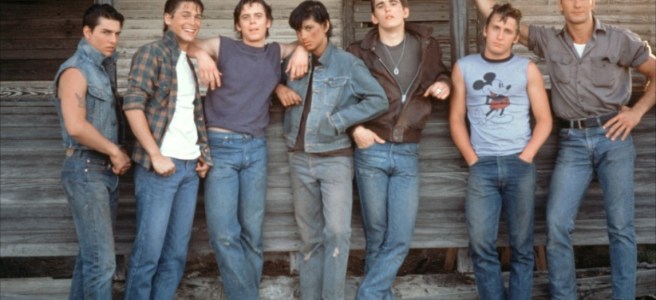
  1. Inspiration – When I was a kid, the first books I ever really fell in love with were The Catcher In The Rye and The Outsiders. I had enjoyed many books as a child, and I had been writing stories for as long as I could remember, but those two books affected me in a way the childhood books had not. I fell into those books and got lost. I fell in love with the characters and saw them as utterly real. I could totally empathise with the feelings, emotions, and scenarios of both books. I loved the style and the voice they were written in. More than any other books I can remember, those two made me want to be a writer. I emulated them in my teens, writing similar stories with similar characters. From that point on I was always searching for books as good as those. I’m still not sure I’ve found any to top them.
  2. Nostalgia – For that reason, YA evokes nostalgia in me. YA books make me remember the surge of enthusiasm and inspiration I got from that genre when I was a teenager. They take me back to that time and remind me of the impact books can have on your life. This I think, draws me towards reading and writing YA. I’m not a rose tinted glasses kind of person by any means, but I do love a bit of nostalgia!
  3. Feeling Young – There is this. Not that I feel old. I really don’t. In my head, I am still a kid, and I always assume people are older than me and certainly wiser. I still feel new sometimes. I still feel like I have so much to learn. I like reading and writing about young people because I still feel like one of them! What I see in the mirror is not what I see in my head. When I read a really good YA book, I can totally recall what it feels like to be that young. I particularly love a good coming-of-age story. I think being a young adult is a totally unique time in your life. Too many people embrace adulthood too quickly and tend to put up walls, separating their generation from the ones below them. (You only have to look at the amount of millennial bashing that goes on!) I think YA books are important for this reason. They remind you of what it is like to be young, conflicted, confused, with those huge highs and lows, mixed with fear, ambition, self-doubt and hope. If you can read YA and feel young again, perhaps it helps build a bridge between generations.
  4. YA is so varied – This is true. YA is a genre with so many sub-genres and I love them all. I’ll even read Romance, if its YA! Horror, dystopian, post-apocalyptic, coming-of-age, historical, thriller… Having young adult characters just seems to make all these genres better.
  5. YA is fast paced – of course, there are exceptions, but generally I find YA books move pretty fast. Not that I mind a slow moving book. I’m not particularly drawn in by the ‘page-turner’ claim, but YA does tend to grip me. I can’t think of too many YA books I’ve read where I haven’t wanted to start a new chapter as soon as I’ve finished the one I’m on. (Michael Grant Gone series and Unwind dystology comes to mind!!)
  6. Gritty, edgy themes – I don’t want to be bored when I read or write. I want subjects I can really get my teeth into. YA has these in abundance. Frightening dystopian futures, post-apocalyptic disasters, family drama, domestic abuse, substance abuse, self-harm, suicide, bullying, running away, sexuality, sexual awakening, poverty, race relations and more, YA is all about tackling difficult issues head on. As a reader and a writer, this is the stuff I yearn for.
  7. Characters that come alive – I struggle with characters in some adult books because I can’t relate to them. Like I already mentioned, I don’t feel like I am nearly 40, so I find it hard to relate to middle aged characters. I consider myself working class, and so much adult fiction is written by and about middle class people. YA offers a wider spectrum of characters who are flawed, still growing, changing and learning. This in itself makes them relatable and interesting. I’m thinking of Holden Caulfield and Ponyboy Curtis, but also Charlie (The Perks of Being A Wallflower), Katniss (The Hunger Games,) Theodore Finch (All The Bright Places) Leisel (The Book Theif) Jonas (The Giver) Todd and Viola (Walking Chaos Trilogy) and so many more! I really struggle to think of a character from an adult book that has stayed in my head…
  8. You are not alone – Reading YA as a teenager is a life saver. Whatever struggles you might be going through, you are going to find a YA character going through the same thing. There is a YA book out there that is going to help you and show you that you are not alone. This is so important when you are young
  9. Packs an emotional punch – The reason I love writing and reading YA books so much, is the emotional journey they take me on. Writing young characters opens up so many possibilities for reaction and action and motivation when you are throwing dramatic situations at them. They don’t just have the plot journey to go on, they have their own inner, coming-of-age journey going on as well, which I find, magnifies the emotions of everything else! YA books tend to pack an emotional truth and are not afraid to venture into dark or emotional territory. I need this when I am reading, and I find this cathartic when I am writing. What can I throw at these young people and how will they react? How will they change and grow and develop as the story unfolds?
  10. Offers hope – YA books may stray into dark waters, but they are never afraid to offer hope. The characters, being young, tend to veer on the optimistic side. They are not tired or jaded by life yet. They are not cynical. They believe things will get better. These books may not all have happy endings, but you can guarantee most will be fuelled by hope…

Over to you folks! What do you think about YA books? Do you have a favourite from your youth? Or have you discovered any great ones in adulthood? (PS – here are 12 of my favourite ones off the top of my head!)

  1. The Outsiders – S.E Hinton
  2. The Catcher In The Rye – J.D Salinger
  3. The Chaos Walking Trilogy – Patrick Ness
  4. The Unwind Dystology – Neal Shusterman
  5. The Gone series – Michael Grant
  6. The Giver (quartet) Lois Lowry
  7. The Book Theif – Markus Zusak
  8. The Hate U Give – Angie Thomas
  9. All The Bright Places – Jennifer Niven
  10. The Perks of Being A Wallflower – Stephen Chbosky
  11. The Shock of The Fall – Nathan Filer
  12. Vernon God Little – DBC Pierre


‘I Got A Head Full Of Ideas That Are Driving Me Insane’; Tips For Dealing With A Busy Mind

I’ve always loved this line from Bob Dylan’s ‘Maggie’s Farm’. I first heard it on a best of Bob Dylan compilation tape I bought when I was 12 years old. Yes, I was a strange kid, obsessed with words, old music, and writing. I used to scrawl lyrics and random thoughts over my bedroom walls and floorboards. And at the time I discovered Bob Dylan’s lyrical genius, I was also discovering how addictive it was to put words together. Little poems. Songs. Stories that grew into novels. I’d get one idea and become obsessed by it, only to have another equally exciting one show up on its heels, demanding my attention.

I remember the feeling of having too much inside my head. And having no escape from it, no way to turn it off or quieten it. I was always thinking about something. I disliked small talk and found it hard to concentrate on people when they spoke to me.

These days, it’s even worse. Just like when I was a kid, I have these people in my head. These made up people who feel so unbelievably real and who all have desperate stories to tell, and who all want their turn NOW!

So how do you cope when your mind gets this noisy? How do you focus on what is important and not end up burning out or giving up? I wouldn’t say I’ve fully figured this out yet, but here are a few tips for anyone who has a head full of ideas problem;

  • Count yourself lucky. Yes, I know it can feel like a burden and a curse. If only just some of these people would shut up and go away, you could concentrate fully on the task at hand. But it pays to remember having too many ideas is actually pretty cool. You’re never going to run out of material. You have decades worth of books and sequels lining up to be penned. That’s lucky and that’s exciting.
  • List your projects. I did this about a year ago. I have a to-be-read list and I have a to-be-written list. I’m a list person and there is nothing more satisfying than putting a tick in a box. So make a list of all the ideas for books you have and then enjoy that feeling when you get to tick them off. Also, this way you won’t forget any of the ideas!
  • Multi-tasking is your friend and ally. If you are taking the indie route, you’re going to need those multi-tasking skills in an abundance, so this is another reason to be happy that your mind is so busy. If you can juggle all of those projects and ideas without losing it, then you will probably do pretty well as an indie writer, juggling writing with building an author platform, promoting and so on.
  • Give yourself a day off each week. I didn’t always do this. I didn’t feel like I could. How was I ever going to get all these books written if I slacked off at any point? But then my kids kept giving me sad eyes and saying they missed cuddling up on the sofa with me. So I take every Saturday off. Completely. I don’t turn the laptop on. I sit downstairs with them and watch whatever they want to watch and take a deep breath. It’s my reward for all the hard work in the week.
  • Make sure it’s still fun. I think serious writers, or at least those who are serious about actually selling their books, should treat writing like a job. I always wanted writing to be my job, and now it sort of is, although obviously, I have to do other things to earn the real money! Viewing it as a job doesn’t have to take the fun out of it.On the contrary, writing should be a fun job. The best job in the world, in fact. So keep an eye on the fun factor. You might be churning out novel after novel and hitting all of your word count targets, but are you still having fun?
  • Feel free to slack off a bit every now and again. I’m doing this at the moment. Or at least it feels like it to me. I’m going over the sequel to The Tree Of Rebels I started a while back which is about half written. I’m editing a bit but I’m not doing any actual writing yet. I have two books with beta readers, so you know, can’t do much there right now. I’m gearing up for the release of The Tree Of Rebels, but until the artwork and formatting is done, I can’t set a release date and put the plan into action, so that’s all kind of relaxed right now too. It’s nice. I know things are going to get hectic again really soon, so I am enjoying the peace. I’ve been watching TV! Unheard of!
  • Remind yourself that one day you will have more time…I’m a mum of four kids and I’m also a dog walker and run writing groups and workshops. My youngest child is almost three, so hasn’t started pre-school yet. He’s 24/7. My older kids are fantastic but let me just say this to all you new parents out there, it doesn’t get any easier. It gets harder. Sorry, but it does! Anyway, I have days when I feel frustrated that I didn’t get much done, but then I remind myself that one day the kids will all be grown up. They’ll be gone one day. I’m not looking forward to that, by the way, but wow, I will certainly know how to keep myself busy when the time comes! So for now, I remind myself to be patient. These are busy days and I’m torn in many directions, but it won’t be this way forever.
  • Write weekly lists to help you stay calm. I would be lost without my weekly to-do list. I sit down every Sunday night and write down the things I would like to achieve in the coming week. There will be things I need to do, such as writing this blog or putting together the monthly newsletter, and things I aim to get done, such as more editing, research or whatever comes up. Basically, I sit down each night and decide which things on the list are the most pressing. I usually split my time in half between promotional things, and actual writing or editing.
  • Don’t push yourself too hard. I could write into the night and not stop. I used to do that before I had kids. I’m more sensible now, because I know I have to get up early and look after them all, but also because I’m kinder to myself. My mind needs a break. I turn everything off around ten pm and climb into bed with a book. Reading helps me calm down and tune out from my own mind. You can guarantee the ideas will start up again once I turn out the light, but I quite enjoy this if I am honest. I always fall asleep playing mini movies in my head, where various characters move about and talk and basically perform the book for me.
  • Have other hobbies and passions. I think this is vital. Obviously, I have the kids, and I expect most writers will have family commitments of some sort, as well as a day job. But I think having other passions in your life can really help you switch off from the writing, and give your hectic mind a break. I love gardening and being with my animals. I can easily lose a few hours just weeding, planting and digging. I love reading and will happily pick up a book at any time of the day, including whilst making the dinner. I’m pretty addicted to music and will waste away an hour or two on YouTube if I ever get the chance! Make sure writing is not your only obsession.
  • And finally, remind yourself that it will all get done one day. One word at a time, one day at a time, one book at a time. You will work your way through that list of projects. I’m sure more ideas will arrive when you really don’t want them to, but consider it a privilege and just keep going as calmly as you can!

Now I just need to keep reminding myself to do all of the above and I might just survive!

Please feel free to leave a comment. I’d love to know how you cope with having too many ideas!


Second Draft Joy

Back in December, I penned this post Why My Favourite Draft Is The Second, while I was busy writing the first draft of a YA novel called A Song For Bill Robinson. I was enjoying the first draft, but also realistic about its ugliness, and I was excited about going back to the second draft for the reasons I mentioned in the post.

Well, three months on, I am now well into that second draft, and enjoying it every bit as much as I said I would! It is easier than the first because the basic framework is there and the hard work has been done getting the story out of my head. I already know I can make it better and I have already listed and made notes of how to do this. The second draft is just fun!

I had to have a think about this earlier. Has this been the case with all my books? And I think the answer is yes. The first draft is the hardest for me. The later drafts are the most tedious because you know the story, and really you want to be writing something new, but you have to polish this thing up, cut bits out, sharpen it and refine it and make it as good as it was when it first appeared in your head. I think of the first and the final drafts as the real hard graft. The second, for me, is much more fun.

can you tell I'mhaving fun-

In many ways, the second is more of a read through than a rewrite or a detailed edit. After a break, I am familiarising myself with the story and getting to know the characters again. I read through each chapter, getting a sense of them and their motivations, making notes and finding my way back into it all. Of course, I fix any typos I come across, and I do a lot of deleting unnecessary and repetitive words or phrases. I tidy it up as much as I can, but at the same time, I know the more brutal cuts, the reshuffles and the changes in direction will all come much later. This is still very early days, and I want to enjoy it. I don’t feel the need to make any major decisions at this point.

At the moment, I am totally addicted to this particular story, which is also how I felt when I first wrote it. I suppose it’s more familiar ground for me as an author and a person. A gritty, contemporary YA drama with lots of dysfunctional family behaviours and social issues thrown in. I feel a passion for it. I want to tell these stories. And there are so many stories in this novel…

It’s fast paced. Which is good. I hope! On later drafts I might feel the need to slow things down a bit, my niggling worry being that it might come across as unrealistic for teens to have a life this dramatic. It’s literally a roller coaster of events, repercussions, consequences and drama. It’s full of highs and lows with plenty of unrequited love, dangerous lust, and familial miscommunication and resentment. Oh and of course, a rather wonderful soundtrack (the male protagonist is a talented singer) which ranges from The Four Tops and The Foundations, to Arctic Monkeys and Jamie T. There is just so much to play around with!

And I know I haven’t got it all right yet. I know I need to keep fleshing out the characters and finding stuff out about them. I know I need to work on the visuals, the environment, such as their homes and bedrooms and so on. I tend to forget about all that stuff on a first draft, knowing that no one else is going to read it for a long time. I just want to get the nitty gritty down first.

But at the moment I am enjoying the ride, and just felt the need to share that with you. Adding bits and cutting bits. Reading it like a reader and bloody enjoying the process. I can’t get enough of it.

I doubt I will feel this way by the time draft ten comes around, so this is why I savour the second draft so much. I know the time will come when I almost come to hate this book. I have been there with The Tree Of Rebels many times, and Elliott Pie reached that point just recently before I sent it out to a second round of betas. I was sick of it. I am sick of it. Diving into this much fresher book has been just what I needed.

So, for me anyway, I give my thanks to the wonderful second draft, with the foundations laid down and the really hard work yet to come. I shall enjoy the party while it lasts.


Diversity In Books

About a year ago I noticed something about my books. I realised that all of my characters were white and straight, with the exception of the head teacher in The Boy With The Thorn In His Side. Or at least they were white in my head; obviously readers may have imagined them differently. I have to admit I felt a bit ashamed by this. It was never intentional of course, not to write about more diverse characters, it’s just that I’ve always lived in a very white area, where everyone I grew up with was white and so on. As for writing characters that were gay, this had also never occurred to me, I guess, because I’m not gay.

After realising this, I decided to change the ethnicity of my main character Elliot in Elliot Pie’s Guide To Human nature. It wasn’t a huge change. I just mentioned that his absent father was Indonesian, making him mixed race, with dark skin and hair, unlike his mother who has blonde hair and fair skin. Not much is made of this in the book. It did, however, tie in nicely with the hatred his mother Laura feels for the people who live in her claustrophobic neighbourhood, such as Tony, who likes to knock on people’s doors to warn them there are immigrants living behind them.

At the time, I spoke to a lot of other people about the topic of diversity in books. My daughters thought I was right to change Elliot’s ethnicity, and were quite appalled that all my characters so far had been white and straight. Other people said to change his ethnicity seemed a bit like a token gesture, and if he was white in my head I should leave him like that. I’ve since thought about the decision in other ways too. For instance, does a white writer have any right to write about a character who has a different cultural background to them? I would argue that they do, as long as they have done their research if research is needed. In this case, it was not. Racism is not an issue for Elliot, only his mother, who cannot stand the Little England mentality of people like Tony. His mother is in a state of despair about the state of the world, and for example, cannot understand the callous attitude people are having towards the refugee crisis.

I decided to leave Elliot as mixed race and think about it again later. If he persisted as blonde-haired and blue-eyed in my head, then I would change him back. But for me now, after about a million drafts, he is darker skinned than his mother, with very dark hair. He’s become this Elliot in my head, so I’m pretty sure that’s the way he’s going to stay.

While Elliot Pie was with beta readers, I took a break from it and wrote a rough draft of a YA novel about an alcoholic teenage singer. I’ve blogged about this story idea in the post  Untold Stories , as the original story was one I penned aged 16 and then discovered in an old suitcase under my bed. In the original story, again, everyone was white, straight and working class. In this new version, as I was writing it, the characters changed. One of the secondary characters became gay, and the main character, Bill became bisexual. Well, I say bisexual, but this is not entirely confirmed by the end of the novel, and he certainly doesn’t waste any time feeling confused or upset about what he is or isn’t. He just has a lot of fun kissing his best friends, one of whom is female and one of whom is male.

Now, again, why did I do this? I think there are several reasons. I think because diversity in books has been on my mind. It’s been on my mind because I too have noticed how many of the books I read contain, straight white characters and this has started to annoy me. It’s been on my mind because of my children, who are, to my great pride, growing up to be the sort of people who are accepting of anyone of any culture, ethnicity or sexual preference. In many ways, my children educate me on the issues facing the LGBT community. Plus, I feel that with recent political events, and the horrific rise of hate crimes against ethnic minorities and LGBT  people, we all have a responsibility to stand up for equality and decency and kindness.

With all this on my mind in recent months, it’s no wonder it crept into this rough first draft. It was not intentional, but rather an organic and natural progression. It felt right for the characters and added to their storylines hugely.  Have I got it right? Who knows at this point? I will see how it all reads once I get around to the second draft.

And as for Elliot Pie’s ethnicity, this still feels like the right thing for the book. So, what do you think? As readers, do you feel the books you read have enough diverse characters? Is diversity in books important to you? Do you ever feel certain groups in society or ignored,

So, what do you think? As readers, do you feel the books you read have enough diverse characters? Is diversity in books important to you? Do you ever feel certain groups in society are ignored, sidelined or stereotyped in literature? What about you writers? Do you write about diverse characters, and if you do, is it intentional or natural? Do you tend to write about characters who are similar to yourself? Or do you feel writers have a responsibility to open people’s minds up to other lives, cultures and backgrounds? I would love to know your thoughts, so please feel free to join in the conversation!