What Makes Us Who We Are?

A character building activity with my students
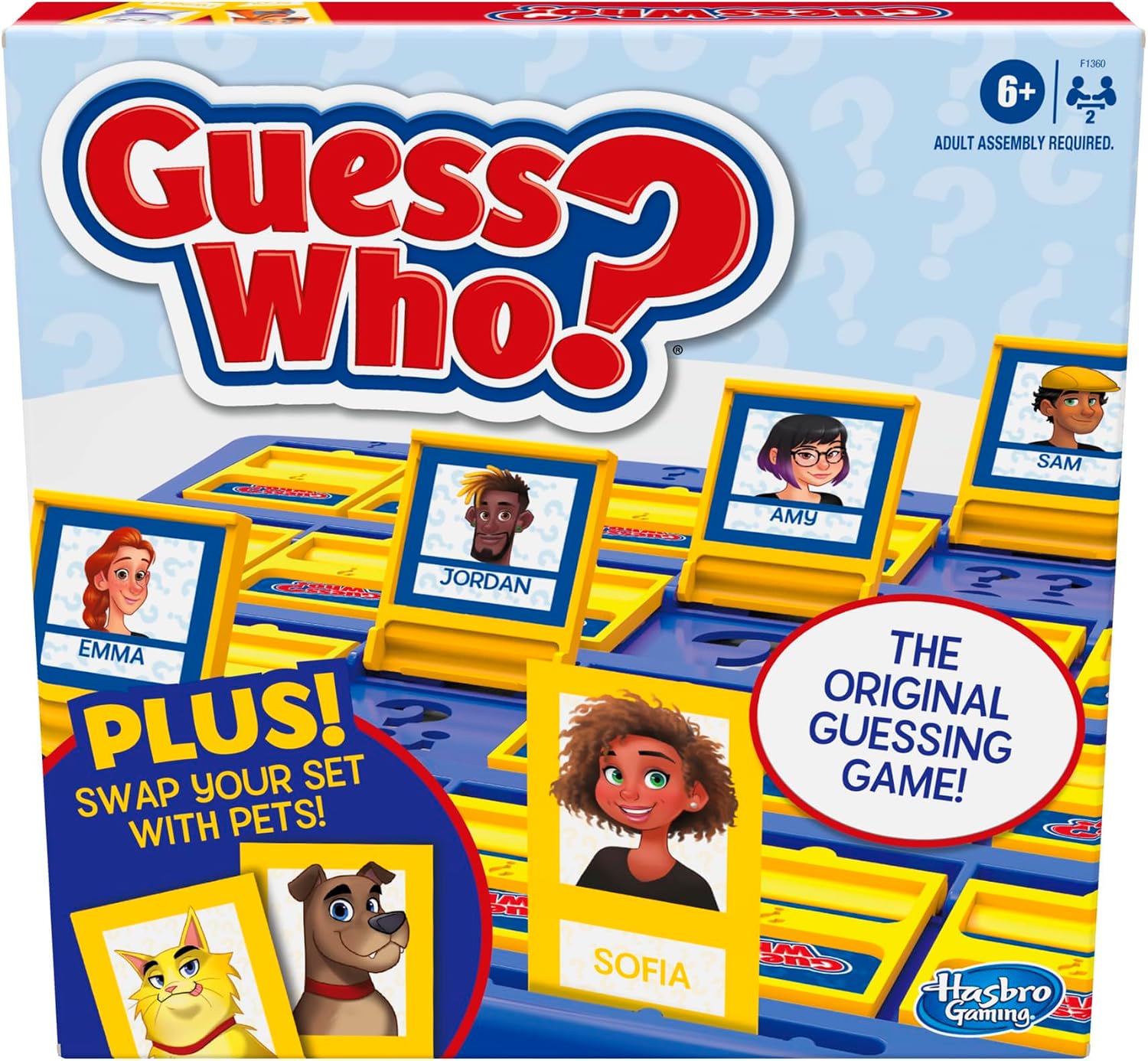
image from Amazon

This week in my creative writing clubs for children, we were looking at characters. The children I work with are well-rehearsed on the art of character building. They know how to create a basic character bio and how to develop it into a more complex character profile. This week I offered up a different way of building characters using clues and it got me thinking…

For the activity, we started with me offering some clues about a character. I picked a character I already had, and the clues were a camera, a cloak, some black boots, rolling green hills and a gift shop. They then had to create a character based on the clues. They had to name the character, give them an age, a physical description, a personality description and more. It was fascinating to see how close some of them got to my actual character!

We then turned the activity upside down and they had to give clues about a character they had created. Once they had a list of clues (they could use pictures or words) they had to swap with a friend and each try to create a character based on the clues.

Again, it was fascinating how close some of us got to a character by using the clues we had been given. One student, for example, posted pictures including some badges with aliens on, a purple scarf, and purple material. I instantly came up with a character called Deirdre Drake, who was obsessed with alien life due to an experience she had as a teenager. She loved watching The X-Files and wrote FanFiction. I got the gender right and personality mostly right, but I got the age wrong. I did get it right that she wrote FanFiction!

We had a lot of fun with clues and character building in our online clubs this week, and in the school clubs we turned the activity into a game of Who Am I? Or Guess Who? They could either draw or write clues about a character real or made-up then swap with a friend to fill in the answers and guess who it was, or they could create their own guess-who style board by creating characters and giving them different features. This was a lot of fun and it went down very well. It also prompted discussions about what makes a character, and indeed, what makes us who we are.

If you were to choose ‘clues’ to help someone get to know you, what would you pick? If someone was to turn out your coat pockets, rifle through your bag, or look through your CD collection, what would they be able to tell about who you are? If you were gone and only your possessions survived, what could people determine about your personality and life by looking through them?

It’s interesting to me as a writer how our physical looks, clothes, the objects we hold dear, and the places we visit shape who we are. These are all things writers should consider when building a character.

If someone was to walk into my house without me here, they would soon know that I love animals, books and music. The pinboard next to my writing desk and the books with my name on them would tell them I am a writer. The bag I take to school clubs full of glue sticks, scissors, paper and pens would suggest my day job. My CD and DVD collections would tell the story of someone clinging to the old analogue world. My coat, welly boots and Converse trainers might suggest something about my personality… How close could a stranger get to knowing me by looking at the clothes and objects I own?

As people we are a combination of the time we grew up in, the part of the world we were born in and the way we were treated as children. We are also a result of genetics, of chance, and of the experiences we have lived through. We inherit looks and personality traits from our ancestors, while the environment we exist in shapes us further. And then there is the part of us that is just us, not influenced or controlled by anything else.

I am always encouraging my students to be people watchers. The best way to build and flesh out complex characters is to observe other humans. Take note of their clothes and and accessories and determine what they suggest about them. Pay attention to facial expressions, gestures and ways of speaking. Think about the things they care about, their hobbies and interests, the objects they hold dear.

The little bits and pieces that make up who we are.

10 Things I’ve Learned Working With Young Writers

I’ve been working with young writers since I started my company, Chasing Driftwood Writing Group in 2015. I was no stranger to working with children as I was a childminder for five years and as a mum of four myself, I’ve always felt quite confident dealing with young people. At the moment, I run seven writing clubs for children aged between 7 and 16. I have four physical, in-person clubs and I have three clubs on Zoom. These clubs cater for schoolchildren and home educated children. Currently I’m working with fifty young writers every week. It’s a privilege combining my love of writing with working with kids, and I consider myself very lucky. There are of course many challenges and here are ten things I have learnt from working with young writers:

Image by NeiFo from Pixabay
  1. Drawing is writing too – quite often when a child is new to a club, they will ask if they can just draw. I never mind this, as it’s amazing how much writing can evolve from drawing. They might start off just scribbling or drawing something that interests them, but more often than not, they will get an idea from the drawing and will start to talk about a possible story. Sometimes allowing drawing can form part of a deal too. Younger writers are not keen on writing too much but often I can get them to write a paragraph, then go back to their drawing and so on. They often surprise themselves when they start to write as well as draw!
  2. How quickly they improve year from year – it never fails to amaze me how quickly young writers mature. It’s always exciting to note the improvements in their writing skills. Just little things like them starting to self-edit, picking up on repetitive phrases and words for instance, or using body movements in place of dialogue tags. It’s amazing how fast their storytelling skills mature from one year to the next.
  3. Talking is writing too – sometimes talking is writing and it’s good for young writers to realise this. Talking about writing with other writers can be so helpful. If one child is a bit stuck and we start talking about it, suggesting ways to move forward or to generate more ideas, or to get the plot moving again, it’s still writing! There might be less words on paper but often they have learnt a lot more.
  4. Give them options, not instructions – I learnt early on that running my writing clubs ‘my way’ was not going to work for every child. There are children who thrive on instructions and being told what to do, and don’t mind coming into a session, finding out what the tasks are and getting on with them. But there are children who come bursting in with their wonderful new ideas who then feel completely deflated that we have something else planned. For this reason, I always have options. There is never just one task, or a one size fits all approach to my clubs. For example, we have been trying creative non-fiction in a lot of my clubs lately and I always give them a list of prompts to choose from. Some kids whizz quickly through the whole list, responding with short paragraphs to each one and some spend the whole session on one prompt. They definitely prefer having choices! One of their favourite things is to have different writing activities on each table so that they can move around the room and try different things.
  5. Eventually it sinks in – Young writers tend to get a head full of ideas and want to write their story instantly. Inevitably, they often get stuck or run out of steam so I’m always trying to impress on them the importance of character development and plotting, which can happen alongside the actual writing, but certainly can’t be ignored. I often meet resistence to this and it can take time for it to sink in. The moment when a child shows you their plot ideas or their character bios or their map for their location, when you haven’t asked them to do it, is a very special one indeed! Eventually it does all start to sink in.
  6. They take things off on own tangent and that’s a good thing – as I mentioned already, talking about writing can be just as beneficial as actually getting words down on paper. And sometimes talking within a writing group can help children get unstuck. Often I find, I have planned a session with structured activities I aim to take them through together, and the whole thing will get hijacked by young writers going off on their own tangents. It might be an idea they suddenly get that they just have to share. It might be something I have mentioned has sparked off a memory about something else. Or it might be that my suggestions lead them in a direction I had not anticipated. Either way, as long as they are writing and getting excited about writing, I really don’t mind at all!
  7. How surprised they are when you say they are a good writer – This always gets to me. When you listen to something they have written, or they pass you something they want you to read and you reply with positive feedback and tell them they are good at writing, they always get this wide-eyed look of surprise on their face. In our groups we focus on writing for fun and don’t focus too much on grammar, spelling or punctuation. We do of course edit and encourage young writers to self-edit and we do mention correct spellings and grammar, but they are not tested and not pushed. If a child hands me a story or a poem with incorrect spelling, I still tell them they are a good writer, because they are.
  8. Some of them are natural writers, which is very exciting – I think all children are natural storytellers, just as they are natural artists and dancers. It is human to create and it is very human to make up stories and pass them on. Some children come along to writing groups and start to improve their skills very quickly, for example learning how to use dialogue, how to fully develop their characters, how to utilise back story and so on. And some children come along as almost fully formed perfect little writers. Actually, perfect is the wrong word. Natural, is closer to what I mean. They instinctively know how to structure a story, how to reveal character and how to build tension. It’s so natural that they don’t even realise they are doing it. I find this very exciting!
  9. Jumping from idea to idea is okay – I’d have to say that the one thing most of my young writers have in common is how much they jump from one idea to the next. I do try to encourage them to stick with a story and finish it, and everything we work on from character to plot, is aimed at helping them achieve this. However, I never mind when they get bored of a story and come up with a new idea. Having a lot of ideas is very exciting for them and I’d hate to get in the way of new ideas spilling out whenever they need to. I always insist that they keep everything they write somewhere safe, so that if an idea has not worked out, they can come back to it another time. I also encourage them to write down all their ideas for other stories, if they are sticking to the same one. Keep those ideas safe and the more you have, the better! Writing is very much like a tap, I think. Once you have turned it on, it wants to keep flowing. Your mind is finding new ideas to explore for you and that is a good thing.
  10. The quietest ones sometimes have the loudest minds – My writing clubs can be noisy excitable places at times! It can be a challenge keeping the noise down so that the quieter students can focus on their writing. Some children are very creative and like to talk about it and share it around. While some are quieter and like to keep it to themselves. I tend to find that the really quiet ones, the ones that keep their heads down and write away endlessly in a corner, have the loudest minds when their work is finally revealed. They have so much going on in there that they just have to focus on getting it down on paper.

I think I could add more than ten things I have learned from working with young writers, but that will cover it for now! It is a challenging but rewarding job. One of the best feelings is when a parent emails to say their child is writing more at home now, of their own accord, or that their teachers have noticed their writing has improved in school. Another fantastic feeling is when children bring in finished work they have been doing at home. They are always so proud if they have seen a story through to the end. Introducing them to new things is also really exciting. Getting children to enjoy non-fiction or poetry, for example, feels amazing! You can’t win them all and you can’t please them all, but I aim to keep the clubs as varied and exciting and as challenging as possible. Sometimes I look at these kids and wonder who will be a best selling novelist one day!