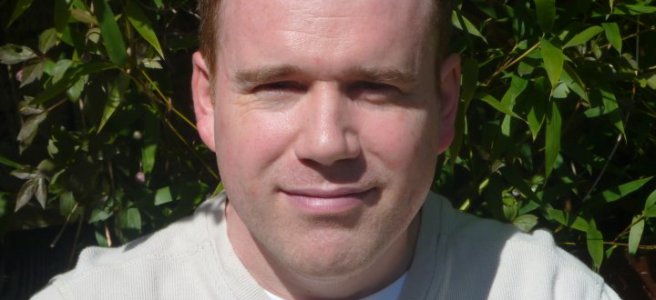
Author Interview; Keith Gillison

Welcome to another indie author interview! If you missed the last interview I posted, it was with indie author Joel Dennstedt,  during which he told me all about the inspiration behind his novels, and how manages to keep writing alongside his constant travels. Next up is Keith Gillison, a British author I discovered recently. His debut novel The Boss Killers is a dark and twisted satire about one man’s desire to dispose of his vile boss. Intrigued? You should be, it’s a hell of a story!
1) Your novel, The Boss Killers is a dark satire about one man’s desire to kill his terrible boss. Could you tell us where you got the idea from? 

I’d love to say I did lots of research, spotted a niche area ripe for exploiting and then painstakingly plotted the novel out. However, I was walking through the splendid grounds of a public school in Dorset when this scene played out in my head of a man having his annual appraisal and in his mind he’s saying all the things he really wants to say to his jobsworth boss. I just liked the idea and wanted to know what would happen next so took the idea from there as a starting point and ran with it. The hammer came from an actual former boss who, on my first day, showed me a hammer he kept in his desk, which I’m pretty sure was intended as a threat.

2)Did you always know you wanted to be a writer?

When I was at school for some reason I actually enjoyed writing essays. In my career in marketing I wrote a lot of business copy for promotional materials and websites. I liked writing but never tried my hand at creative writing, I was one of those people who thought ‘one day I’ll write a book’ while secretly knowing that it was a pipe dream and I’d never do anything about it. Nine years ago that changed when I lost my sister to cancer. I thought I couldn’t look myself in the mirror if I didn’t at least try my best to write that book.

3)What has your journey as a writer been like so far? How would you describe the experience?

It’s been a tough journey. At the same time my sister was dying of cancer I was very ill. My energy levels were getting worse and then one day I was out in Dorchester, I sat down at a bench and couldn’t move any part of my body. I was eventually diagnosed with Chronic Fatigue Syndrome (also known as ME) and nearly ended up in a wheelchair. I’ve battled back but have still had frequent bouts of chronic illness for the last 10 years. During this time I also had two children, moved home and wrote a novel. It took me a long time to write it because I was ill so much so there were long periods when I couldn’t write. Also, I wrote the entire novel before I attended my first writing class, which probably isn’t the wisest way of doing things. At first I really struggled writing the novel, as I’d never even written a short story before but I persevered and then one weekend I wrote this scene, what would become The House of Lard chapter, and I thought ‘Woah, where did that come from?’ It was like I’d opened this door into my imagination and suddenly I felt like I might actually be able to do this.

I’ve had ups and downs, I’ve won a writing competition and had short stories published in magazines and anthologies, and been broadcast on local radio, as well as plenty of rejections along the way. I’d say I’m more confident in my own ability now and have learnt some of my blind spots and areas I need to work on but I’m still learning.

4) What made you decide to take the self-publishing route?
I contacted a number of agents initially and was rejected by some, others didn’t even bother to reply. I had some nice rejections but I found the process of waiting an interminable amount of time (always longer than their guaranteed reply period!) very frustrating. I found myself in the position of having a decision to make – did I want to spend the next however many years sending my novel off to publishers and agents or did I genuinely want people to be able to read it. I was impatient to start working on other writing projects as well and I didn’t spend all that time and effort writing my novel to sit on my computer forever so I went for self-publishing. I think people need to ask themselves that question – do you want people to read your work? If the answer is yes then there is nothing stopping you doing it yourself through self-publishing.

5) What would you say is the best thing about being an indie writer?
You can do whatever you want. Nobody is telling you what to do or when to do it, you have the freedom to just go ahead and publish and while the process is a lot of hard work, you also learn a lot and gain valuable skills. It’s a feeling of freedom to not be dependent on other people, knowing you can just do it all yourself. You don’t have to be one of those people who says ‘I wrote a novel but couldn’t get it published so I gave up.’ Self-publishing means when you are rejected by publishers it’s not the end of the road. It’s better that some people read your work than nobody.

6)What would you say are the worst things about being an indie writer?
It would still be good to not have to do everything yourself. As a self-published author you have to do all the promotion of the book yourself and there are times when I’d rather have someone do that for me so I could just concentrate on writing. It’s also irritating that sometimes the self-published tag is perceived as meaning lower quality which is an unfair generalisation. I’m sure there are some poor self-published novels, but I’ve also read plenty of traditionally published novels that were utter tripe.

7) Do you have any top tips for indie survival?

In the words of a well-known sports clothing brand; just do it. It’s an amazing feeling to have your work published and out there for everyone to read. The biggest piece of advice I can give is – believe in your work. As an indie author you have to fight to get attention for your work and you’ll get disappointments along the way but if you truly believe in your work then you’ll know that people just need to read it. Don’t expect it to be easy though, there are millions of books and authors out there but you know something they don’t – your book is awesome! And keep going, it might take you longer to get where you want to be but you can still get there

8)What are you working on at the moment?

I injured my arm in December and typing is still painful now so at the moment I’m mostly writing short stories and flash fiction, with a view to an anthology later this year. I’m about 40,000 words into another novel and I have plans for several others as well. I’ll get back to the novel when I can write more intensively again without the severity of pain.

9) How would you describe your genre and style?
Humour tends to be my natural style of writing, with a leaning towards dark and surreal or ridiculous humour. I love taking an idea and stretching it way beyond what anybody would consider normal. I’d like to think of my writing as very original and different from everything else out there.

10) Who are your influences/fave authors?

Terry Pratchett is a huge hero of mine. I love the humour in his writing and he has some of the greatest fictional characters of all time. Lord Vetinari is a particular favourite, as are Granny Weatherwax and Cut-my-own-throat-Dibbler. Pratchett takes you on amazing journeys of the imagination and he combines great humour with brilliant storytelling.

11) what are your dreams/hopes for the future?

The ultimate dream would be to be able to make a decent living out of writing novels, be a bestselling novelist. I’m sure all authors would want that. I’d just like to write more novels and feel that I’d told the stories in my head as I wanted to and that people enjoyed them. I don’t want to be accused of literature but it would be nice to be recognised as a writer that readers regard as entertaining and original.

12) Tell us about your writing routine/process – how does it work?

I write the old fashioned way – pen and paper and then I type it up later. It adds to the time but I just can’t get any creative juices flowing staring at a screen. There is something special about just a pen and paper and your imagination, you can go anywhere, be anyone and do anything. Pen and paper also means being able to write anywhere without the need for technology. I’m continually scribbling bits at the side and adding arrows so the page is organised chaos. Ideally I like to be alone and somewhere quiet and then just write for a few hours. I have found it difficult to find a quiet place, even libraries aren’t quiet anymore, sometimes I’ve written in my car and bits of the novel were written at kids soft play places but I wouldn’t recommend that. I don’t edit as I go, just write it all out, including the rubbish bits, it’s important to keep the flow and once I’m on a roll I’ll keep writing until I’ve either got to the end of a story for a short story or the end of a scene or chapter for a novel. I don’t like to leave a scene or story half-finished, I’d rather wait until next time. I usually write a few notes at the top of the page, pointers of things I want to include but I don’t plan anything out in detail, I like to just picture the scene in my mind and then write it.

13) Tell us three interesting things about you

1/ I’m a decent table tennis player. I’ve played for my county at both junior and senior level. I spent my youth travelling around the country playing in table tennis tournaments.
2/ I suffer from acute anxiety and have frequent panic attacks.
3/ My background is in marketing. I have a management degree from Aston University and a postgrad diploma from the Chartered Institute of Marketing. I once worked for a woodland burial ground and funeral directors, selling burial plots to the general public and steel mortuary trays to funeral directors. That was a conversation stopper; ‘So what do you do?’ ‘I work for a funeral director’. Many a tumbleweed moment was had.
 Keith Gillison is 40 years old and lives in Dorset, but is originally from Birkenhead on Merseyside. He is married with two children. A graduate of Aston University and the Chartered Institute of Marketing, he spent 17 years working in marketing. He published his first novel, The Boss Killers, in 2015. He also writes short stories and flash fiction and has been published in magazines, anthologies and online.
Find out more at thebosskillers.com or follow Keith on Facebook and Twitter

Interview with indie author Joel Dennstedt

Almost a year ago I interviewed two great author’s about their experiences of writing and publishing, Kate Rigby and Alec John Belle. You can find the interviews here. I’ve been meaning to interview more author’s since then, and just have not had the chance to get around to it. Anyway, that’s all about to change! Joel Dennstedt is a very diverse indie author, and I have enjoyed all three of his novels. Here he chats to me about his indie journey so far, his books, his on-going travels, and his plans for the future.


1) You and your brother are currently travelling through South America. Could you tell us a bit about what made you decide to do this? And was there a conscious decision to write and blog about it as you went?

Everything was Steve’s idea. As of 2010, I was working for the same evil corporation as he, a criminal organization known as the largest bank in the United States. He couldn’t take it anymore and decided to retire. His wife could not take that, so they divorced. He said he was off to see the world. I had to ask him twice – he did not believe me the first time – if I could tag along. So, in April of 2012 we packed everything we owned into our backpacks and duffels and went off to see the world …. slowly. Four years later, we have made it to Peru. He began his blog a year before we left, and once we hit our first stop in Merida, Yucatan, MX he said: you should publish your novel Orange Cappuccino. So I did. Because he has really great ideas.

2) Your novels are all quite different. Could you tell us what inspired you to write each one? Where did each idea come from?

Orange Cappuccino is true. I wrote it as a novel for the style. It tells the story of my life with my second wife and our trials and tribulations in Alaska. I had to write that story to make way for other things. And yet, the first book I wrote was Hermit – A Novella. I wrote that during my breaks at work, and though the main character is a lot like me, the story was simply a fantasy to help me get through my days in the real world. I published Orange Cappuccino first, and Hermit only after a hundred hours of editing while ensconced in a hostel/brewery in the jungles of Honduras. Guanjo is my science fiction novel, a promise to myself when I was young. The idea came from two photographs I had collected along the way: one of a huge longhouse situated in the canopy of a rainforest; the other of a little native girl with her pet frog.

3) Did you always know you wanted to be a writer?

I have never wanted or intended to be anything else. I considered myself an abject failure for 60 years of my life because I caved to the necessities of the real world.

4) What has been your journey so far as a writer? How would you describe the experiences you’ve had?

Mostly, I have felt rather lost. The writing is not fun. There has been little appreciation for my work. And yet, when I compare now to four years ago, that is not true at all. I have had a lot of fun. The appreciation has been immense. Now put those two feelings into one and shake them up every single day, and you know something of the rollercoaster ride that you and I are on. The experience of writing has called on every reserve of wisdom that I possess, and made me practice the path I follow with an intensity far beyond what I had known

before. The best things come unexpectedly. The worst come from my own expectations. The lesson: stop expecting and start accepting. And all I can say to that is when I do, things seem to progress perfectly.

5) What would you say are the best things about being an indie writer?

This is pretty easy. The creative control is great. The ability to immediately respond to any new idea, whether in the writing itself or in the marketing and sales keeps everything alive and fresh. The rebelliousness of it all. The interactions with other indie writers, their support and commiserations.

6) What would you say are the worst things about being an indie writer?

Only one thing that I know of: lack of exposure. The challenge to locate your audience, when mainstream authors seem to find their audience ready-made.

7) What are your personal top tips for indie survival?

Be prepared to do it all. Create, Write, Proofread, Edit, Produce, Promote, Market & Sell. If you don’t understand the essential elements of business, then enjoy the vanity of it all, but don’t expect success. And one personal tip for Indie Authors in general: if you don’t start learning to edit and correct your mistakes, you are going to fail. I read a lot of Indie works now, and I am nauseated by the typo’s, grammatical errors, misspellings, and simple format errors that permeate their books. It has given and will continue to give Indie Authors a bad reputation.

8) What are you working on at the moment?

I am supposed to be working on my literary novel: In the Church of the Blue-Eyed Prophets. Instead, I work most consistently on my blog, my collection of horror short stories, and my book reviews.

9) Who are your favourite authors?

My top 5 favorite authors are British: Barry Unsworth, Jean LeCarre, William Golding, Charles Dickens, and Graham Greene.

10) What are your dreams/hopes for the future in terms of your writing?

My biggest dream is to be accepted by the industry professionals and regarded as a writer of great literary merit. I know I ought to be seeking popular approval, but mostly I just want affirmation from those who know good writing.

11) Tell us about your writing routine/process

I guess that you’re assuming I have a routine. Not so much, really. I write what I want, when I want, at the pace I want. In this regard I pretty much go against all the advice of others. I do not write a certain number of words a day. I do not challenge myself to write so many pages. I do not even make myself write each day. It does not work for me. And even if it did, I would not do it. When I have experimented with such a program, what I wrote was trash, and I had to go back and rewrite every word. Sometimes I write a single paragraph in a day. Sometimes a page. Much more than that, and once again it turns to trash. I also ignore the trusted advice to just get the first draft out. Doesn’t work for me. I edit as I write. A lot. I cannot proceed until the writing is almost at the standard I maintain. And when I’m done, I go back and edit, edit, edit all over again. You see, writing does not come easily to me. And if I don’t take long breaks between, the writing suffers … a lot!

12) Tell us three interesting things about you

I am the son of a dwarf.

I believe that I am high-functioning autistic, enough not to be diagnosed.

I believe that animals can talk.

https://www.facebook.com/JoelRDennstedt/

Writings


Book Promo Plan (Getting my arse into gear)

It’s about time I made a proper plan.

Now, I’m not really a plan kind of person. I will freely admit that I do not have the remotest touch of OCD or perfectionism of any kind. I am by nature a messy, laidback, go with the flow kind of girl. I don’t need all my picture frames to be straight on the wall. I don’t need my books organised in height level on the bookshelves. I don’t mind a bit of dust here, a cobweb or two there, or sticky fingers on the windows and walls.

But when it comes to promoting my books, something needs to change. I need to sort it out. I need to work it out. I need a proper plan and I need to stick to it. Now, like I’ve mentioned before, I do all the right things, or at least I think I do. I pick up tips and advice all the time. I just don’t always find the time to follow through with them. I make great lists. I am a list sort of person. Lists are great, because without lists and remind-me notes, I would be living an even more haphazard life than I already am!

Just recently I signed up to a free on-line course by a successful author. Daily emails came through with tips on everything you can think of. Some of these emails contained links to join up to more courses, so I did, and one of these was a Book Launch course. No, I haven’t done it yet. I don’t have the time! I am sure I will get to it eventually, and I am sure I will make some lists of things I should be doing to promote my books. Maybe this blog post, this ‘plan’ will be the first step in me getting it together with all this. Well, I’ll aim for it.

So far, my approach to promoting my books has been sketchy, disjointed, back to front and upside down. I’m not joking. I have never done a book launch thing. Not sure how to. (Haven’t read those emails yet, remember?) I have never done the promo before the book release. Well, not really. Not unless posting on my Facebook author page counts for much, which I doubt. I don’t have a marketing strategy, and I don’t even know what one is. When I started all this two years ago, all I thought about was writing. To me, writing was, and still is, the most important thing. I learnt the hard way, like a lot of indies. Getting a book out there and patting yourself on the back for making a dream come true does not automatically guarantee you sales. Not even from friends and family. It is much, much harder than that. And I have learnt. And I have come a long way. Things have changed, and things are always getting better.

But! I still feel I am missing a trick. I see and hear other authors talking about their sales and I start to think; what the hell am I doing wrong here? How can I reach more people? I still feel like such a novice. It’s never too late for me to start better promoting the books I already have out there, but what better way to get my head around this marketing plan thing, than to start with a brand new book? In other words, try to get it right this time? So this plan will go into action as of now with my brand new book The Tree Of Rebels. This book won’t be released for some time as it is only in the third draft. But I can start the ground work now, right? Isn’t that what they say? And if it makes a difference I can then apply this plan to all future books!

So here is the plan. Tell me what you think. Tell me yours! Please feel free to comment. Let me know what else I need!

1) Write first draft (done)

2) Write second draft (done)

3) Send out to at least three beta readers (in progress)

4) Receive feedback/critique and start third draft – make better!(now in progress)

5) Fourth/Fifth/sixth – you know the score – until it is done

6) Arrange front cover (done)

7) Enter in competition to drum up promo (done already!)(noooo, this competition is now cancelled, so need another idea here!)

8) Write short stories inspired by the book to draw people in and get them interested in the whole book and post these on Wattpad and blog (in progress)

9) Post segments of actual novel on blog and share

10) Create Pinterest storyboard, make memes with quotes and images and share

11) Approach people for advanced reviews

12) Get the street team involved in promoting/sharing/reviewing in advance

13) Start a countdown to cover reveal on FB page

14) Sort out ebook and print book at SAME time so that both are available at the SAME time and people don’t have to wait ages for me to faff about getting prints done!

15) Announce a release date for both

16) Contact as many promo sites as can (free ones and pay for ones)

17) Do same with review sites

18) Create a release day event on FB and get other authors to guest and join in with q and a sessions and their own giveaways etc

19) Email everyone I know about release date and release event

20) Have release day event on day of release!!!

BOOM!!!

So ,what do you think??

Well, it’s an improvement on what I’ve done so far anyway. This feels more professional and organised, and when I forget what I am meant to be doing I can refer back to this post and remind myself. Thanks for reading, don’t forget to add your comments and suggestions re book promotions.