Indie Author of The Month; Jane Davis

Welcome to another Indie Author of The Month post! This time please welcome award-winning author Jane Davis to the blog. I have followed Jane for a while on social media and have read a number of her novels. I enjoyed each one tremendously. Jane has just released a brand new novel, At The Stroke of Nine O’clock, and is here today to tell us all about it, as well as her publishing journey so far, her writing process and advice to aspiring writers. Enjoy!

1.Tell us about your latest release. What is it about and who is it aimed at?

My latest release is called At the Stroke of Nine O’Clock. I haven’t perfected my elevator pitch on this yet. The short answer to the question ‘What is it about?’ is that it’s a timeless story of sex, class and murder.

My inspiration for the book was the discovery that the subjects of three biographies I read back to back each had a connection with Ruth Ellis, the last woman to be hanged in Great Britain. My fascination with Ruth Ellis stems from my teens, when I first saw the same photographs that were splashed across the front pages that spewed from the presses when production resumed in 1955 after a month-long newspaper strike. With a four-million-pound loss to recoup, the papers needed something sensational to fight back with, and Ruth’s story was newspaper gold. ‘Platinum blonde ex-model shoots racing-boy lover.’ By the end of the day, in every pub and Lyon’s Corner House, around every dinner table, on front doorsteps and over garden fences, talk was of one subject and one subject only.

The reason for my initial fascination with Ruth Ellis is almost as complicated as she herself was. It’s difficult to accuse those who paid £30 for a seat in the Old Bailey’s public gallery of treating personal tragedy as entertainment, without acknowledging something of the same motivation. At the same time there was something truly shocking about the fact that the last hanging in Great Britain took place as recently as 1965. This was the world I inherited.

For me, the tragedy of the Ruth Ellis story is that, because she admitted that she intended to kill David Blakely, the trial lawyers had little interest in why she did it, the very question that has had me gripped. To a writer, cause and effect is everything.

I didn’t want to put myself in Ruth’s head, so instead I explored some of the same issues she faced through my characters, three very different women, who all have a very personal reason to say, ‘There but for the grace of God go I’ when they learn of Ruth’s fate.

As for who it’s aimed at, one of my readers wrote, ‘Jane Davis straddles the contemporary and historical genres with grace and aplomb, while combining the very best of literary and women’s fiction.’ So my hope is that it will have fairly broad appeal.

2. Tell us about your publishing journey so far.

My publishing journey began before the advent of self-publishing, when the Done Thing for a writer was to secure the services of a literary agent. Which I did. But that agent was unable to place my first novel. (There was an offer and a contract but before I could sign the contract the publisher who had offered the terms was bought up by another publisher, so that was the end of that). There, my journey diverted. Unbeknown to my agent, I entered my second novel in a competition, the aim of which was to find the next Joanne Harris. And I won! Half Truths and White Lies was the result.

Unfortunately (as you may have guessed), I didn’t turn out to be the next Joanne Harris. Transworld published my book under their women’s fiction imprint. I didn’t challenge their decision because I was very green and had no idea of the implications of this. When I submitted my follow-up novel to them, they turned it down because it wasn’t women’s fiction.

There followed several years of trying to find homes for my next three novels. During this time people began to speak about self-publishing in hushed tones. I paid good money for the advice that no self-respecting author would even consider it. But by 2012, I was on the verge of giving up. Before I jacked it all in, I decided that I should see for myself. I booked a ticket for a self-publishing conference. The rest is history.

3. When did you first know you wanted to be a writer?

I didn’t put pen to paper until my mid-thirties. I was quite an artistic child, but I left school at the age of 16 without any idea what I wanted to do. (Being an artist didn’t seem like a very practical plan.) In those days what you did was to go to the Job Centre and say, ‘I’d like a job please,’ and they would look through their index cards to see what was available. I was sent to work in an insurance company. I enjoyed being treated like an adult and earning my own money, so I stayed put. When the time came to apply for another job, my experience was in insurance and so those were the jobs I applied for. I chased promotion after promotion but I was also busy doing all of things that you do as a young adult (buying a flat, DIY, doomed relationships). But I found that I craved a creative outlet. I had been mulling an idea around in my head for a while and, on a two bottles of wine evening, I said out loud that I was thinking of writing a book. After that, there really is no option but to do it.

4. What is your writing process? (How do you plot a book, come up with characters, find motivation etc?)

Do you know, a couple of weeks ago, I was interviewed by an eleven-year-old for a schools project and she asked me that very same question! I had to admit that I don’t have a process. Instead every book seems to require its own approach. Sometimes I start writing with only the germ of an idea. (When writing My Counterfeit Self, for example, I simply decided that I was going to write about the life of a poet, and the only reason I did that was because readers who reviewed my previous book said that my prose was poetic.) Generally, I work on the characters, put myself inside their heads and allow them to take over. Some projects seem to demand extensive research, but I tend to be aware when the research is just a form of a procrastination and it’s time to face the blank page. Several interviewers have put it to me that in XYZ novel, I was trying to get a certain message across. The truth is that, whatever my chosen subject matter, I use the process of writing to explore my feelings on the subject. That doesn’t mean that the views expressed in the book are necessarily my own. Perhaps I need: The view expressed on this novel are the views of the characters and not the author.

5. What has been the most positive thing about your publishing journey so far?

I’m extremely proud of the two awards I’ve won, which acknowledge not only the quality of writing, but self-publishing standards. (Writing Magazine’s Self-Publishing Book of the Year Award 2016 and the Selfies (best independently published work of fiction) Award 2019.) I think it’s so important that professionalism in self-published is honoured, and to recognise that self-publishing doesn’t mean DIY. A team of thirty-five people are behind my books, both professionals and unpaid beta readers who provide invaluable feedback about early drafts.

6. What has been the most negative thing about your publishing journey so far?

I must admit that it was probably having A Funeral for an Owl rejected by Transworld. But it’s a novel I’m incredibly fond of, and self-publishing enabled me to put it out there.

7. Who is your favourite character from your own books and why?

That’s like asking me to choose a favourite child! If forced, I’d have to say Lucy Forrester, my main character from My Counterfeit Self. She’s a cross between Edith Sitwell and Vivienne Westwood. I enjoyed watching her grow from childhood polio victim, from poet to political activist and, in later life, into a reluctant style icon. I was very proud when readers said that they’d Googled her and were surprised to learn that she wasn’t a real person.

8. Where do your ideas come from?

A variety of places. On two occasions now, I’ve been inspired by an episode of the arts series, Imagine. My 2018 novel Smash all the Windows came from a place of outrage. (It was my reaction to a news report.) But I also have a love of photography, and I’m regularly inspired by photographs.

9. What can we expect from you next?

I have an idea for a novel, but the other project that I’ve had on the go for the past eighteen months is the diary I kept about caring for my father who had dementia. (He passed away in April.) I am not quite sure what I should do with it yet, except that I would like to do something.

One in fifteen adults over the age of 65 suffers from some form of dementia. That’s 793,333 people. By the time you reach the age of 80, the odds increase to one in six (approximately 533,333 people). And yet talking about dementia seems to be taboo.

I have so many incredible anecdotes that might provide reassurance to those whose relatives have a diagnosis, but another approach would be to produce a more serious work of non-fiction about how little help is available for the army of unpaid carers who are looking after family members. My 81-year-old mother was my father’s full-time carer (and believe me, it was a 24-four-hour-a-day job), and was not always in good health herself. In October 2018 she was hospitalised with a very serious infection that came about because she had neglected her own healthcare needs. She should have been entitled to a carer herself for six weeks. This was never forthcoming. Instead, she was straight back into the role of caring for my father.

Here is a short extract:

14th October 2018, middle of the night. I am staying at the house because Mum has just come out of hospital. Dad up and dressed.

12.30am

Dad cutting out newspaper clippings, looks very tired.

Jane: Hello, Dad. I could have sworn I put you to bed two hours ago.

Dad: Where did you come from?

Jane: I was asleep in the bedroom at the back.

Dad: Yes, but who are you?

Jane: I’m Jane. Your daughter.

Dad: Jane? (Incredulous)

Jane: Come on, let me show you. (I take Dad to the hall and point to my photograph.)

Dad: That’s you?

Jane: That’s me. 26 years ago.

Dad: Are you sure? (Looks closely at me.) But your hair is all funny. (Tries to flatten it down.)

Jane: I expect I need to brush it.

Dad: He’s one of mine (points to Bernard). Birmingham.

Jane: To be fair, I think we’re all yours. Bernard, Anne…

Dad: Oh, Anne is very good.

Jane: Jane, Louise…

Dad: Yes, Louise. She came.

Jane: …and Daniel.

Dad: Scotland.

Jane: That’s right. Daniel in Edinburgh.

Dad: (Happy now) Shall we have a nice cup of coffee and some of the little round things? (He means biscuits.)

Jane: I think we should both go to bed. It’s the middle of the night.

Dad: I know. It’s ridiculous!

Jane: It’s very dark outside.

Dad: Because of the rain. (For the last two days, I have been telling Dad it is dark in the daytime because it has been raining. Now I regret it.)

Jane: How about it? Shall we go upstairs to bed?

Dad: Shhhh. If you have some blankets, you can still be very cosy. Come on, let me show you. (Shows me his recliner in the sitting room.) You sleep here.

Jane: How about you sit down, Dad, and I’ll do the blankets for you?

Dad: But when is the coffee?

Jane: You sit down and I’ll tuck you in and make you a nice coffee.

Dad: Oh, (nonchalant), I suppose so.

Dad is fast asleep by the time I bring his coffee.

2.30 a.m. Dad is ‘restoring’ one of his father’s self-portraits with Blu-tack.

Jane: Hello, I see you’re up again.

Dad: We have to put it in the holes. One, two three, four, five, six, seven. And we press it in and then we leave it for a few days.

Jane: Perhaps we could do that in the morning. It’s the middle the night.

Dad: Yes! (Very happy)

Jane: I really think you should try and have some sleep, otherwise you’ll be very tired tomorrow.

Dad: (Holds my head and gives me a Latin blessing). You worry too much.

Jane: I probably do.

Dad: Where is the person who makes the porridge?

Jane: Mum? I hope she’s fast asleep.

Mum: (Standing on staircase.) No, she isn’t!

Now we are all up in the kitchen and it is the middle of the night. I decide that one of us really has to go to bed so that Dad does not think we should all be up. Mum insists it is me.

Next day, Dad up bright and breezy at 6.00am. Meanwhile Mum and I are exhausted.

10. Tell us three fun facts about you

I was kicked out of the brownies for refusing to play the game of ladders on health and safety grounds. (I was right. Someone broke their ankle the following week.) I got my revenge by becoming a Cub Scout leader.

I once played James Galway’s golden flute.

My mother plays recorder on the Finger of Fudge advert. (My apologies to persons of a certain age for the earworm.) https://www.youtube.com/watch?v=nC9BBLSZZdQ

11. What is the best advice you could give to aspiring writers?

I learned so much from the process of writing my first novel, my advice is just do it!

A huge thanks to Jane for coming on the blog to talk about her new release. If you are keen to find out more, you can find her bio below followed by her book and social media links!

Hailed by The Bookseller as ‘One to Watch’, Jane Davis is the author of nine thought-provoking novels.

Jane spent her twenties and the first part of her thirties chasing promotions at work, but when she achieved what she’d set out to do, she discovered that it wasn’t what she wanted after all. It was then that she turned to writing.Her debut, Half-truths & White Lies, won the Daily Mail First Novel Award 2008. Of her subsequent three novels, Compulsion Reads wrote, ‘Davis is a phenomenal writer, whose ability to create well-rounded characters that are easy to relate to feels effortless’. Her 2015 novel, An Unknown Woman, was Writing Magazine’s Self-published Book of the Year 2016 and has been shortlisted for two further awards. Smash all the Windows was the inaugural winner of the Selfies (best independently-published work of fiction) award 2019.

Jane lives in Carshalton, Surrey with her Formula 1 obsessed, star-gazing, beer-brewing partner, surrounded by growing piles of paperbacks, CDs and general chaos. When she isn’t writing, you may spot her disappearing up a mountain with a camera in hand. Her favourite description of fiction is ‘made-up truth’.

Links and Social Media;

Books2Read Universal Link: https://books2read.com/u/brWppZ Amazon Link https://www.amazon.co.uk/dp/B08B1PCTC1 Smashwords link https://www.smashwords.com/books/view/1027278 Kobo https://www.kobo.com/us/en/ebook/at-the-stroke-of-nine-o-clock Apple https://books.apple.com/gb/book/at-the-stroke-of-nine-oclock/id1518038645 Goodreads link https://www.goodreads.com/book/show/53955188-at-the-stroke-of-nine-o-clockMy social media links are: Website: https://jane-davis.co.uk Facebook page: https://www.facebook.com/JaneDavisAuthorPage Twitter: https://twitter.com/janedavisauthor Pinterest: http://pinterest.com/janeeleanordavi/boards/
Dreaming Of Another World

On the 17th of March 2020 I was sat in my car about to go into a primary school to run an after-school writing club. I checked my phone and found an email from one of the other schools I work at, stating that schools would be closing at the end of the week and all clubs were cancelled. I felt a whoosh of fear and shock and checked my news feed for more information, all of which confirmed that the government were closing schools and putting us into lockdown due to the outbreak of Covid 19. It was probably the most surreal moment of my life. I went into the school and ran the club and I haven’t seen those children since. I haven’t been able to work since either, apart from a few bits online. I can’t yet go back to the libraries, museums, halls and schools I normally work in.

At the end of that week, life changed for everyone over night, just like that. I blogged about it almost instantly because it was just so strange, so historical and unprecedented and because writing about it helped me to make sense of it. Here’s the link to that post; https://chantelleatkins.com/2020/03/18/and-just-like-that-everything-changed/

And then, being the highly adaptable creatures we often forget we are, we all just got on with it. We worked from home, or we didn’t work, we home schooled our confused children, we stayed in, we entertained ourselves, we thanked fuck the internet existed and we very slowly but surely got used to a new normal. Humans are adaptable. We’ve proved that. Perhaps we’ve all realised how resilient we are capable of being. At the start of this, I blogged about how everything had changed over night, I blogged about the ups and downs of home schooling and I blogged about how weird had become the new normal, as well as the positives I hoped could come out of the pause in our lives.

Life is for many of us, slowly returning to normal. At the start of lockdown, it was eerily quiet in our garden, with barely any cars sailing by. Instead we had a constant flow of walkers and cyclists. Now it’s back to normal and that’s a bit sad. But I’m one of them now, aren’t I? Doing the school run again.

And I can’t help feel a bit lost and sad. Don’t get me wrong. I want all of my children to return to their normal lives and I am desperate to get back to my writing clubs and workshops. I just can’t help comparing the stillness, the silence, the gentle creep of Mother Nature reclaiming what is hers, at the start of lockdown, to the way it was before Covid 19 stopped us all in our tracks.

But the return to everything else makes me feel sad. Driving here and there, constantly in traffic and adding to the fumes that are heating up our only planet. Racing against the clock to get it all done, pick everyone up and get everyone where they need to be, dreading getting up and it all starting again.

What we were doing to the planet before Covid 19 was wrong. All of it was wrong. And we knew that…yet we couldn’t or wouldn’t change. And then lockdown… clear skies, grounded planes, silent roads, birdsong, sheep playing on roundabouts and deer walking down the streets, dolphins in the canals of Venice…so many beautiful, beautiful sights. And in our homes, we became creative. We sought out more and more ways to entertain ourselves and our children. We got into gardening! And self-sufficiency! We worried about where food came from and whether we could get any. Our eyes were being opened and we found we were not helpless. We had power.

I’ve always been into gardening, with varying degrees of success. I think it is actually one of the most therapeutic and simultaneously rebellious things you can do. It’s hopeful. To believe in a garden is to believe in tomorrow, they say. And that is so true…. On my darkest days, when life weighs so heavy I can’t breathe…I need my garden, I need fresh air and grass and dirt under my nails. If I plant something, I am optimistic. I am hopeful. And I am clawing back power. We used to feed ourselves; we had that power and that connection with Mother Nature, and not even that long ago. But we’ve lost it, moved so far away from it we forgot it was even possible.

And to care about this planet we have to feel connected to it! We have to feel part of it, part of everything and we have to believe that everything has a right to be here, to be treated with respect and dignity.

And during lockdown, the most amazing things happened. People started growing again. There was a massive increase in people buying seeds and plants and greenhouses. I was overjoyed to see this, even among my friends and family and social media contacts. People were discovering, many of them for the first time, how addictive gardening is. People were getting excited about growing a lettuce or picking their own strawberries. There was also an increase in people getting chickens for the first time. And undoubtedly, there has been an increase in people exploring their local wild places and perhaps fully appreciating the natural world for the first time too. Pond dipping, bird watching, identifying trees and leaves, bug hunting, walking and hiking and playing in rock pools. I have seen so much of this going on and it’s absolutely heartwarming.

But what now? Do we all go back to our ordinary lives and forget any of this happened? I really hope not. I really hope people continue to think about where their food comes from, continue to grow some of it themselves, continue to make ethical consumer choices, continue to do their bit to fight climate change, continue to respect animals and wildlife, continue to walk and cycle if they can and so on. Because I don’t know about you but I am constantly dreaming of another world.

Another world where we are connected to wildlife and nature, where we respect and value and protect it above all else. Where money and wealth are not idolised or deemed more important than human happiness and dignity.

Sometimes I go there in my mind and wonder if I can make it possible, even just for me and my family. It’s perhaps not realistic, but something I can’t stop thinking about it. I call it my basic life. Because going back to basics is what I crave. In my basic life, I live in a log cabin in the middle of nowhere, surrounded by trees and rivers and streams and meadows. I grow all my own food and keep ducks and chickens and perhaps a few goats.

I have solar panels, wind turbines and a well. I have orchards. I go out each day and forage for food. I cook everything from scratch. I only go to the nearest town once a month for other supplies. I only have limited access to the internet. My kids are home schooled and spend their days swimming in rivers, climbing trees and learning survival skills. We sit around the fire outside at night under the stars, swapping stories and jokes.

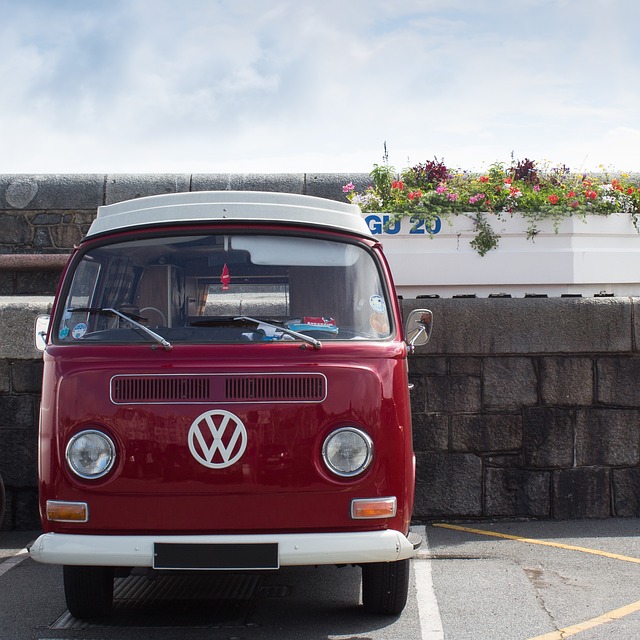
I spend my time growing food, tending the animals and the children, writing, reading and listening to music and we are all at peace and at one with the Universe. Did I also mention our only means of transport is a battered VW campervan?

Haha, just a pipedream, but I like it. I go there in my head at night. I try to build up little parts of it in my real life, such as extending my vegetable plot so I can grow even more next year.

I dream of my basic life and another world while fearing and grieving for this one.

What about you? What do you hope changes when this is all over? Do you think this will ever be over? What do you think should change? Will you be changing anything in your own life? What kind of other world do you dream about?

Indie Author Of The Month; Kim M Watt

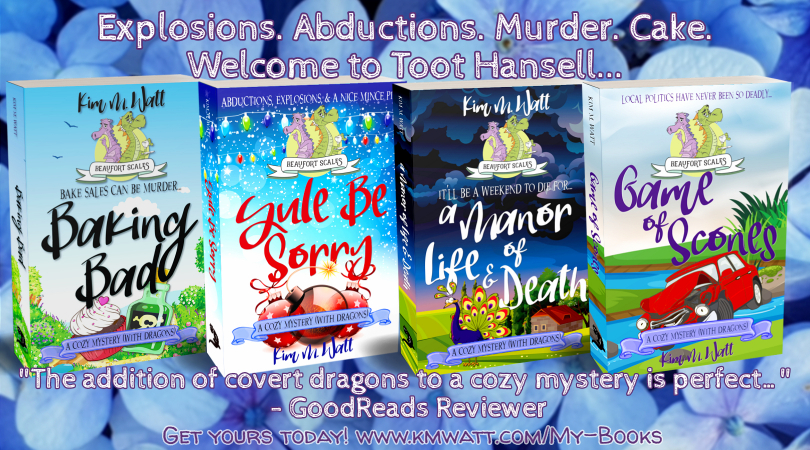
Hello and welcome to another Indie Author of The Month post! At the end of each month I highlight an indie author I happen to think is rather wonderful. This is usually because I have read their books and been following them online for some time. For June, please welcome author Kim M Watt. First, let me say that Kim writes books I wouldn’t normally make a beeline for. Humour and fantasy. Not that I don’t like either, but I’m usually more drawn to YA or gritty, dark kinds of books. I was attracted to Kim’s books because of the snippets and graphics she posts on social media, all of which made me smile and want to give these unusual books a go. I have particularly fallen in love with her Gobbelino London series. To find out more, read on!

1. Tell us about your latest release. What is it about and who is it aimed at?

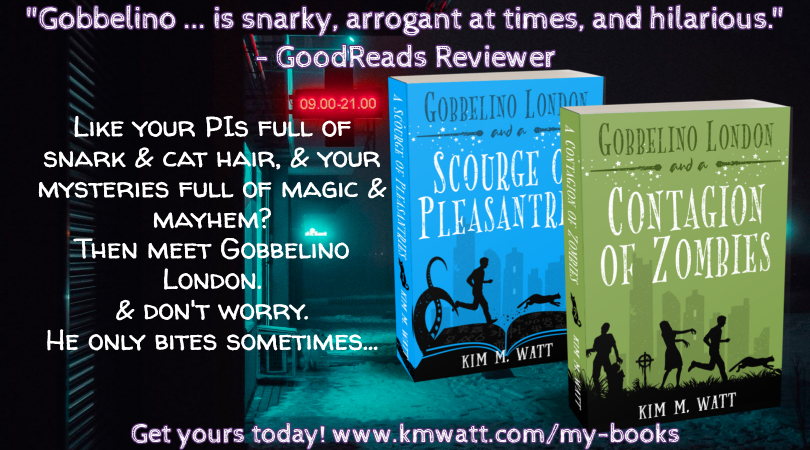
My latest book is Gobbelino London & a Contagion of Zombies, which is book two in the Gobbelino London series. It’s an immensely fun series to write, about the adventures of a feline PI and his human sidekick on the streets of Leeds. Contagion is (surprise!) about an unexpected rising of the dead, resulting in stress-baking reapers, irate magicians, zombie chickens, and some issues of undeadness for our team. It’s aimed at anyone who enjoys a light take on the PI genre, heavily salted with mayhem, humour, and cat hair.

2. Tell us about your publishing journey so far.

I’ve had a few attempts at traditional publishing (starting with a truly terrible vampire novel at 16), but a few years ago I became interested in indie publishing. I like the degree of control it affords the author, and as I’m a reasonably fast writer it also suits me. Plus, as my stories are a bit … quirky, shall we say? Weird has also been used… Anyhow, they don’t fit any one genre that well, so it’s tricky to sell them traditionally. So indie just seemed like a good fit all round. I published my first cozy mystery with dragons about 18 months ago, and it’s just been a really interesting and fun learning curve ever since.

3. When did you first know you wanted to be a writer?

Ooh, always! I grew up on a boat in the South Pacific for quite a few years, so was on the NZ correspondence schooling system. Those being the days of very slow post, we sometimes lost incoming coursework. My solution was to write (and illustrate) a book of short stories. Although I may have been trying to avoid my mum’s maths questions by saying I was writing, too.

4. What is your typical writing day like?

I’m really lucky in that I’m able to write fulltime at the moment, so a typical day for me is up around 6 (earlier if the cat feels I’m slacking on food duty), work out or run, breakfast, then write for about 4 to 5 hours. I don’t write every day, but when I’m on writing or rewriting, that’s my time frame to hopefully get a couple of chapters done. I’m not too hard and fast on word counts, but that’s my goal. The rest of the day is then blog posts, social media, newsletters – whatever else needs doing.

5. What is your writing process? (how do you plot a book, come up with characters, find motivation etc)

Right. Yes. My process. *Tries to look like she knows what she’s talking about*

My process is … messy. I’ve tried really hard to learn to plot, and have done everything from plot gardening to circle-y things to Beat Sheets and everything else I’ve come across, including using a small forest’s worth of Post-it notes (I’m sorry, trees).

My conclusion is that it doesn’t work for me, certainly not in the first draft. My best writing is to have a start point and a vague idea of where I want to end up, then I just start writing. I find by hand works really well, or fast typing without correcting anything (and I’m a terrible typist. It’s almost as bad as my handwriting). The characters tell me about themselves as I go along, and that tends to shape the story. I’m mostly just along for the ride at this stage.

I then go back for at least one major rewrite before I send the story out to beta readers, and that’s where I use a Beat Sheet as a reference point to make sure I’m hitting plot points at about where I should be. Motivation is rarely a problem when I work this way – by the time I start writing I’ve usually had an idea rolling around in my head for a few weeks or months, and I have so much fun watching it take shape on the page that I look forward to sitting down. When I try to plot, on the other hand … not so much fun.

6. What has been the most positive thing about your publishing journey so far?

The online writing community. It’s the most supportive and wonderful collection of people – it makes me feel so lucky to be a part of it. I also love how social media means you can chat to readers – it makes the whole process so personal and lovely.

7. What has been the most negative thing about your publishing journey so far?

I’m not sure I’d call it negative exactly, but it’s All The Other Stuff you have to learn – from formatting to figuring out what you want covers to look like to trying to work out why your website suddenly started eating all your photos. There’s a lot!

8. Who is your favourite character from your own books and why?

Aw, that’s hard! I love all of them for different reasons. Gobbelino because he’s just such a cat, and so much fun to write. Beaufort because he’s so optimistic and gentle and fierce all at once. Glenda, who joined the Apocalypse on her Vespa, and who hasn’t told me her full story yet, but I know she will.

9. Where do your ideas come from?

An amazing amount come from Twitter. Gobbelino London started as one of those games that go around – the name of your first pet plus the last place you went on holiday. The Beaufort Scales series was a combination of a tweet I misread (it was about being barbecued by dragons if you went near their hoard, and I thought it was about dragons hoarding barbecues) and a strange discussion with my dad regarding the Beaufort Scale. Anything can be an idea, really.

10. What can we expect from you next?

I have the third Gobbelino London book due out in August, and a fifth Beaufort book towards the end of the year.

11. Tell us three fun facts about you

This is the hardest question yet!

– I’m originally from New Zealand, but haven’t actually lived there all that much.

– The Little Furry Muse (aka Layla the cat, and inspiration behind many snarky feline characters) has been with me for over 10 years, and in that time has lived in three different countries, ten houses, and two campervans.

– I’ve had all sorts of non-writing jobs, including teaching SCUBA diving, teaching sailing, cooking on sailing yachts in the Caribbean, and being bosun on a superyacht. Writing’s still the most fun.

12. What is the best advice you could give to aspiring writers?

Finish your writing. Accept it won’t be perfect, but know when you’ve done the best you can, and put it down. Otherwise you’ll be adding dragons and taking away pixies for another 326 drafts. And celebrate everything. Every draft, every rewrite, every edit. They all deserve celebrating.

Plus drop the “aspiring” bit, unless you’ve actually not written anything at all yet. And in that case – just start. That’s the scariest bit, so just start anywhere. And then you’re a writer 🙂

Thank you so much for inviting me to interview!

Thanks so much Kim for joining me on the blog. If you would like to find out more about Kim and her books, the links are below!

Website: https://kmwatt.com/

Books links: https://kmwatt.com/my-books/

Indie Author Of The Month; Paula Harmon

Welcome to another Indie Author of The Month post! This time please welcome the marvellously versatile and prolific indie author Paula Harmon. As well as writing fantastic novels and short stories, Paula was also one of the wonderful people behind Blandford’s first ever literary festival last November. I was honoured to be asked to get involved and it was a fantastic event I hope they are all very proud of. I can’t wait for the next one! Here Paula talks about where her ideas come from, what her writing process is and more. Enjoy.

  1. Tell us about your latest release. What is it about and who is it aimed at?

The Wrong Sort To Die’ will be out as an e-book on 30th June 2020.

It’s a historical mystery set in June 1910.

Fighting her corner in a man’s world, Dr Margaret Demeray works as a pathologist in a London hospital for the poor. Suppressing her worry that she’s breaching confidentiality, Margaret gives a stranger called Fox information about a dead down-and-out, in the hope he’ll use it to raise awareness of bad working conditions.

But when a second man appears to die the same way, Margaret starts to wonder why the enigmatic Fox keeps turning up to ask ever more complex questions.

She decides to work alone, uncertain of his motives and wary of her attraction to him.

Once she starts investigating however, her home is burgled, she’s attacked in broad daylight and a close friend becomes distant.

Fox offers the chance to forge an alliance, saying he knows why the men have died but needs her to find out what is killing them and who is behind it.

Yet how come the closer she gets to him the more danger she faces? And how can a memory she’d buried possibly be linked to the deaths?

Margaret must discover the truth before someone – known or unknown – silences her for good.Margaret Demeray was a minor character in the Caster and Fleet series set in the 1890s where she first appeared as feisty teenager. There was no chance she was going to let her older sister get away with all the fun. It would be suitable for anyone who enjoys writers like Ann Granger, Anne Perry, Clara Benson and like a strong-minded female lead.Tell us about your publishing journey so far.

2. Tell us about your publishing journey so far.

I published two collections of short stories in 2016, followed by a memoir about my father in 2017. In 2018, I published my first novel ‘Murder Britannica’ which is a historical mystery set in Roman-Britain in AD190. The sequel ‘Murder Durnovaria’ set the following year in Roman Dorchester came out late 2019. I published a joint collection of short fantasy stories called ‘Weird and Peculiar Tales’ with Val Portelli. With Liz Hedgecock, I co-wrote the Caster and Fleet series – six historical mysteries set in 1890s London which start with ‘The Case of the Black Tulips’. They’re about two young women, frustrated with the restrictions in their lives who end up in partnership solving mysteries.

3. When did you first know you wanted to be a writer?

When I was very small, if I was sent to bed early as a punishment I was always quite glad as it gave me the chance to tell myself stories. (For as long as we shared a bedroom, I used to drive my younger sister up the wall by doing this under my breath when she was trying to go to sleep.) Creative writing was my favourite subject at school and I’d always meant to be a writer. Earning a living, then having a family got in the way to start but I thought I’d finally have time and space when my youngest child started school.  However, a relocation and change of working pattern meant my dream was dashed. Then in 2015, someone encouraged me to enter a competition and join a writers’ group. After that I sort of thought ‘if I don’t just get on with it whether I have time and space or not, I’ll never do it’ and I did.

4.What is your typical writing day like?

I work full-time and writing tends to have to fit round work. I try to write for one day at the weekend as well as fitting in an hour a day otherwise. I’d write on train journeys as I did a lot of commuting up till March. The current Covid-19 situation makes things less easy since, although I’m still working, I spend that ‘hour after work’ catching up by video with my mother and sister. But on the other hand, I’ve had nowhere to go at weekends and been able to get on with writing instead. Although, as for many, the coronavirus situation itself has a scrambled my brain a little.

5. What is your writing process? (how do you plot a book, come up with characters, find motivation etc)

I tend to start off with a short scene in my head – a person or people in a location doing something apparently ordinary and then I have to work out who they are and what’s extraordinary about it or what’s going to happen next. I usually start with two characters and seem to end up with a million – really not sure why! Once I know who the people are, I then work out where they are, when they’re living and what time of year it is. If it’s set in another era, I’ll do a little light research to find out what was going on at the time in case I need to factor that in.  Generally once I find the ‘shape’ of the story, I know how it will start and end and roughly who wants what and what is stopping them from getting it. I usually write that down and then an outline of what ought to happen roughly at each stage of the book. Then I just start and see what happens. I quite often end up completely reorganising the middle, though the beginning and end don’t usually change. I find out more and more about the characters as I go long – they become ‘real’ and that sometimes alters what the core of the story is about in terms of what they learn about themselves or their world.

6. What has been the most positive thing about your publishing journey so far?

Hearing that people enjoy what you’ve written – that it’s touched them or made them laugh – is wonderful. But for myself, even if I write something that not many people read, somehow tapping into the part of my brain that demands to write stories is a wonderful mental release.

7. What has been the most negative thing about your publishing journey so far?Marketing is very hard work. Most writers by nature are rather introverted. I’m not sure I always come across that way at work, but the minute I start talking about my books, I’m overwhelmed with shyness. It always feels like I’m exposing a part of myself, which I suppose I am – since most characters have elements of the author in them. (That’s a little alarming when I think of some of my characters.)

8. Who is your favourite character from your own books and why?

That’s really hard to answer and tends to depend on what I’m working on at the moment! Margaret Demeray’s outgoing and determined nature leads her to want to make the world a fairer place, but it hides a vulnerability. She’s drawn in part from some of the rather feisty women in my family, none of whom let anyone tell them what they could or couldn’t do. But I confess her tendency to lose her temper and say the wrong thing when she does is definitely me.

But I can’t help loving Lucretia – one of the main (and from her perspective) most misunderstood characters in the Murder Britannica series. It never ceases to astound her that people don’t realise just how important she is, but she remains full of hope that not only will she become even richer very soon but that she’ll find if not love then passion – it’s just annoying that people around her keep dying in suspicious circumstances.

9. Where do your ideas come from?

I really don’t know! They just turn up. I’ve always had very vivid dreams and quite often that’s where they come from, and I’m also a terrible day-dreamer. I love places of transit like stations where you can think ‘what if I got on a different train and went somewhere else entirely? or what if the train went back in time? or what if an old friend/enemy sat down next to me? or…’ I sort of apply that in other contexts and see what unfolds. ‘Murder Britannica’ started as a paragraph where Lucretia is having a snide and critical conversation with her daughter-in-law. It just came to me one lunch-time and I wrote it down. It was years before the rest fell into place. With ‘The Wrong Sort To Die’, I started knowing that Margaret had qualified as a doctor in about 1898 and wondered what she’d done after that. I knew she’d have a thirst for justice and equality but also suspected she wouldn’t be much good at bedside manner, so wondered what she’d do and decided she’d probably work in a charitable hospital in the pathology department. I decided what year the story would take place in and by chance, saw something on TV about that era which gave me a germ of a background for the plot – most of the general public thinks they’re living in a golden age of peace with new inventions and social change but meanwhile, the government is preparing for war. What might that mean for the people Margaret wants to help?

10. What can we expect from you next?

Next on the list will be the third in the ‘Murder Britannica’ series. While ‘Murder Durnovaria’ was set in Roman Dorchester, the third book is set in a small town near a river which is roughly located where modern day Blandford is. It’s midwinter and Lucretia’s nephew Fabio will do anything to avoid being forced into an arranged marriage, even look into strange goings on in a small town where it’s hard to know who’s on whose side.

11. Tell us three fun facts about youI can make something out of next to nothing whether it’s a meal or a costume; I don’t take myself remotely seriously; according to family legend I have a medieval ancestor who caught a ‘whale’ off London bridge.

12. What is the best advice you could give to aspiring writers?

Don’t give up. Keep writing things even if you don’t finish them, they may come into their own one day and if not then they’re worth it just for the practice. Maybe today is the right day and maybe it’s not. One day you’ll just get on with it, regardless of whether you really have the space or time. Everything you experience, witness and live through can inform your writing whether it’s serious or funny or thought-provoking. Within legal limits – be a people watcher!

Thank you so much to Paula for agreeing to be interviewed on my blog! |If you would like to find out more about Pauls and her books, her bio and links are below!

Paula Harmon was born in North London to parents of English, Scottish and Irish descent. Perhaps feeling the need to add a Welsh connection, her father relocated the family every two years from country town to country town moving slowly westwards until they settled in South Wales when Paula was eight. She later graduated from Chichester University before making her home in Gloucestershire and then Dorset where she has lived since 2005.

She is a civil servant, married with two children at university. Paula has several writing projects underway and wonders where the housework fairies are, because the house is a mess and she can’t think why.

https://paulaharmondownes.wordpress.com

https://www.facebook.com/pg/paulaharmonwrites

viewauthor.at/PHAuthorpage

Murder Britannica

It’s AD 190 in Southern Britain. Lucretia won’t let her get-rich-quick scheme be undermined by minor things like her husband’s death. But a gruesome discovery leads wise-woman Tryssa to start asking awkward questions.

Murder Durnovaria

It’s AD 191. Lucretia last saw Durnovaria as a teenager. Now she’s back to claim an inheritance. Who could imagine an old ring bought in the forum could bring lead to Tryssa having to help local magistrate Amicus discover who would rather kill than reveal long-buried truths.

The Wrong Sort To Die

London 1910. Dr Margaret Demeray is approached by a stranger called Fox to help find out what’s killed two impoverished men. How can a memory she’d buried possibly be linked to the deaths? And how come the closer she gets to Fox the more danger she faces herself?

The Cluttering Discombobulator

Can everything be fixed with duct tape? Dad thinks so. The story of one man’s battle against common sense and the family caught up in the chaos around him.

Kindling

Secrets and mysteries, strangers and friends. Stories as varied and changing as British skies.

The Advent Calendar

Christmas without the hype says it is – stories for midwinter.

The Quest

In a parallel universe, Dorissa and Menilly, descendants of the distrusted dragon people, are desperate to find their runaway brother in a fog-bound city, which simmers with unrest and deceit.

The Seaside Dragon

For 7-11 year olds. When Laura and Jane go on holiday to a remote cottage, the worst they expect is no wifi. The last thing they expect is to be battling strange creatures with an ancient grudge.

The Case of the Black Tulips (with Liz Hedgecock)

When Katherine Demeray opens a letter addressed to her missing father, little does she imagine that she will find herself in partnership with socialite Connie Swift, racing against time to solve mysteries and right wrongs. (This is the first of six Caster & Fleet Mysteries)

Weird and Peculiar Tales (with Val Portelli)

Short stories from this world and beyond.