The Tree Of Rebels; Book Launch Plan

To update, The Tree Of Rebels is finished, has a front cover and is ready for release. But I have decided to try the small press route first, just in case. So far I have sent it out to seven independent publishers and been rejected already by two. I am going to try to add another three to the list and then leave it at that. My reasons for trying the traditional route for this book are all in this recent blog post; Self-Publishing; Good times, bad times and ugly truths.

Obviously, I want this book released as soon as possible, which is why I am only trying ten suitable publishers and I have given myself until July. This particular book has been two years in the making and I feel it is very relevant to the times we are currently living in, so I am itching to get it out there. But if I self-publish again I’m going to do a proper book launch, which is something I have never done before! I need to start working on this now so that come July I can kick everything into action and give this novel the best start possible. So here is my plan which I am going to print out and stick it on my wall like a check list!

Book Launch Plan (month in advance)

  1. Send out ARC’s to potential reviewers and book bloggers.
  2. Read and write blog posts about similar books in the genre to mine. Let the authors know, and share the books on social media
  3. Use Instafreebie to set up a free sample of ARC’s of the book a month in advance
  4. Set the book up for pre-order a month in advance
  5. Post quotes/teasers to social media by using Canva graphics
  6. Send out ARC’s to email subscribers a month in advance
  7. Arrange a paid book promotion to coincide with launch week
  8. Launch the book at discount price 99p
  9. Send the Street Team ARC’s a month in advance and invigorate them to share my posts about the book
  10. Sort out either and Amazon ad or a Facebook ad
  11. Make sure Amazon book description contains relevant keywords
  12. Upload Createspace paperback version so it’s ready for release at same time

Book Launch Week

  1. Set up a Facebook Event for book launch day
  2. Set up a giveaway for the event day
  3. Share event and book link to promotional groups
  4. Share event and book link to Street Team
  5. Send out another newsletter
  6. Schedule a blog post about the book this week
  7. Arrange a suitable guest post if possible
  8. Post quotes and teasers leading up to the event
  9. Reveal the cover a week before
  10. Start posting chapters back onto Wattpad which is where the book was originally written.

Now, I am sure I have forgotten something, so if you’ve ever launched a book yourself, please let me know what else you did! As always, please feel free to share and comment! I am thinking about having a physical launch as well, possibly in the library.

This list has excited me and I can’t wait to get this book out there! Not long now folks!


Self-publishing; Good times, bad times, and ugly truths

I am writing to you from a place of confusion. I’m unsure about so many things that I feel the need to write them down to make sense of them. The one thing I am sure about is this; I am a writer and I need to write. I will always be a writer and I will always need to write. Everything else is a muddle.

Let me try to explain. When I got back into writing in 2011, I had a decade of wasted years lying behind me. Don’t get me wrong, these years were not wasted in my personal life. I was bringing up small children and earning a wage. I was too exhausted to write. Or so I told myself. The real reason? I was too afraid to take it further. I was too shy, too anxious, too introverted and too protective of my work to send it out to agents and publishers. Ahh, I can breathe a sigh of relief now that’s off my chest!

Once I started writing again, nothing would stand in my way. Not a new job, or a new baby. And at some point in 2013 my attitude towards publishing changed. I got braver. I’d shared some work on here and had some good feedback from a few very early followers. So I started sending the two books I had written, The Mess Of Me and The Boy With The Thorn In His Side out to agents and publishers. I wrote massive lists of both and worked my way through them. It was, of course, depressing and demoralising, but I felt I had to do it. I never expected any of them to like my work, and in many ways, it felt like a rites of passage to go through this.

Self-publishing presented itself to me and appeared to be the answer to all of my problems. I didn’t need to torture myself by waiting for inevitable rejection anymore. I didn’t have to stress over how to word a query or an email. I could take full control and get my books out there on my terms. Brilliant.
philosoraptor-self-publishing-you-say-i-think-this-could-work-out-well

It was exciting to start with. I felt like I had accomplished something. I had realised a dream. I had written and published my books! I wasn’t too fussed about sales or money as that had never been my motivation, and in those early, hazy days, I was just excited.

Of course, reality soon set in, and over the last four years I have had one hell of a bumpy ride and made many mistakes. I’m actually embarrassed now to look back on the early days. I had no idea about front covers. I had no idea about social media, building an author platform or promoting my work. I soon bumped back to earth and started the real hard graft that is the life of an indie author.

Let me tell you the reality of being an indie author.

It’s good and it’s bad. It’s pretty and it’s ugly. I love it and I hate it.

Indie authors do everything themselves. Yes, they may hire editors and front cover designers. If they have oodles of spare money they may pay for adverts and promotions too. There is nothing more evil to me than the saying ‘you have to spend money, to make money.’ That’s the crappest thing ever to say to someone who has no money.

Indie authors offer their work for free. This happens in very few other areas of life. But people expect it now. They expect freebies and offers and giveaways. We expect reviews and recommendations in return but rarely get them. In essence, being an indie is like giving your all, your everything, your blood sweat and tears, and then getting very, very little back. And again, I don’t just mean sales. I keep my books priced low because I want people to be able to afford them. I give free books and stories away with my newsletter and I post free stories on Wattpad and I do the odd giveaway.

Indie authors work extremely hard. They’ll have families, and other jobs, and still keep plugging away, writing more books, building their platform, increasing their content, remaining active on social media, trying new things all of the time in the hope it enables their books to become visible. They don’t want to spam people, they don’t want to beg. They have to learn how to self-promote without getting on people’s nerves. They have to deal with people thinking they are totally wasting their time.
insanity-wolf-buy-my-books-buy-my-books

Let me be clear once again; it’s not about the money. It’s about the connection. I write books because I want people to read them. I love that connection. I love passing my stories on. I love receiving messages about how people related or reacted to the characters.

Right now I feel like I am betraying the indie scene, because I am trying the traditional route again with the next two books. I started the process the other night with The Tree Of Rebels and was instantly reminded of why I hated it so much last time. Ugh. It’s scary. I kept thinking, just self-pub it! Why are you doing this to yourself again? You’ve been here and done this! You’ve moved on! You’ve grown! You’re indie and proud! You know how to do it now, how to get the right cover, the right blurb, the right marketing plan…Yes I do, but I am also, really, really tired. My confidence is at an all time low. I am not making that connection with people. I am banging my head against a brick wall.

So, here I am again. Researching publishers and putting my heart in the firing line. I already had one rejection the day after I started this! I expect many more to come. Maybe I feel I need to do this. Give it one last try. Because I am not succeeding as an indie. I am getting better as a writer, and I am getting better at all the things you need to do to be an indie, but I am not succeeding where I really wish to, which is gaining new readers and forging that connection.

I see other authors getting promoted with their publishers and I want a piece of that action. I admit it. I am envious. I am filled with longing. I am practically drooling for the same number of sales and reviews. I want what they’ve got and I am afraid that my efforts as an indie will never be enough to get it.

So, heart in mouth, I will try the traditional route again.

But no fear, I will self-pub these books if I get nowhere. I promise you. I will self-pub the god damn hell out of them! I will market and promote the holy fuck out of them! I absolutely promise you that. I promise myself that. I will come back harder and faster and stronger.

There is no giving up. Not ever.

Either way, I will keep writing and getting better at it and if I self-pub again I will never give up trying to find more readers. This is not a post about quitting. This is a post about the realities of finding success as an indie. And by success, I mean a growing readership.

It’s just at the moment, I am tired of the indie ups and downs. The good days followed by the bad days. The endless hope that one day it will all be worth it…

And in a weird kind of way, submitting to publishers has already made me appreciate being an indie…it’s already made me feel that surge of pride and passion again about everything indie authors do, and are…I love the indie scene, I really do. I have read countless amazing books, in fact, I rarely read traditionally published books these days, because there is so much talent in the indie pool. It just makes me sad that so many of them are not getting the recognition they deserve.

Over to you. What do you think? Do you love being an indie? Is it what you thought it would be? How do you keep going when times are tough? I would love to hear your thoughts on everything I have talked about today. Join the conversation, have a moan if you need to..and then we will all get back to the writing!
Diversity In Books

About a year ago I noticed something about my books. I realised that all of my characters were white and straight, with the exception of the head teacher in The Boy With The Thorn In His Side. Or at least they were white in my head; obviously readers may have imagined them differently. I have to admit I felt a bit ashamed by this. It was never intentional of course, not to write about more diverse characters, it’s just that I’ve always lived in a very white area, where everyone I grew up with was white and so on. As for writing characters that were gay, this had also never occurred to me, I guess, because I’m not gay.

After realising this, I decided to change the ethnicity of my main character Elliot in Elliot Pie’s Guide To Human nature. It wasn’t a huge change. I just mentioned that his absent father was Indonesian, making him mixed race, with dark skin and hair, unlike his mother who has blonde hair and fair skin. Not much is made of this in the book. It did, however, tie in nicely with the hatred his mother Laura feels for the people who live in her claustrophobic neighbourhood, such as Tony, who likes to knock on people’s doors to warn them there are immigrants living behind them.

At the time, I spoke to a lot of other people about the topic of diversity in books. My daughters thought I was right to change Elliot’s ethnicity, and were quite appalled that all my characters so far had been white and straight. Other people said to change his ethnicity seemed a bit like a token gesture, and if he was white in my head I should leave him like that. I’ve since thought about the decision in other ways too. For instance, does a white writer have any right to write about a character who has a different cultural background to them? I would argue that they do, as long as they have done their research if research is needed. In this case, it was not. Racism is not an issue for Elliot, only his mother, who cannot stand the Little England mentality of people like Tony. His mother is in a state of despair about the state of the world, and for example, cannot understand the callous attitude people are having towards the refugee crisis.

I decided to leave Elliot as mixed race and think about it again later. If he persisted as blonde-haired and blue-eyed in my head, then I would change him back. But for me now, after about a million drafts, he is darker skinned than his mother, with very dark hair. He’s become this Elliot in my head, so I’m pretty sure that’s the way he’s going to stay.

While Elliot Pie was with beta readers, I took a break from it and wrote a rough draft of a YA novel about an alcoholic teenage singer. I’ve blogged about this story idea in the post  Untold Stories , as the original story was one I penned aged 16 and then discovered in an old suitcase under my bed. In the original story, again, everyone was white, straight and working class. In this new version, as I was writing it, the characters changed. One of the secondary characters became gay, and the main character, Bill became bisexual. Well, I say bisexual, but this is not entirely confirmed by the end of the novel, and he certainly doesn’t waste any time feeling confused or upset about what he is or isn’t. He just has a lot of fun kissing his best friends, one of whom is female and one of whom is male.

Now, again, why did I do this? I think there are several reasons. I think because diversity in books has been on my mind. It’s been on my mind because I too have noticed how many of the books I read contain, straight white characters and this has started to annoy me. It’s been on my mind because of my children, who are, to my great pride, growing up to be the sort of people who are accepting of anyone of any culture, ethnicity or sexual preference. In many ways, my children educate me on the issues facing the LGBT community. Plus, I feel that with recent political events, and the horrific rise of hate crimes against ethnic minorities and LGBT  people, we all have a responsibility to stand up for equality and decency and kindness.

With all this on my mind in recent months, it’s no wonder it crept into this rough first draft. It was not intentional, but rather an organic and natural progression. It felt right for the characters and added to their storylines hugely.  Have I got it right? Who knows at this point? I will see how it all reads once I get around to the second draft.

And as for Elliot Pie’s ethnicity, this still feels like the right thing for the book. So, what do you think? As readers, do you feel the books you read have enough diverse characters? Is diversity in books important to you? Do you ever feel certain groups in society or ignored,

So, what do you think? As readers, do you feel the books you read have enough diverse characters? Is diversity in books important to you? Do you ever feel certain groups in society are ignored, sidelined or stereotyped in literature? What about you writers? Do you write about diverse characters, and if you do, is it intentional or natural? Do you tend to write about characters who are similar to yourself? Or do you feel writers have a responsibility to open people’s minds up to other lives, cultures and backgrounds? I would love to know your thoughts, so please feel free to join in the conversation!

Message and Themes; What Are You Trying To Say?

When I was at school, English Literature was always my favourite subject. I was a total book-worm who dreamed of becoming an author, so you can kind of see why I adored English Literature. Reading books, talking about books and writing about books was my idea of heaven. Having said that, there was always one part of the subject that annoyed me at times. When analysing a text, the teacher would often ask us to think about what message the author was trying to get across. It was a question akin to the equally confusing one; what are the themes of the novel? I remember thinking, I bet the author didn’t know there was a message or a theme, or that we would try to work one out. I always considered that Shakespeare, Bronte and Steinbeck just wrote books because they had great ideas, great characters, and could string some pretty awesome sentences together.

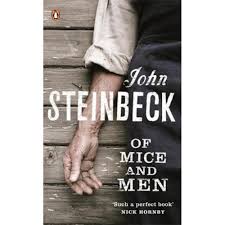
But English Lit demands we find the messages and the themes, and yes, when you pick apart a text and analyse it within a classroom setting, you do tend to find them. But were they intended? I suppose I’m asking, did the author write the book with a theme or a message in mind? Or is it the reader who later determines what the potential messages are? I mean, did Steinbeck write Of Mice and Men because he had something to say about society or human nature? When I was a kid, I thought not. But it turns out I was wrong;

In every bit of honest writing in the world there is a base theme. Try to understand men, if you understand each other you will be kind to each other. Knowing a man well never leads to hate and nearly always leads to love. There are shorter means, many of them. There is writing promoting social change, writing punishing injustice, writing in celebration of heroism, but always that base theme. Try to understand each other.

John Steinbeck in his 1938 journal entry
I remember trying to distinguish the themes of the novel when I was at school. What seemed so obvious to the teacher, had to be pointed out to us. I haven’t read the book since then, but it is on my to-read list as part of a reading challenge I’m undertaking, where one of the books has to be one I read in school. But I think I will see things differently now.
Why? Because I am approaching my fourth decade and I’ve seen enough of life, love, people and society to know that Of Mice and Men is not ‘just a story’ as I once mistakenly believed. It’s a book about dreams and aspirations, loneliness and solitude and the author had plenty to say about all of these things. I am now the writer I hoped I would be, and writing books is a fascinating process, which involves the seed of an idea germinating into an intricate plot full of characters who become real to you and set up camp in your head. But more than that, writing is about what you want to say to the world.
I’ve been thinking about this a lot lately after I received feedback from a beta on my still unfinished novel Elliot Pie’s Guide To Human Nature. One of the things she picked up on was the messages or themes of the book, and in particular, her observation that some of the characters had views very similar to my own. She felt this at times made the narrative somewhat preachy, or at least, it was in danger of heading in that direction.
I had to stop and think about what she meant. None of the characters are me, or based on me, or anyone I know. I plucked them up out of the thin air to build around the character and story of Elliot, who I really did know and believe in.
However, I have to admit that unintentionally, or at least sub-consciously, bits and pieces of the writer and the writer’s viewpoints seep into the writing. I knew what this book was about, and I knew from the beginning what I was trying to say, so as you can see, I have come a long way from my previous scepticism that books did not contain deliberate messages. On the contrary, I have had something to say in all of my books, and I think it very much depends on what is going on in my life at that time. For this book in particular, Elliot and his mother are like the two sides of me. One side is heartbroken and terrified about the state of our world and wants to withdraw from it all, while the other side is perpetually hopeful and joyful, determined to the best in everything.
So is this a good thing or a bad thing? I think my beta was right to point out the danger of appearing preachy in the narrative. I certainly don’t want my books to come across that way. I have to be sure it is the character’s viewpoint being explored, not the author’s. I have to be conscious of what is being portrayed as ‘right’ or ‘wrong.’ So at the moment, I am going through the book again, with the beta’s notes beside me. Sometimes it just needs a tweak, some words rearranged or deleted. Sometimes I don’t need to do anything because I think the character truly believes in what they are saying, and in doing so is remaining true to character.
This brings me to another question, though. Do people pick up books looking for messages or themes? Do most readers notice them, even if they are supposed to be there? I suspect that what one reader picks up as a message or theme, is very different to anothers. Do readers want to be spoken to in this way? I don’t think many people pick up a book looking for clarity or persuasion. I think they pick up books looking for stories. And stories involve people and their messy human lives, and messy human lives contain messages, whether intentional or not. Because they are written by one person, created by one person, and whether they were totally aware of it or not at the time, that person had something to say.
So, what do you think? As a reader, do you choose a book because of the message it seems to be conveying? Do you notice the themes of a novel as you are reading it, or do they become obvious to you afterward? Do you ever feel like the writer is trying to tell you something about the world or about life? Does this every feel like you are being preached to?
And what about you writers? Do you know what you are trying to say before you start to write the book, or does the message reveal itself to you in time? Are you aware of any themes in your book, and again, are these intentional? Do you ever worry that you are trying too hard to get a message across?
Please feel free to join in the conversation!