Interview with Author Harriet Springbett

Last week I read and reviewed a beautiful and unique YA book, called Tree Magic. I came across this book in a Facebook group I am lucky enough to be part of, and the front cover and title immediately caught my eye. It sounded just my sort of thing. (If you follow me on Instagram you might have an idea of how obsessed with trees I am!) You can read my review of Tree Magic here. Author Harriet Springbett kindly agreed to an interview, which you can enjoy below. Tree Magic comes out in paperback on the 1st of March, and is currently only 99p for the ebook on Amazon. Grab it!

Tree magic3

1) Can you tell us what inspired you to write Tree Magic?

I was sitting under a weeping willow tree in my garden, writing the start of a novel about Rainbow, a teenager who didn’t fit in. A recent storm had uprooted a nearby sumac tree and I found myself wishing I could stroke its branches back into shape to rebalance it: we hug trees to make ourselves feel better, but who ever makes trees feel better? I started to wonder what it would be like if someone could communicate with trees and help them in this way. As Rainbow was under my pen, she became the one to be blessed / cursed with this gift.

2) Did the plot come first, or the characters?

Definitely the main character. I’d already written a short story about Rainbow, and a member of Lumineuse, my writers’ group, said she was such a vivid character that she could almost see her beside me. The plot grew organically from Rainbow, her gift and her problems. This was a deliberate approach on my part, because the previous novel I’d written was plot-led and I’d found the writing experience too restrictive.

3) The story is told in both past and present tense – why did you choose this approach, and how difficult was it to pull off?

The tenses are intrinsically linked to the characters of the two protagonists: Mary wants to forget her past so the present tense represents her best, whereas Rainbow is like a tree, with roots into her past. It wasn’t a question of ‘pulling it off’, because it was natural rather than being a storytelling device. I was warned that publishers wouldn’t like the tense-mixing, but I believed it was too essential to change. In fact, my publisher (Impress Books) never questioned the tenses.

4) Are any of the characters based on people in real life?

No! Part of the fun of writing stories is creating characters. I’m a detail hoarder, and I jot down lots of rubbish that amuses or interests me, which may then produce a character (or not). For example, the other day I was running with a friend who’d bought a new pair of trainers. I noticed that the underside of her trainers happened to match the colour of her T-shirt, and found myself thinking about the kind of person who would do this deliberately.

5) Did you have to do much research into trees, or did you already have some knowledge in that area?

I love trees. I grew up on a Dorset farm that had 10 acres of woodland and a stream, and we were always playing in them, making tree houses or fixing rope ladders and swings to them. We had our own trees in the way other children have pets. Tree Magic doesn’t have technical details about trees, so I only needed an everyday knowledge, which my childhood and a tree guide provided. However, I did research details for the habitats and characteristics of certain trees, such as the symbolic silver maple.

6) This is your debut YA novel, can you tell us what is coming next?

I have already finished another YA novel called Red Lies, White Lies. It’s a thriller with a 17-year-old protagonist, set in France, and has no magic realism. A beta reader said she couldn’t put it down – but I really should make time to seriously hunt for an agent. I love the writing part of being an author, but I’m not very good at sending out my work. I must confess that I have begun to write another YA novel when I should really be trying to find a home for Red Lies, White Lies.

7) Do you read a lot of YA yourself? If so, what are your favourite YA books?

I didn’t intend Tree Magic to be a YA novel because I hadn’t read much YA fiction. When it was placed runner-up in a competition, the judge told me that with a little rewriting I could target the YA market. An agent who rejected it mentioned YA too – so I researched the YA market and rewrote it for younger readers. I only really started reading YA a short time ago – and I’m seriously seduced by what I’ve read. There’s a refreshing liberty in YA writing. I loved The Sun is Also a Star for its ‘science versus intuition’ approach (a little like in Tree Magic). I was shocked and impressed by Orangeboy. I adored the protagonist in Wing Jones and thought A Monster Calls was beautifully written. I could go on, but I’d better stop there.

8) Can you tell us about your writing and publishing journey so far? What have been the highs and lows?

The lows were the rejections. I originally sent Tree Magic to about 10 agents, was rejected by all of them and concluded that the story was rubbish. I left it in a drawer for years before learning that this rejection rate was normal, and that small publishers accepted unsolicited manuscripts. Long live small publishers! The highs were firstly getting my manuscript accepted by Impress Books (though I worried for ages that they’d change their minds) and then the whole editing process with them. They are wonderful. The weirdest moment was when I read the blurb my editor wrote. My immediate reaction was ‘that sounds like an exciting book’ and my second was ‘it’s your book, you idiot.’

9) What advice would you give to new writers just about to start the journey into publication?

Don’t be put off by rejections. You must keep searching for a home, but make sure you get readers and other writers to critique your story first. Writers’ groups are invaluable for this. Also, I wish I’d written more short stories before launching into a novel because the experimentation, feedback and rewriting loop takes less time than with novels. Short stories help you to find your voice.

10) What have you learned so far about promoting your book?

I didn’t realise that book promotion and publicity would be so time-consuming. Getting started can be scary, so it’s wonderful if you have a publicist to guide you. If you’re not careful, it will eat into your writing time, so you have to sum up your courage and push yourself to be proactive while still remembering that the writing is what’s most important.

11) Describe an average writing day for you

I exchanged my full time job for part time work in order to have writing time, so this motivates me to sit down every morning and write until lunchtime. Most evenings I run or cycle – this is my problem-solving time, when I run through scenes in my head and visualise characters’ reactions. Of course, my friends don’t believe me when I say I’m working as I run! I don’t write at weekends, because I want to live fully, spend time with my family, do sport, see friends etc. Inspiration comes from interacting with real life, from watching and listening to what’s going on in the world, so it’s important not to shut yourself away all the time. It also means I look forward to getting back to my computer on Monday mornings.

12) Finally, tell us three interesting facts about yourself

This is the most difficult question. OK: when I was 22 I did a Raleigh International expedition in Chile and then hitchhiked 5000km from the south to the north. My ideal holiday is an itinerant trip with a bike, a tent and good company. And I’m (distantly) related to Thomas Hardy.

More about Harriet Springbett…

Harriet Springbett lives in France with her French partner and teenage daughters. She grew up in West Dorset and qualified as a manufacturing engineer before realising she preferred people to machines, and words to numbers. She moved to France in 1995, where she studied French and then worked as a project manager, a freelance feature writer, a translator and an English teacher. She has always written in her free time.

Her debut YA novel, Tree Magic, was published by Impress Books in ebook format in January 2017. The paperback is due out on 1st March. Harriet writes every morning and blogs on writing and cultural events at Harriet Springbett’s Playground of Words and Thoughts. Several of her short stories (Quark Soup, Shingle & Sand, Ami Entends-tu?, Big Bones…) have been placed and shortlisted in competitions or published in magazines such as The French Literary Review.

Links;

Tree Magic page at Impress Books: http://www.impress-books.co.uk/impress/tree-magic/ Tree Magic on Amazon.uk: https://www.amazon.co.uk/Tree-Magic-Harriet-Springbett/dp/1911293001/ref=sr_1_1?ie=UTF8&qid=1485160742&sr=8-1&keywords=9781911293002 My Blog: https://harrietspringbett.wordpress.com Facebook author page: https://www.facebook.com/HarriSpringbett/ Twitter: https://twitter.com/HarriSpringbett


The Many Roles That Make Up Who We Are

Last Tuesday was a fairly busy day for me.

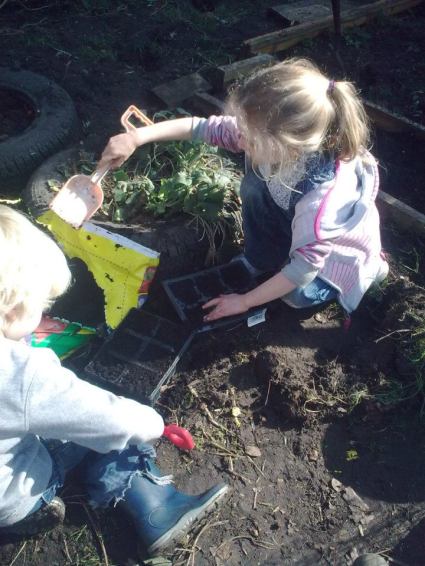
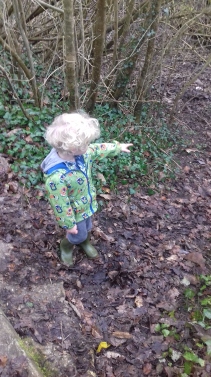
I got up around 6am with my two-year-old, as is the norm. We had breakfast, got dressed, let the chickens and ducks out and fed and watered them all. Then we had our usual little mooch down the lane with the dogs. Back home, I had my coffee and he had a hot chocolate to warm up. These things happen every day.

20170219_085234


After that, I left the house with my fourteen-year-old and drove us to the local community hall where I was running a writing workshop for 7-16 year olds. I do this every school holiday with my Chasing Driftwood Writing Group business . I slipped off my ‘mum’ hat and popped on my teaching one, welcoming the children in, talking about writing and getting the workshop started. Once it was over, my daughter helped me put the tables and chairs away, and I was Mum again.

We arrived home and I slipped further into the usual role of Mum, with my toddler who had missed me. I only had time to eat some lunch, placate him with brief cuddles and chat, before I had to get back into the car to drive to another job. This time it was within my other role as a dog walker. I’ve only gone back to this fairly recently, but it was what I was doing before I had my youngest child. Back then, it was the perfect day job to tie in with writing. In between walking dogs, I wrote.

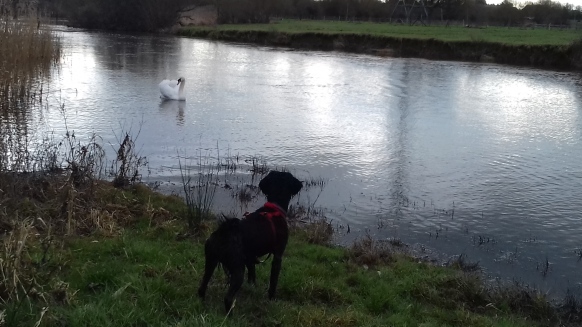
I put on my wellies and mucky dog walking coat, collected the dogs from their home and set off across the muddied fields of Throop, adjacent to the river, as usual, in total awe at the beauty of my surroundings. I was yet another me. The dog loving me. Never happier than when in the company of these lolling, wagging, slobbering beasts. Dogs are an obsession to me as much as reading, writing and music. They make me who I am, and who I have always been, and when I am walking along with them, lost in my own head, smiling at their antics, I am reminded of who I was as a child and of what I dearly wanted. To be a writer and to work with animals.

20170208_113514

While I walked, I slipped between dog walker and writer mode, throwing their ball and tossing them treats, as I thought up blog posts and articles and snippets of short stories in my head. Every now and then, as is standard, I had to tap something into my phone notebook in case I forgot it later.For this time, I was not Mum or writing teacher, I was myself, I was Chan.

Back home, a brief rest and then it was time to walk my own doggies again. I was definitely tired by then, and had just recieved a text from a good friend reminding me that it was drinks tonight. I had totally forgotten and instantly I thought no, I can’t, it’s been a busy day and I really need to do some writing and get an early night…At the same time, I desperately wanted to go. This is a group of friends I made through being a mum. Our 9 year olds have all been friends for the last five years, and our friendships have grown over that time. We try and meet up every now and again outside of school, as these days, we are seeing less and less of each other within the school environment. The boys are getting older and wanting more independence, and we’ve all noticed we now see less and less of the usual mums in the playground, as we increasingly drop the kids off and leave them to it.

I made myself go out and socialise, as it is not something I do very often. Like most writers, I’m an introvert at heart and love nothing more than my own company, my own imagination, and to round off the night, a good book. I was so glad I went, though, as I was able to enjoy a few glasses of wine, and strip off all the roles I had played in the day and all the many ‘hats’ I had worn. With the workday over, children in bed, and partners at home, we were all able to have a good moan and a catch-up, a bit of essential ‘me’ time!

This was a busy day, but not an unusual one and it got me thinking about how the roles we play make up who we are. But who is the real you? Are we ever really our true selves, or just different versions of us, presented in different ways, for different reasons? It got me thinking about the next week ahead. On the Friday I was lucky enough to be interviewed on BBC Radio Solent as part of their Dorset Lives section. I was incredibly nervous, but yet when I listened back, I was overwhelmed by how calm, confident and professional I sounded talking about my writing and why I set up my Chasing Driftwood business. I couldn’t believe that was actually me! I mean, was it actually me? Or just the version of myself I knew I had to present in order to get through that particular situation? It was certainly not the same me that gets ratty with my kids at home, or wanders by the river, splattered with mud, throwing balls for dogs! This week I will going into a local school for a meeting about a proposed school writing project, inspired by another writer, but put forward by me for this area. Yet again, I am sure the ‘me’ I put forward during this meeting is going to be different. Professional and confident, but she is also going to need to be warm and passionate about the project and how it could benefit the school.

Is there ever a true us? Does a real me exist? Is it the one who is left when I am totally alone, beholden to no one, with nothing expected of me? Or is it the one who chats to other mums inside the school gates? The one who drifts off inside her own head when out with her dogs? The one who runs the bath, and picks up the dirty clothes and makes the lunch boxes for the next school day? Or the one who plans writing workshops and presentations?

I guess I am or have slowly become all of these roles, and all of these people. They are all me, when I need them to be me. They are all parts of who I am and what make me an individual. Some of them did not use to exist at all, but now, here they are. Here I am. All these different faces and demeanours and personas. How very odd when you think about it!

So, what about you? Who is the real you? How many roles do you play out in your busy life? How many hats do you have to wear? Please feel free to comment and join in the conversation! I would love to hear from you!


Social Media, Distraction and Guilt

Me and social media have had a bumpy ride to date. There was the initial stand off, followed by sluggish efforts, which were then followed by a relationship that can only be described as love/hate. In this day and age, social media is essential for indie authors who want to connect with more readers and build a following. I accepted this early on, but I didn’t have to like it. It felt really odd in the beginning. I needed to be active on as many sites as possible, but didn’t really want to be on any. The whole networking thing was a complete mystery to me and I didn’t know where to start. And then when I did make the brave move of starting this blog, joining Twitter and setting up a Facebook author page, I found I had two main problems. I didn’t know what to post and when I did post, I was just talking to myself!

Is there anybodyout there-.jpg

These days things are very different. I’m happy to report I now have a far more positive and realistic relationship with social media. I have my little following, for which I am extremely grateful. I have learned what to post and when to post, and hopefully, I maintain likes, follows and engagement, by posting interesting things!

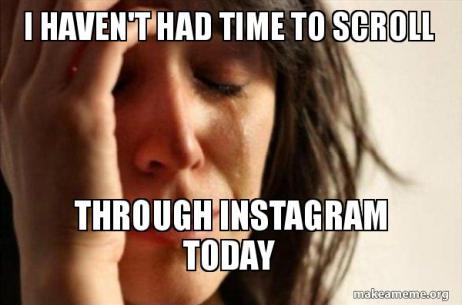
The problem I have these days is a little different, and it might be one you are familiar with. Social media, now that I have fully embraced it, is one major distraction, for which I feel endless amounts of guilt. Know the feeling?

i-havent-had-56u62s


As a new author, I started with this blog, Facebook and Twitter, but I obviously wanted to spread the word far and wide, so I collected a few more here and there. Goodreads, LinkedIn, Pinterest and Wattpad. And just last week, I added a shiny new one to the social media collection, Instagram.

I thought it would kick me up the bum a bit to try a new one. Nothing ventured, nothing gained, and all that. And as I already mentioned, the problem I have these days is rather different to the one I had in the beginning, where I viewed promoting via social media as a kind of cold sell out that somehow devalued what I was trying to do. These days, the problem is it is too tempting to be on as many as possible and for as long as possible!

It’s great that I genuinely enjoy social media these days, but it can be incredibly addictive and it can be hard to strike the right balance.

A while back I deleted Facebook from my phone as I was scrolling through my feed and posting things all through the day, and this was making me feel constantly depressed and angry about the state of the world, as well as terribly guilty for being on my phone whilst I have a beautiful little boy to care for.

I felt much better after it was gone. I limited myself to social media in the evenings only, a bit before writing and a bit after.

But now I’ve got Instagram on the phone. And…um, Facebook is back too.

I have to be strong though, and keep reminding myself that I am on both of them for business, ie book promoting reasons, only. I don’t have the time to go scrolling through feeds all day and missing time with my child. If I only have a few minutes here and there in the evening, then that’s all I’m going to get. Of course, I would love to spend hours and hours on social media, finding interesting articles on Twitter and Medium to share to my pages. I would love to be pinning all day and adding to my boards, and I won’t even go into how joining Instagram has had me viewing everything in hashtags since last week. It’s just weird!

social-media-updates

So, how to you avoid getting totally distracted by social media and then feeling guilty as a result? My advice is to set yourself rules and stick to them!

You don’t need to post on all of them, all of the time. I posted on Instagram for the first time a few days ago. I decided to start off I would post a series of photos in the style of a ‘day in the life’ type thing, I took pictures of things that happen in my life every day, ie walking dogs, baking, gardening, parenting, and at the and of the busy day, writing followed by reading. This was really fun to do. But now I intend to leave it alone until I next think of something worth posting, for example, scenes that inspire or are in my books, front covers, extracts of work, events and so on. I don’t want to get addicted to it as a site.

The same applies to Pinterest. It is very addictive and a lot of fun to play around with, but I only dip in and out when I need to. This is the sort of site you can totally ignore until you need to make use of it. I update the boards when I have a reason to, and will be paying much more attention to the site when I have a new book to launch and promote.

There are going to be times when it is much more important to use certain social media sites, such as when a new book is coming together or about to be launched. But my advice would be the rest of the time, to stick to the three that you deal with daily or weekly, and take a break from the rest.

It’s not a good idea to dip in and out of all of them for example, so if Facebook and Twitter are your thing, then stick with them, and post consistently and engagingly in order to build a loyal following. Just don’t feel like you have to be doing this all day every day with ALL of the sites you are on.

My last piece of advice? Give yourself one day or night totally OFF. I’m the sort of person that would be writing all day every day if I could. I hate not writing and when I am not writing, I always wish I was writing and I am constantly thinking about writing. This includes time spent increasing my social media content. But once a week I turn it all off and step away from the wi-fi. It’s a no go area, and it really does me the world of good. I curl up with my kids, leave my phone off, watch TV and chill out.

It genuinely feels like a day off ‘work’ and of course, we all need those.

Please feel free to comment or share! How many social media sites are you on? Do you feel guilty about the amount of time you spend on them? How do you strike a balance between work, social media and home life?


Changing Perspective

Last week I explained how my beta readers have shaped the direction of my next novel Elliot Pie’s Guide To Human Nature. (Beta Readers: How and Why? I mentioned how some of the issues that have been addressed thanks to my betas were pace, showing rather than telling and point of view. So today I thought I would talk a bit about point of view and perspective in storytelling.

It’s a subject that can prove quite divisive. I know I was shocked the first time I realised not everyone loves first person viewpoint! Apparently, some people really despise it! Obviously, it has its limitations. Here are some of the disadvantages of climbing entirely inside the head of just one character;

  • you only get the viewpoint and opinions of one character
  • this can limit the amount of information and back story the reader receives
  • other viewpoints are neglected, including the potential scenes between other characters when the narrator is not present
  • it gives the story one voice, the narrative voice of the character telling the story which can be a bit restrictive
  • if the reader dislikes or does not connect well to the first person viewpoint, it can really deter them from the book
  • it’s a very personal way to tell the story, and can impose biased and subjective viewpoints which may grate on the reader
  • it runs the risk of becoming boring and/or repetitive
  • there is a danger of relying too much on ‘telling’ rather than ‘showing’

Now I am not ashamed to admit that I LOVE first person. I think this may have something to do with how obsessed I get with characters. It’s character over plot for me all the way, hence why The Catcher In The Rye is still my favourite book ever. If I like a character, I don’t mind being inside their head one bit. Anyway, these are the reasons I think first person can be a really effective way to tell a story;

  • it allows the reader to fully connect with the protagonist/narrator
  • it’s much easier to gain sympathy and empathy from the reader
  • easier to construct a consistent style and voice
  • can make it easier to explain/justify a characters motivations and behaviour
  • can be much more emotional, drawing the reader in
  • it brings a vivid sense of immediacy to the story
  • done well, can be extremely powerful

But how do you know which is the best perspective for your story? There is also alternating points of view, which can be done in first or third person. Then there is the authorial third POV where the narrator is the all seeing eye of everything and everyone.

I think every author has their preferred perspective to use, but it is important to think about the story being told and what will best suit its needs. I know for a fact I am way too tempted to use first person. I did so with The Mess Of Me; a YA drama written in a tell-all, confessional diary style. We climb inside Lou’s head and never get to see through the eyes of any of the other characters. I could have explored third person, and jumped from character to character, but there was a reason I didn’t. As well as being about body issues, family drama and first love, The Mess Of Me is a story about those people we sometimes have in our lives, yet do not really know. eg Travis, Leon and Marrianne, for Lou are all deeply involved in her life and the drama of the story, yet are all as good as strangers. The story needed to revolve around her mind set and emotions in order to get this across. So it just had to be first person.

The Boy With The Thorn In His Side was a different matter. I originally wrote and rewrote this story in third person. Yep, you got every character’s viewpoints, and there are a lot of characters! The action jumped around all over the place. But it didn’t work. I didn’t feel close enough to my two main characters, protagonist Danny and antagonist Howard, and the more I rewrote it and got into their mindsets the more I realised that this was their story. Truly, this book is about their warped and dangerous relationship. So I changed it to first and boy did it work then. I must have worked with a constant smile on my face! You see I knew them both so well by this point that it was a piece of cake to climb into their heads and write from their POV. I used alternating POV from both characters in the first person. You get to examine their twisted relationship from both their views. This is a fantastic way to make first person narrative more interesting and varied.

With the sequel, This Is The Day, I wrote it in third person to begin with and then again switched it to first, but this time using alternating perspective from five characters. This was fun to do because I got to really explore the motivations of the characters who were introduced in the first book. And I think it worked; it was the best way to put the story together.

So, as you can see, there was a growing tendency and fondness to using first person narrative. I had found my comfort zone and made myself extremely comfortable! I forced myself to break out of this warm little zone with This Is Nowhere. (And I would strongly recommend forcing yourself to break away from the familiar every now and then.) Third person. It had to be. But with the chapters zipping back and forth from the past to the present. However, I still stuck to one point of view, Jake’s. This was not intentional at the time but now I can see why it makes sense. Jake’s story is the unpicking of two mysteries; what happened to his mother in 1996 and who he is. The other characters didn’t really need a say in this, although their behaviour and secrets helped pave the way for the climax where Jake discovers the truth about everything. I also think this was the best way to tell the story. Third person worked with jumping between time frames, as we got to see the young Jake and how his mind worked then, helping us to understand the person he was in the present. Other characters perspectives would have made this way too muddled and complicated.

Tree Of Rebels. Uh oh, I was back to the first person again. You see my problem? I really do like that comfort zone!! This book is still awaiting a final rewrite so I will not pass judgement on it yet as there is still work to be done and decisions to be made, but at the moment is feels right to leave it in first person.

Which brings us up to the two latest works. The unexpected rewriting of Elliot Pie, and the quickly thrashed out first draft of A Song For Bill Robinson.

Before I started writing Elliot Pie, I knew it would be written in the first person viewpoint. I think this was because he had been in my head for so long by that time, I knew him inside out, knew what he thought and felt, and how he looked upon the world. It was scarily easily to climb inside his mind and allow him to tell his story. But there are lots of other characters of importance in this story, and there was no way Elliot could know everything about them. I had to switch to third person whenever an adult character stepped into the plot. There was no real intention to do this; it just sort of happened. So, all of Elliot’s chapters were in first person, present tense. Very YA. Very Catcher In The Rye. And all of the adult’s were in third person, past tense. Which felt very grown up and evolved. It actually surprised me how smoothly writing that way became, especially as I had sunk so deeply into the first person comfort zone.

I was initially happy with this, and thought, that although different and challenging, it worked. I told myself it was good to try something a little bit different!A little bit brave.

While Elliot Pie was with another beta reader, I thrashed out a first draft of a YA drama called A Song For Bill Robinson. This is based on a book I wrote but never finished aged sixteen. It was written in third person back then, so it seemed apt to write it again this way. I was also feeling confident after the third person narrrative in Elliot Pie had gone so well and become so enjoyable. Third person, multiple viewpoints worked best for this latest book because again, there are so many characters and so much going on, it really would not work in first person. And also, a bit like with Jake in This Is Nowhere, I didn’t really want to climb into these people’s heads. I felt a bit of distance was needed.

When I received final feedback from betas on Elliot Pie, there were several issues, some of which I discussed in last week’s post and some of which I will probably mention another day. But what dawned on me more and more as I went through them, was how many of them could be solved by changing Elliot’s narrative to third person. Which is what I am currently doing. Just to see how it works.

So far, it’s working. It suddenly feels more adult (it is to be aimed at adults) and I do feel relieved to be out of his head. It gives me as an author a whole new perspective on the story, on his character, and on the best way to tell this story. I noticed there were many problems with writing his parts in first person. For instance, he was rambling too much, daydreaming, going off on tangents, all of which slowed the pace down, and may have proved dull for some readers. However, writing his parts in first person initially have helped me truly understand his character, which I really hope shines through when it is all completed.

The moral of the story today is this; sometimes as a writer you want to tell a story in a certain way, for whatever reason. But sometimes, you have to stand back, take a look and admit that it may not be the best way to tell it. This may concern other things, such as structure and pace, but if your story is not working out the way you hoped, maybe changing the narrative perspective is worth considering.