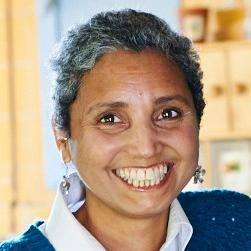
Author Interview; Rae Stoltenkamp

Welcome to my latest indie author interview, this time with author Rae Stoltenkamp. I first came across Rae when we were both authors on the now defunct indie publishing platform Autharium. I read her excellent  crime thriller  Six Dead Men and will soon be diving into her new venture, the first in a young adult series, Where Rainbows Hide. In this interview Rae talks about her writing and publishing journey so far, tells us about her writing process and offers her advice to writers about to embark on the indie route!

Q1 Tell us about your writing and publishing journey so far;

In 2006 I made the firm decision to leave teaching and write on a more full time basis. When I told my dad of my decision he didn’t blink an eye and supported me without a moment’s hesitation. In 2012 my dad died and my rebellious streak asserted itself in a desire to do something to honour his passing. I had a completed novel (Six Dead Men) which I was editing whilst sending letters and emails to agents and publishers – getting the usual rejection mail as expected. His death prompted me to do SOMETHING more concrete with my novel. Unbelievably, an opportunity arose to publish in e-book format without any expenditure on my part at all (Autharium). At that time e-publishing was a much debated topic and people were convinced it would have no place in the world. I thought, “Well, what the heck – it’s not costing me a penny.” Tons of no risk no gain sayings crossed my mind: Nothing ventured nothing gained If you’re not willing to risk the unusual you’ll have to settle for ordinary For who that dare not undertake, by right he shall no profit take So I forged ahead. I didn’t have the slightest clue what I was doing but the e-book went into the world and I told my friends and family all about it. I made the sum total of £12 in royalties and could not have been prouder.

Q2 When did the writing bug first grip hold of you?
I first got the writing bug around age 12 but started with incredibly soppy poetry that always rhymed. From 13 onwards wrote angst ridden teenage poetry which is so embarrassing I probably shouldn’t even mention the existence of it. Then ventured into short stories around age 14 and started on my first novel called Panthra.
Q3 Tell is a bit about Six Dead Men. Where did the idea for the story come from?
It’s quite sad really. I’d been to a neighbour’s party and met a rather nice guy. We ended up snogging for quite some time. Afterwards he asked for my number and I was certain he’d call but then he didn’t. I just put it down to the way things go sometimes. But a few weeks later my neighbour called me in, sat me down, made me a cup of tea and was generally acting very anxious. He then told me that the lovely man had been killed in a tragic accident. It may have been the shock but I found myself thinking it was probably my kisses which cursed him. And so was born the premise for Six Dead Men.
Q4 How would you describe your genre and your style?
My preferred genre is Magic Realism. I’m intrigued by how much in life can seem totally inexplicable. This genre allows me to explore this and helps me to delve into characters’ minds to look at how they may think or behave or be affected by circumstances and influences. My style is influenced by writers like Toni Morrison and the poet Maya Angelou. I love how these writers use the rhythm, feel and sound of words to get a message across in a dramatic way. I also equally love the element of melodrama you get in work by Austen and the Brontes. My YA books are all Science Fiction as they have a strong eco message which lends itself to this genre. It was also one of my mother’s favourite genres so I have a great soft spot for it. I guess my YA books are mostly a tribute to her.
Q5 You write in adult and YA genres, can you explain to us how this works? Does the character come first, or it is usually the plot?
As I’ve already said, Six Dead Men was born out of a personal experience so the character was built around this. I thought long and hard about the names as I wanted them to be significant. With my WIP; the prequel to Six Dead Men, the character came first. In fact I woke one morning with her words in my mind. Her voice was strong and clear and I had to race to scribble them all down. My YA novels always seem to be story led but I’ve recently found that characters are beginning to demand I tell their story in greater detail. As this is a series of books on the same topic I don’t have to think about the plot so much – it is almost a foregone conclusion. So it seems natural that I can now focus more on characters and what they feel, think and ultimately do.
Q6 Can you tell us about your writing process? What is an average writing day like for you?
I teach at a local charity 3 days a week so only have 2 dedicated writing days a week. I also volunteer one evening a week and tutor in the evenings the rest of the week. So I usually get up around 6:30am. After a coffee I get stuck right in. I have to set the timer on my phone as I often forget to have breakfast. After breakfast I get straight back into it and work until about 2pm. The afternoons are reserved for meetings or any marketing which needs doing. If I have no meetings scheduled I write until about 3 or 4pm then call it quits for the day. I’m currently thinking of moving all my marketing activities to a Saturday as this will free up more writing time as I want to crack on with several projects.
Q7 What are you working on at the moment?
My current WIPs are: 1. The prequel to Six Dead Men 2. A series of short stories based around characters in Six Dead Men and its prequel 3. The sequel to Where Rainbows Hide 4. The sequel to The Lonely Dragon.
Q8 What would you say have been the best and the worst parts of being an indie author?
The best part is writing about things that matter to me and seeing them in print. There is no worst part as it allows me to do something which makes me feel incredibly fulfilled. Sometimes the precariousness of the financial side can cause sleepless nights but when I’m deep into a project and the words are flowing on the page, I get such a sense of rightness that the worry simply falls away.
Q9 What advice would you give to anyone about to embark on the indie publishing route?
Only go down this route if you have great support from friends or family or both. Trying to do it all alone is a very hard road. Be prepared to put the hours in. No-one will be standing over you to make it happen – you’ll have to do that all on your own. Join a body like the Alliance of Independent Authors as they have a wealth of information which is invaluable. And finally – know your product and your audience then market accordingly.
Q10 What are your hopes and dreams for the future with regards to your writing? What would you like to achieve?
My hope is that within 5 years I will be able to earn a living from my writing and give up tutoring in the evenings so I can spend more time with friends and family. I would then wish to publish any writing for children for free.
Q11 Who are your favourite authors and why?
My favourite authors make up a very long list so I’ll just do my top 10: Jane Austen, The Brontes, George Eliot, Toni Morrison, Louis de Bernieres, John Steinbeck, Terry Pratchett, Joanne Harris, Neil Gaiman and Jacqueline Wilson The Brontes, Austen and Eliot because of the element of melodrama they bring to a cracking good story. de Bernieres because he opens up unexpected worlds in my mind. Pratchett and Gaiman because they tackle serious topics but also make me laugh out loud. Morrison, Harris and Steinbeck for their beautiful use of language. Finally, Wilson as she tackles issues so very relevant to children in this day and age and does it with great sensitivity.
Q12 Tell us three interesting facts about yourself
Not sure these are particularly interesting but here goes: 1. I absolutely loath white trainers – don’t know why, just do 2. I don’t like being given cut flowers as a present as they only serve to remind me that they are already dead and only good for the compost heap now. 3. I love watching garden make-over programmes even though I am the worst gardener on the planet and never even go into my own.
Thanks so much Rae!

Rae Stoltenkamp was born in South Africa and came to England in 1987 to visit family. She liked the weather so much she stayed. After a writing holiday in Greece she had an epiphany and realised she should be writing on a more full time basis. It was probably heat stroke since she hadn’t had sun in a while. She then studied writing at City Lit with the poet Caroline Natzler and is now a writer, blogger and former English teacher living in South London.

Currently Rae also works with www.inkhead.co.uk , teaching creative writing courses to children. This has inspired her to work on a children’s book called The Lonely Dragon. She is writing and editing several projects simultaneously, including a series of YA Science Fiction novels and the sequel to The Lonely Dragon.

Rae has a passion for Argentine Tango and when she is not chained to her desk and laptop, can often be seen tripping the light fantastic with her tango friends. She has also recently discovered the delights of Lindy Hop and is laughing her way through this style of dance.

https://www.facebook.com/raestoltenkamp.author

http://raestoltenkamp.blogspot.co.uk/

https://twitter.com/Raedenewrites

Indies!! What The Hell Are We Doing?

Indie writers, if you’re anything like me, you ask yourself the same question on a regular basis. It looks a bit like this;

headinhands

I’m sure my family think I am mad. None of this really pays off, let’s be honest. My husband chuckles when I declare I am going onto the laptop to ‘work’. He thinks I am crazy for giving myself so much stress.After all, it’s not like I have a boss breathing down my neck! I don’t actually have to do any of this, do I?

He can’t understand when I announce that ‘I have a lot to do tonight’. To explain, it usually goes a bit like this; ‘I’ve got to finalise the short story for the newsletter and I’ve got to fiddle with the template, plus I’ve got to share the newsletter link to my page before it goes out, so I can try to pick up a few more subscribers, then I’ve got to go over this week’s blog, because that goes out tomorrow and I haven’t added images yet, and I’ve really got to start hitting some book review blogs and I’ve really got to start submitting to some competitions, but I’ve got to finish this book too, and plan this other one…’

And I’m sure he’s thinking; um no, you don’t actually have to do any of that. You could have a night off and watch TV or something.

Indies, I’m sure you can relate to how I feel when I regularly ask myself; what the hell am I doing? Why am I doing this? Why am I writing another short story to add to another newsletter than only 19 out of 34 people will even open, and out of those 19, only 2 will go on to open the file and hopefully read the story? Why am I sharing my thoughts, my progress and my blog posts to Facebook so that it can show them to only 23 people out of 1027? Why am I asking for reviews when I might as well be banging my head against a brick wall? Why am I writing a book when the ones I have released already barely sell? Why do I constantly feel like I am fighting a losing battle? Why am I forever looking for the holy grail of ‘making it’ as writer? Will I even know it when I find it? Why the hell am I doing this to myself?

71989118

I think it’s common to feel thwarted, frustrated and downhearted as an indie writer. You constantly swing between feeling like an outsider, and feeling proud to be doing it your own way. You feel like you have something to prove, when surely having a nice, fat traditional publishing contract, would be all the proof you’d need? As an indie, you keep one eye on the sales, you pester and beg for reviews, you enter competitions, and do all you can to promote without becoming an annoying spammer. You lose yourself in social media, and it is all for your books. Sharing interesting writer advice to Twitter, pinning funny writing quotes and making storyboards for your books on Pinterest, running events and giveaways on your Facebook page, and starting an email newsletter to try to gain a decent, loyal following. You do it all, don’t you? And wonder when on earth it’s going to pay off…

How do you know when you have succeeded? How do you measure achievement when you’ve chosen the indie path?

Maybe it’s enough money to live on, or to at least pay a few bills. Maybe it’s some level of fame, recognition or critical acclaim? Maybe it’s wonderful reviews, or just a nice, steady trickle of sales? Maybe it’s just becoming a better writer.

Sometimes I have to stand back and force myself to ask some awkward questions. What if I never sell lots of books? What if I never get the amount of reviews they say you need to get Amazon on side? What if I never win an award? What if I never get any recognition or any level of success?

Would I stop doing it?

No.

Never. And when I remember this, I think, fuck it, and keep going.

And what is success anyway? Yes, more reviews, more sales, an award or too etc, would all be lovely. Of course they would. They would make it all worthwhile. They would help justify the hours, the blood sweat and tears and sanity invested in all this. They would help alleviate the crippling self doubt and the gloomy, why am I bothering days.

But you can measure success in other, smaller ways too.

Such as, where was I a year ago? Or two? How about six?

Well, six years ago I was still working on the early drafts of The Boy With The Thorn In His Side, having dragged it out from the dusty suitcase under my bed where it had been living since I last worked on it aged 16. With my then youngest child starting school, I’d felt the strongest urge ever to get writing again, as that book had just never stopped talking to me.

In the years that followed that decision, I’ve published four novels and one short story collection. I’ve finished two more novels and am working on getting them released soon. I’ve started a Facebook author page and slowly but surely reached over 1,000 likes. I started this blog which also has over 1000 lovely followers. I’ve had many articles about writing published by Author’s Publish. I’ve fallen back in love with writing short stories. I’ve started my own writing business, Chasing Driftwood, running adult writing group and children’s creative writing workshops. I’ve been asked to run several workshops for children and adults by the Dorset Writer’s Network. I’ve become a reviewer for Underground Book Reviews, where I actually get paid to read books! There is so much more I want to do too, such as working regularly with schools, running workshops for aspiring authors and after school writing clubs. I want to write all of the books in my head! And if that’s not the main motivation for all of this craziness, then I don’t know what is!

Plus, I have a confession. I do moan, I do lose heart, I do get frustrated and I do have ‘I’m just gonna’ give up’ days, but do you know what? The truth is I actually enjoy all the craziness that goes with being an indie. I’m proud to be doing it my way, I’m proud to be learning from my mistakes, I’m proud to be getting stronger and more confident, I’m proud of the sales and reviews that I have, and the messages from readers. And as for all the other stuff; Pinterest, tweeting, author page, email newsletter…yeah, I have to admit it is all quite fun. Admit it!! It is fun!! Plus, writing blog posts, learning how to master social media, attempting articles and short stories, will all help make you a better writer. You may be doing them for promotional reasons, but the process is going to help your writing in the end, so that’s a win-win!

preview

Now, over to you, fellow Outsiders. How often do you feel like quitting? How do you really feel about being an indie? How do you measure your own success? Do you enjoy all the promotional activities that go with being an indie, or are they a curse? Please feel free to comment and share! 🙂


It’s Not Done…Until It’s Done!

I often get asked how I know when the book I’m working on is finished. If you’ve been following my struggles with The Tree of Rebels, you will know that I have now lost count of the amount of drafts I’ve done of this book. It’s got to be up to ten, at least! The same applies to The Boy With The Thorn In His Side. There were so many rewrites and drafts of that book that I lost count completely, but at a guess, I would say it easily passed twenty.

This is not true of all my books however. I think there were five or six drafts of The Mess Of Me, only three of Bird People and Other Stories, and probably around five or six for both This Is The Day and This Is Nowhere. For some reasons, those books were just all kind of done by the third draft, and just needed proofreading and polishing after that.

So, how does a writer know when they are done?

yuno

Well, I sort of have a system. If you can call it that.

I’ll explain it using my current work in progress, Elliot Pie’s Guide To Human Nature. As you may already know, Elliot Pie has been written almost alongside The Tree Of Rebels, with me jumping back and forth between the two novels. If one was with beta readers, then I was working on the other one. If I needed a break from one, then it was the other one I’d stick with. Well, it now looks increasingly likely that Elliot Pie will jump past The Tree Of Rebels and become the next release. This is because I’ve decided to stick with it until it is done, and stop jumping between the two books. I also feel it is very close to being finished, much closer than The Tree Of Rebels, which requires a bigger rewrite, with added storylines.

But back to Elliot Pie. How do I know I’m nearly finished? Why is it likely to have a  lot less drafts/rewrites than other books? And how will I know for sure when it is truly ready?

It works a bit like this;

The first draft; ugly, clumsy, galloping, mad, hungry and glorious. An outpouring of ideas with a basic sequence of events, a strong theme, developed characters, all held together by an accompanying notebook of notes, dialogue, bios and so on. While writing, I constantly added items to a list in the notebook; things to add, (extra scenes or dialogue) things to question, research, embellish and so on, or things to reword or cut out. In other words, things to sort out on the second draft!

The second draft; in this case, a read through with a few minor corrections here and there with my list to help me. I was actually surprised by how happy I was with the first draft and at the time, figured I only needed to polish up spelling, grammar and maybe cut out a few bits here and there.

Beta readers; feeling exceptionally brave and over-confident, I made the unusual decision to send it out to two trusted beta readers at second draft. I wouldn’t normally do this so soon, but there were two important things I needed to get their opinions on before I proceeded. One, the tenses change. Elliot is written in first person POV and everything is in the present tense. The adults of the story are written in third person POV and past tense. Don’t ask me why. No decision was made! It just happened this way and I liked it. A lot. Luckily the readers didn’t actually noticed the tenses, but they did have feedback on other issues, such as the middle part dragging and certain bits feeling repetitive.

Third draft; scary, self-conscious, tail between legs, unsure what to do or how to do it. Slowly I came to terms with the critique offered and realised how true it was. I did a lot of cutting out, rearranging and rewriting. I also made a list as I went through, plus I was already using the list I’d made from the readers comments. Things got ticked off the list as I went, so I knew I had answered various questions, or researched particular parts in more detail. By the time I got to the end, I had a new list. I still hadn’t set up a timeline, and one was needed, due to the main character’s disappearance at the end of the novel. What day and time was he last seen and so on?

Fourth draft; list in hand, questions in mind, I tackled it again. Obviously I was correcting typos, spelling and grammar issues as I went through, as well as removing repetitive phrases or words. I had things to add and things to change, for example, I realised too many of the characters were only children, so I had to add a sibling here and there. I also added the timeline and made a list of the exact times and dates the events took place. I needed to exaggerate certain things, leading the reader a particular way, for example, making certain characters darker than they had been. I also added a new scene to the ending and rewrote the first chapter, tightening it all up and hopefully creating more impact. In fact sharpening things up and cutting things out went on a lot!

Fifth draft; (where I am now) another read through, this time on my Kindle. It’s amazing how many more things you pick up on when reading in a different format. Spelling and grammar for example are far more noticeable on an ereader! I’m making another list as I go through, advising myself to reword certain parts, cut out words here and there etc. In fact, quite a lot of my notes this time around involve just cutting words out that do not need to be there as they add nothing to the scene. There is also a separate list above my correction list, which I add to any time something springs to mind. So, for example, while out with the dogs today I realised that a certain object needed to be found and mentioned in a certain scene, as it would add impact and credibility. So far I have seven items on this list; things to add to dialogue and events, things I simply thought of while going about my daily business.

Sixth draft; I will go back to the laptop with this current list in hand, and go through the manuscript methodically correcting the issues, cutting out the words, adding the things I’ve thought of, and so on.

If by the time I get to the end of this draft, there is yet another list on the way, then I will know a seventh draft is needed. Of course there will also be an even more thorough grammar and spelling check, and a proofreading, which will involve sending it back to Kindle to pick up errors.
patience.jpg

So basically, I’ll know the book is as good as I can get it when there are no more things being added to the list! When the list is ticked off and stays ticked off, it will be done. But it also more than that. I have to have the right feeling about it. And as I have mentioned before in other posts, I have yet to have that feeling with The Tree Of Rebels, hence it being held back for now.

I have to feel completely happy, completely satisfied, not just about grammar and typos, but about the actual story. Are all the characters doing what I need them to do? Are they fully alive and realised? Could they walk off the page and into my house to converse with me about anything? Is the beginning interesting and powerful enough? Does it raise questions and curiosity? Is the middle doing its job; developing the story, but keeping a steady pace, keeping the reader coming back for more, making promises? And does the ending satisfy, as well as tie things up if need be? More importantly than all of this, does this book make me smile? When I read it, what is my face doing? I’m pleased to say that at this stage, it is making me smile a lot, and I simply cannot wait to share it with you. I hope all the hard work will be worth it and that you will fall in love with Elliot as much as I have!

Now, over to you! Please feel free to comment and share! Do you ever worry that your book will never get to see the light of day? How many drafts is too many? How do you know when it’s done?
 

Short Story Problems!

Short stories have always proved problematic for me. The clue is in the word ‘short’. I’m not too good at ‘short’. But I am learning, and I am also learning how vital it is to master short stories.

Recently, an old friend was sorting out her attic and found something I had once given her. It was a short story I’d written when I was about fifteen. She brought it over and gave it to me and for a moment or two I was utterly flummoxed. Not only could I not recall writing it, but I couldn’t work out how I’d done it either. I mean, I struggle with short stories, I really do.

For a while, I gave up on them completely. I was too busy writing rather long novels, and didn’t see the point in pursuing something I didn’t think came naturally to me. Then one day someone suggested writing short stories related to my novels and releasing them as a kind of marketing tool. I have to admit, as cynical as it sounds, I liked the idea immediately. Not so much the marketing bit, but the writing short stories related to my novels bit. You see I am rather over attached to my novels, the current ones, the ones in progress, and the ones that are still just in my head. I rather see the characters as real people and it’s extremely hard to switch off from them. They kind of exist forever. They are always starting new stories, diving into new dramas and conflicts. So writing some short stories suddenly seemed like an extremely enticing and fun idea. And it was. And Bird People and Other Stories was born.

Now, I have to admit to being rather proud of this little book. I can’t say I have mastered the art of the short story, far from it. Many of the shorts in this book are character snapshots, or scenes from a different point of view than the one shown in the novel. But they were easy and fun to write, which was a massive revelation to me as a writer who had turned away from short stories for so long.

I’m now kind of addicted to them. In fact I write one once a month to be included in my author newsletter (click here if you want to sign up!)

My friend’s discovery reminded me that I had once embraced short stories before novels. Like a lot of young writers, I cut my teeth on short stories and little ‘books’ before I worked up the skills and patience to write an actual novel.

I’d just forgotten!

Reading through this particular story, I’m both embarrassed and impressed. Embarrassed by the younger me’s habit of repeating myself, a lot. I used to say the same thing in about three different ways, as if afraid of being misunderstood! But I’m impressed by my fearlessness, and that’s what young writers have in abundance. I didn’t fear the short story then, I just thought of one and got on with it. There was no ‘I can’t do this’, or ‘I’m not as good at shorts, so I won’t bother.’

If I am honest, I still find them a challenge. Some work instantly. Like magic. Others don’t. For as many finished shorts, I have unfinished, festering, niggling ones. I know what I want to say, but just can’t seem to say it.

I mean, what is the perfect short story anyway? The one that says something big in the shortest, sharpest way possible? Or is it really down to personal taste, as with novels?

The other problem I have with shorts is their annoying tendency to start developing into full blown novels! Give them an inch and they take a mile! I now have one epic novel, if not an entire series of books planned due to inspiration taken from the last two short stories I attached to my newsletter. Unexpected and brilliant, but you know, I don’t want this happening too often! There is already a backlog of books waiting to be written. (See Upcoming Books!)

So, what’s your opinion on short stories? Do you enjoy reading them? What makes the perfect short story in your opinion? And if you write them, how does the process work for you?