The Dark and the Light

The Dark and The Light


It is wrong. Like me.

Everything about me is wrong, and I hear them say it. I have heard it often enough. I amble through it, warm inside, warm outside, full of acceptance and impatience.

I am impatient because life is long, and slow. Like my love. I need them both to end.

I am thinking about this in my flat. My flat is always warm. And so am I. I am not sure what being cold feels like. I have too many layers, one on top of the other, dirt and grit in-between, guilt and shame. They layer up, they gang up on me, they bind me up and keep me warm at night. I am always warm.

Like now. Watching him.

My face is warm and so is my groin. I lift one arm slowly. I watch it travel through the clogged up, fogged up air, and I can feel how tightly the air surrounds my skin, lingering there, filled with secrets. My hand moves slowly. It is a juddering, shuddering thing, a dark starfish turning, curling through the dust.

I touch my face. My palm is rough against my whiskered jowls. It is a landscape of lumps and bumps, craggy and weathered and warm and pulsing. And I can smell it. If I stand here still enough, if I breathe in slowly enough, inhaling the life I exist in. I can smell my skin and I can smell the stink of age and ruin.

Whiskey on my breath, coating my tongue. Nicotine stains upon my fingers. I can smell the scent of who I am, of what I am. I suck it up. Breathe it in. Remember. Rotten on the outside as well as the in. Decayed from within.

Was I ever anything else? Anything more, or less than this?

I am too old now, too far gone, too hunched and sorry and broken and lustful to remember. There must have been another me once. A younger, trimmer, taller me. With brighter eyes and sounder mind. I can’t be sure though. I can’t be sure when the rot set in, when the infection took hold. I do know that I never once tried to fight it. Life was too long then, too slow. And it still is now.

Watching him. On guard. Waiting. Always waiting. Stood behind, looking down. Cocooned by the flat, by the dark, warm cave it has become. Lonely, but somehow we are joined here, linked. I sniff it. The darkness does not hide my secrets well. For I can smell them in the sweet cloying air as it cloaks my face. My flat smells too, of everything I am, of everything I bury here, of longing and loathing, and love.

Orange curry and gone off milk, cobwebs hanging with dust and dried flies, stains on the carpet, mould on the walls, fingerprints in the books and on the dirty magazines under the mattress.

In here it is dark, and he is the only light. He never sees this because he thinks he is ruined and destroyed, and maybe he is wrong, maybe he is right. He never thinks about anything too much these days. Only the home he escapes from, and the fear of being found. Only the music he keeps in his ears, in his brain, blocking everything else out, refusing it entry. Only the dark oblivion we enjoy together. Try this. And this.

I am the dark and he is the light.

His pale face turned up to mine, eyes closed and mind gone. I want to reach out and touch him but I cannot. If I lay my dirtied hand against his pale skin I might leave a stain upon it. I might destroy the light. And then we will all be worse off.

I stand behind and look down.

Breathing him in. Absorbing the light. My hand remains against my face. Warm and throbbing, rough and worn. I hold myself there. And my guts are inside me, behind the wall of fat and whiskey and sloth. Behind the solidified alcohol and curry and waste. My guts are back there, knotted and aching and crying. I can feel them there. I want to ease them out and relieve the pain and pressure. I want to stretch them out and let them breathe. They are a weight holding me down. Holding my feet to the sticky carpet.

Everything I deserve is in this place. Dirt and dust and shadows. I don’t belong anywhere else. One day I think, I won’t leave here. The doors and the windows will seal me in. The air will thicken until I suffocate. I will die here and I hope it is soon.

But what of him? What of the light?

How much time have we got? How much longer can I keep holding myself back? I examine the contours of his face lovingly, as I drag my rough palm over my own soggy, saggy features. Where his is sharp, defined, clean edges, mine is lost, sunken, shabby and derelict. My chins pile up. My cheeks hang loose. My eyes vanish under folds of flesh.

His skin is clear and soft and new. The only blemish is the deep cut to his top lip and a slight swelling there. My hand is reaching out to it now, reaching for the bump on his lip, but I pull back just in time. I always do that. I long to reach out and soothe what the monster has inflicted. I don’t say a word when he does it though. I hang back and look on.

Silence pounds my brain.

Blood throbs between my legs.

The monster jeers and laughs at this, but this is not all there is. It’s not just that… It’s not just blood and longing and desire. This is different. The boy has a light. And now the pounding is in my heart as well. The aching and the longing is in all of me.

My hand is where it should not be. It has landed in his hair again. My heavy fat fingers falling through the tousled blonde strands while my heart beats faster. I pull my hand away when the door suddenly opens. I walk quickly away, shoving my hands into my pockets, blinking away a salty tear.

In walks the monster. In walks King Of The Castle. In walks Mr High and Mighty. Mr The Big I Am. He walks in and the air grows colder and the boy shifts and stirs and moans softly on the sofa, but he does not wake.

The monster smiles at me because he can always smell my guilt.

‘Behaving yourself?’

‘Course I am. What do you want?’

No answer, because he does not have to answer your questions. Not the King Of The Castle. Not the King of the Shitting World. He goes to inspect the boy, who he thinks he owns, who he tries to turn into a robot, a yes-man, a minion. The beautiful boy full of light.

‘Is he out of it?’

‘Looks that way.’

‘Little prick.’

I sigh and shuffle towards the kitchen, where there are dead flies on the windowsill.

‘Do you want tea? Whiskey?’

‘Tea. Not staying long.’

‘Are you taking him home?’

‘Might do. Why? Will you miss him?’

Of course he laughs at his little joke, because he has always found my pain amusing. I deserve it though. He knows this as well as I do. We exist like this, somehow. The monsters. Both of us. Vile. Inhuman. We don’t deserve love or light.

Only I feel the guilt. That is the only real difference. The thing is, we both want the same thing. We both want love given to us, we both want what we do not deserve, what is not rightfully ours. We go about it in different ways. And the boy on the sofa knows all of this and none of this. He knows everything and yet nothing.

I make tea and in the lounge the monster sits next to the sleeping boy, dulling his light. Can it work the other way around, I wonder? Can the light fight back? Can it ward off the darkness and win? Theirs is a fight to the death. A fight neither can afford to lose. I make the tea and try not to think about the future. Time passes too slowly for the likes of me. I have been dying slowly for years. I am trampled fruit underneath the autumn tree, I am crushed and squashed and pulped and rotting. It takes too long. I should be dust by now, but it all takes too long.

Another unseen salty tear stings my eye while I make the tea and think about the boy. I think about him and how rotten we are to surround him like this, to want to own him and love him, to want his light to reflect back on us. I think about the very first time I saw it. I think how my breath hitched in my throat, and how my old eyes widened and my mouth fell open and how my blackened old heart ran up to my mouth, pounding, though it had no right to, though it was not allowed.

I have no right to love of any kind.

And there is a clock ticking somewhere in this place. There is inevitability and pain waiting for all of us in this dark, warm cave.

Something will happen. Something is coming. This, this is all wrong…I swirl the bloated teabags around the mugs, one at a time, my movements clumsy and stiff, sploshing brown liquid over the sides. I listen to the voices in the lounge. King of The Castle is waking the light up, easing him out from his dreams. I wonder how he feels when he wakes up like that. Realising. Remembering. Does he get a jolt of cold fear right in the centre of his chest? Do the hairs on the back of his neck stand on end? Does he feel the most powerful urge a human body can experience; the urge to run? Or does he just feel flat, empty and resigned? Does he just remember and then give in? I don’t know anymore. There used to be more fire in his eyes, I remember that. I enjoyed that. But now I don’t know.

I pick up the mugs and carry them in. They don’t look at me or speak to me, and yet I know what we are. We are a triangle of misery and hatred and love and the whole thing turns like a never-ending circle, but it can’t do that forever, because one of us will be blunted. One of us has to go.


This is a short story written from the point of view of one of the minor characters in my novel The Boy With The Thorn In His Side – you can find out more about these characters and this story by following this link – the novel is available in ebook and paperback 

http://www.amazon.co.uk/Boy-Thorn-His-Side-ebook/dp/B00W8DLGKA/ref=sr_1_1?s=digital-text&ie=UTF8&qid=1431972783&sr=1-1&keywords=the+boy+with+the+thorn+in+his+side


In Blood – short story

In Blood

We met in blood.

His and mine.

Sweet, dark tangy blood. Do you know how it tastes? Thick, dark blood. The essence of life. I do. And I like it. I like the rich, metallic tang, and I like the full, intense aroma, and I like the sight of blood in its many forms and shades.

In blood, it ended the same way that it started, and now they call us toxic. They call us sick. But I will wait for him.  We are connected now. His blood runs with mine.

The night of the party, that was our night. Our first night. But I had been watching him for a long time before that.  Let mel tell you what I saw. I saw a brute, a bear, a man, a thug. He was top heavy with arm muscles and his movements were precise and fast. He was a man who had never doubted himself, never questioned anything. He did not know hesitation or procrastination. He knew who he was, and the best thing about him was that he did not give a shit about anything. Not one single thing, not one single person.

Everyone knew who he was. The big lad, the top one, the bully boy from the bad family. Bad reputation. From the estate. Not to be messed with. Steer clear. If you had the brains you were born with, you would steer clear. But silly girls never listened. Silly girls saw his looks and his power and believed they could change him. But not me; I never wanted to change him.

I didn’t worry about brains, although I had plenty of them. Instead I concerned myself with instinct; where my guts led me. Besides, trouble was fun. Good girls were dull. Life was short, and Heaven was a lie.

He didn’t notice me back then. I was in the background. I think that is how he sees most people. Blurred noise while he cuts through it all. You always see him coming. You always stand back, hold your breath, look on. I remember doing that, when I was just in the background, looking in. I was a self-satisfied,  slinky, skin slashing, know it all. I still am.

I watched him, watched and learned. I was intrigued. I thought maybe, we had things in common. You see the thing about him I liked, was the thing about him they all hated, or feared. He was mean. He didn’t give a shit about anyone. He would hurt you, use you, laugh at you. It was just him and his brother Travis to take on the world; the twosome, one long and lanky and messy haired, and him, solid and immoveable. The younger brothers were not on his radar, not any of them. Not the little sticky fingered brats, and not Joe. If Joe was anything to him, it was a punch-bag.

I didn’t care about Joe. Not much. Or Lou, my so called best friend. I try not to care about people, for numerous reasons. It’s boring, for one thing. I mean, I don’t know if you’ve ever noticed, but people are mostly terribly boring. Plus if you do care about them, it tends to get sticky and complicated. So, we had that in common at least. Me and Leon. See, I knew it would work. I knew it was right. If I had said such a thing to Lou or Joe, or to anyone, they would have laughed and jeered, and then looked at me as if I was crazy. Yes, I am a little bit crazy, I want to tell them, so fucking what? Who isn’t anyway? Everyone is fucked up, and that is the truth, my friends. That is the truth. With some people it’s obvious. It’s written all over their face or their body. Some people hide it better, but usually they are the ones who are more fucked up than anyone. At least the freaks and the geeks and the oddities let it loose, let it out, embrace it and rejoice it. Be different.

Don’t be afraid of pain.

That night, we caught each other’s eye for the first time, and it was all how I knew it would be. I get a feeling, a sense about these things. I was tiny and dark in my little dress and shoes, and he was the monster I invited to my party. The kitchen was full of people, packed tight. But Leon was the only one I could see. The rest were blurry-faced. I moved closer to him, and then moved away. I caught his eye, and then refused to look back at him. I watched from the edges as he drank beer with his brothers and Lou. I felt flashes of hot, surprising rage, when she looked like she was in the centre of them. All three brothers looking at her and laughing as she got pissed up.

I made my move when she ran outside to be sick and Travis followed her. Joe turned away from his brother, and Leon was alone.  He took a chair and sat down, and before he could lift his beer to his lips, I was on his lap.

‘It’s quieter upstairs,’ I told him, and then I was gone. I heard his curious tread coming up the stairs behind me.  I opened my bedroom door,  and in he came. Just like that. We didn’t talk a lot at first. He sipped his beer and looked around at my room. Then he went to the window to check out the garden.

‘Your bedroom is about the size of our house,’ he muttered, and I laughed. I was lying on my bed and playing with my razor.

‘Don’t you get bored,’ I said to him. ‘With everything, and everyone?’

He came closer, his eyes narrowing in on my razor blade. ‘What are you, suicidal?’

‘No, not at all. I’m just bored. And I’m interested in pain. How about you? Tell me something interesting about you.’

He was quiet for a moment, just watching me. He looked hungry then, like a dog sizing up a good, juicy bone.  I waited for him, eyebrows raised.

He said; ‘I’ve got a wrap of coke in my back pocket, if you’re interested.’

I grinned and held up my razor. ‘Well aren’t we just made for each other?’

And we sat together at my desk, and I passed him my blade to chop up the coke, and my bare leg was pressed against his denim clad one, and the pulses in my body were on fire, throbbing and swelling. And then she knocked on the door. That little bitch.

Let me tell you a few things about Lou Carling.

She used to be fat, but now she’s not. She’s on a mission to destroy herself, and I am along for the ride. These kinds of things are interesting. After all, isn’t that the gist of being human? Isn’t that the curse? Once we are old enough to understand that everything must die, we start to destroy ourselves any way we can. Drugs. Drink. Sex. Work. Hate. Love. You name it. It cuts us up, from the inside out. Lou Carling is one of these people, cutting herself up on the inside where nobody can see it. On the outside she is tough and sarcastic and slow to smile. For some reason, she cannot see that her best friend Joe is totally and utterly in love with her. It makes me quite sick. It’s almost like incest. I’m not kidding. They were bathed together as kids, ran around naked in the garden, you name it. But now that their bodies have grown and been honed and hemmed and tightened and lengthened, things are getting all screwed up. Believe me, spend ten minutes in a room with those two and you will want to scream at the top of your lungs; for God’s sake just fuck each other and get it over with!

But anyway. I digress. Lou Carling, short and sweet and bitter and more fucked than any of us. I hang around with her because I want to see how fast she unravels. I want to see what lies underneath.

She knocked on the door with Joe because she was worried about me. How sweet. What happened next was not surprising to anyone at that party. Leon went out there, called her a few choice names, and then beat his brother up. Meanwhile she stormed past them to see if I was okay, and yes, how surprising, I was okay! I was chopping up lines of coke, and she could join in if she wanted to, but no.  No, of course, not Lou Carling. Not perfect little Lou. Smoking the odd spliff with Joe and drinking cider in the park is fine, but you know, anything else is evil! We had words and she went on her merry way to see to her precious non-boyfriend.

When Leon came back in, he had blood on his knuckles and blood on his face.

‘Little bastard,’ he said, under his breath.

God, I wanted him then. I wanted him so much. I couldn’t even speak. But that didn’t matter, because it was all there in the way he looked at me, and the way I looked at him. He was breathing hard and fast, and part of me wished I had gone out there to watch. Pow! Pow! Take that Joe, you little runt, you loser, you nothing!

I don’t mean it. Not really. I kind of like Joe. I kind of like everyone.

But things get so boring

We got back to business. I watched his face as he cut up the powder. I examined the contours of his features, and the curve of his chest, as he breathed fast, in and out. The muscles flexed on his bare arms. He was so very alive. And so was I. So was everything and everyone. It got so much I wanted to eat it. I wanted to grab the whole world and all the fizzing exploding swelling life within it, and shove it right into open mouth, chew it up and swallow it down. Weird, when you feel like that.

We took our medicine and then went to lie on my bed. We kicked off our shoes and stared at the patterns on the ceiling. After a while, he rolled over and looked at me. It felt like he looked into me. He cupped my face with his hand, held it like it was china…

‘What are you waiting for?’ I asked him, and he shrugged.

‘Nothing.’

That was the first time. But it was not the last. His blood mingled with mine, and then again on the night he rushed in and saved me. I was out of it. Mostly, I was absent. But I do remember his arms scooping me up from the bloody mush of my bed. It felt like I was being ripped from my mother’s spongy womb. I remember the feel of his arms, like branches of a tree, holding me close and holding me up. I don’t remember him ripping his t-shirt, which that night was once again doused in the blood of his brother Joe. I don’t remember him using the cloth to tie up my wounds, but apparently his quick thinking saved my life. He tied me once again to this world.

The thug, the animal, the sub-human scumbag. He came to me that night. He could have gone anywhere. He could have vanished from all of our lives, and Lou and Joe and his mother, and the rest of them, would all have been relieved. Good riddance to bad rubbish. But he came to me. He came to me. With the vilest crime a crimson stain upon his hands and all over his clothes, he came to me.

And our blood met again, and when all of this is over, he will be back.

And I will be waiting.

If you are interested in these characters and would like to find out more, you can download the YA novel they are related to here ; (available in paperback and ebook)12227067_1068628339823097_548647694753202354_n

When I’m Thinner…(The Mess Of Me)

The Mess Of Me was never meant to happen. It was never a plan, or a decision that I made. I was busy rewriting my novel The Boy With The Thorn In His Side; a book and a plot which had been with me for over twenty years. It was finally, blessedly getting its time. It was happening. I was writing again. I didn’t know who it would be aimed at, and I certainly did not see myself as a Young Adult writer. No, Lou Carling was not wanted, or invited, or planned. She just showed up one day, and the funny thing was, she had lots of things to say, which were sort of similar to things I wanted to say.

I know that if I look up and see his face, then I won’t be able to say any of the things I am thinking. Is that the way it is for everyone? Or are there some lucky people who are able to voice their exact thoughts and feelings in such a way, that everyone understands them instantly?’

She was hard to ignore, but I tried for a while, because I so needed to get The Boy With The Thorn In His Side done. It had been bugging me for years.  Like a lot of the characters that end up in my books, sixteen year old Lou wouldn’t go away, or shut up. She was a persistent voice in my head during dog walks and time alone. I started listening to her more and more, and God, she made me smile.

I could be so much more, but I can’t seem to be bothered. I want to do nothing. Be nothing. Have nothing to say….I am stuck I suppose. I am jammed. I am unable to move on. I am oddly incapable of development. But I am very good at shrinking.’ 

And so I gave in. The Mess Of Me was written very quickly, during a three month period of rest from The Boy. The Boy was with one of my beta readers, and so I had a window…

Lou didn’t even give me a plot to start with. She was extremely fond of swearing, and she had a cynical, narrow-eyed way of looking at the world she lived in. Her world was small, and reminded me of the one I grew up in. Council estate, identical houses, playparks and graffiti.

I think, look at this here, this is my entire life! This is it, right here. This park, and this field, and school, and the walk over the bridge to get there, and the town, and the bus ride in, and the Priory church and a terraced house, and noisy neighbours, and the parade of shops, and everyone knowing who you are, and where you live, and the working men’s club, and the car parks and the alley ways, and the Provident loan lady and the Avon calling, and the Christmas hampers that take all year to pay for.’

The more she talked and moaned and bitched, the more of her life I could see unfolding behind her. I could see her so clearly, and knew her so well by the time I started writing the book for her. And it was for her. It was to shut her up and get her out of my head, but it was more than that. I wanted to build a plot and a world and story around her character, and the way she masked self-loathing with scorn and contempt for just about everyone and everything.

The truth is, she reminded me a lot of me at that age. How I was convinced that everything would be better when I was thinner. I would be happier, more popular, things would go right, I would know who I was and what I was doing. All of that, and more. In short, life was on hold until I got thinner, and when I did get thinner, everything would be perfect and I would know what satisfaction felt like. I would know what it felt like to look in the mirror and smile and be proud. I truly and naively believed that being thinner would solve all of my problems.

I was all grown up with kids of my own when Lou started talking to me about her problems, but right away, she brought back so many memories I had forgotten. Like her, I can remember having a ‘never again’ moment with a doughnut.

I can still remember the day I snapped. I can still remember the jam doughnut that I crushed inside my fist, instead of inside my mouth. I guess it made me feel stronger somehow, more in control, more savage. Less of a fat loser.’ 

I was house sitting for my mum’s friend, and she had MTV, which was excellent, because we didn’t. This was back in the day when MTV was just the one channel that played music videos every day. I saw the video for the Aerosmith song ‘Cryin’, the one with Alicia Silverstone in it. I remember thinking how pretty and blonde and thin and perfect she was. I sat there on the sofa, eating doughnuts, and feeling the reality of my own squidgy flesh trapping me in a body I loathed and wanted rid of. I knew it was not going to happen by thinking about it, or moaning about it, or crying about it. I had to actually do something about it. And if I did something about it, one day I could be like the girl in the video. And everything would be better when I was as thin as her…

Lou was funny and sad. She was bitter and cynical and snarling in my head, and she sounded so much like me, and she thought a lot like me too, but she was braver. She was bolder, smarter and funnier than me. When I was her age I kept my mouth shut and my feelings to myself. Lou was less likely to do this, and it was such sweet relief to let her take over for a while, to let her loose. Like me, she also allowed the words she could not say or contain inside her head, to spill out across the walls of her teenage bedroom.

Life is fucked up in broken wellies…’

As she loses more weight, Lou discovers a power she never knew she owned. It starts innocently enough, with a calorie controlled diet, and a new found enthusiasm for jogging. But as the weight begins to fall off, Lou finds it then becomes harder and harder to eat. In fact, just thinking about food grips her with fear. She starts to avoid it. She skips meals and she lies. And as she gets thinner and thinner, she experiences an increase in attention from friends, family and boys.

Her best friend Joe and his older brother Travis start to show an interest in her. They even fight over her at a drunken party. Her best friend/enemy Marianne, encourages her to lose more weight and stick to her diet.

Over the course of the summer between school and college, life unravels fast for Lou, Joe and Marianne. The drama centres around Joe’s decision to help deliver drugs for his older brothers. Leon and Travis are paying him attention for the first time in his life, which makes him risk everything in order to help them. Lou is pulled into the drama and the madness, and all the time, quietly in the background, she continues to lose weight. At one point, she catches sight of her face in the mirror and for a brief moment does not recognise herself at all.

But then I realise that it is me, it is my face I am staring back at, and how very peculiar not to recognise myself? I do not know whether to feel glad or sad, and I suppose that I feel plenty of both.’

The book starts with her lying in bed and running her hands over the bumps of her hip-bones and ribs. She wonders if she will be happy when she is as thin as she wants to be. I can remember doing the same thing at the end of the day, when the hunger was at its angriest. I would feel the lumps and bumps of bones rather than fat, and I would feel calmed and affirmed.

Like Lou, I had been a chubby youngster. I surprised myself as much as anyone else the day I said ‘no’ to pudding. But once the word ‘no’ came out of my mouth, I realised that I could say it and mean it. It became easier and easier to say. No. Would you like a second helping? No thank you. Would you like ice cream? No thanks.

The ‘no’ was my friend, and on my side. Unlike everyone else, it wanted to help me reach my goals. The trouble was, the ‘no’ voice gets louder and more insistent. The ‘no’ starts to speak up more and more and more. So that you go to prepare a healthy breakfast, and the voice says ‘no, you don’t need that’. Or you tuck into your dinner, a smaller portion than normal, of course, and straight away, the voice pipes up; no, don’t do it. No. You can’t have that. It gets harder and harder to ignore that voice.

For fans of the book, I can confirm that a sequel has been started, but is on hold while I complete other projects. I do however, know exactly what happens and the entire book is plotted out. Titled The Mess Of Us, the book is set two years on from the first book. Are Lou and Joe together, or are they still just friends? How has Joe’s personality been effected by the ordeal he suffered towards the end of the first book? Does Lou still worry about her weight?

I stand sideways and run one hand over the bumps of my ribs, and for some reason this just makes me collapse in tears, because when I look at her, when I look back, I can still see fat where it shouldn’t be.’

It would be unrealistic to suggest that Lou’s eating problems have magically vanished. Readers of the book will know that she does manage to get herself together towards the end of the book, partly due to the intervention of her mother, and partly due to what happens to Joe making her realise other things are more important.’

Like Lou, I grew up and got to grips with things. Like Lou, I never totally succumbed to my inner demons; instead I fought them off and pushed the ‘no’ voice away. Not all people who experience eating disorders are able to do this. I was lucky enough to receive help which enabled me make sense of so many things, and made me realise what I wanted out of life. Funnily enough, even at that young age, the thing I wanted most of all was to be a mother, and I knew that my ridiculous eating habits were damaging my chances to be one. I had something to work for, something to hold onto. Motherhood is explored in The Mess Of Me, and in the sequel too, but in different ways and for different reasons…

I’ve always said having kids saved me. I became in awe of my body. I was proud of it. I didn’t hate it anymore, and even more importantly than that, once I had daughters I felt a responsibility not to pass my body issues on to them. In our house, we try to focus on health and happiness, not looks. But it is hard, in this society, which still values the thinness of women so much. You only have to look at the way the media portrays women; focusing on whether they have lost or gained weight, what dress they are wearing, what haircut they have, rather than on the job for which they are famous.

I’ve had four children, and my body is not what it was. Time and child bearing have taken their toll, and rightly so. I am not hung up on it anymore, but I would be lying if the ‘no’ voice had completely gone away. Just as it would be unrealistic to expect Lou to have completely recovered between the two books, it’s unrealistic to expect anyone who has experienced eating disorders to be over them forever. Like other forms of addiction and compulsive behaviour, these things become part of you, and to a certain extent, they are always there. There are days that go badly, days when you feel down, days when you look in the mirror and that gloating little voice pops up to whisper in your ear; ‘things would be so much better if you were thinner…’

The Mess Of Me happened because Lou Carling invaded my head space and bitched about everything that annoyed her. Parents. Friends. School. Having to grow up. Everything. Funnily enough, the book jumped the queue and ended up being published before The Boy… It was ready to go, and became my debut novel in 2013. At the time I still wasn’t sure who was meant to read it, or who it was aimed at. These days, I am extremely proud to call it a Young Adult coming-of-age novel, and although I do write books aimed at adults as well, they always seem to have young people in them too. Weird.

The Mess of Me by Chantelle Atkins

The Writer; A Cautionary Tale

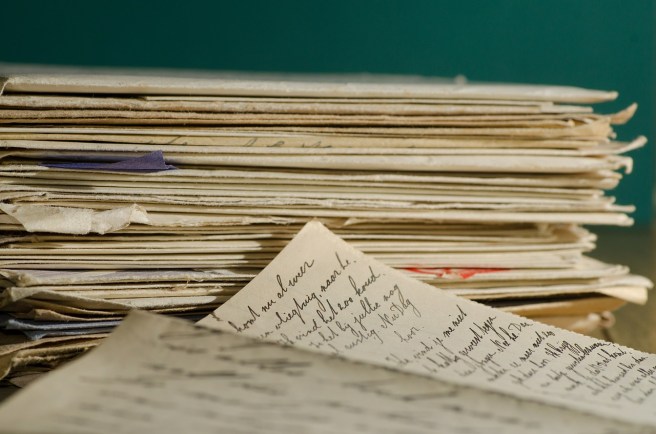
stack-letters-447579_1280

When she was a child, they told her to always have a Plan B. A back-up. Making up stories, putting down words; it was not enough to get by on. It was all right now, they said, as a hobby or a pastime, but as you get older, you will need more than that to survive.

She was never much good at anything else. Her mind wasn’t on it. They called her a dreamer and a book worm. Her mind wandered, wouldn’t settle or steady. So she flitted about, whilst they let her, from the real world and the world of her own construction. As she passed through her teenage years, she dare not tell anyone that she had a head full of voices. That they came to her at night, nudging her awake. They spoke to her in the daytime too. Their words and lives constantly interrupting her own. For this reason, she found it hard to communicate with real people, because the made-up ones were always butting in. Conversations grew too noisy and overcrowded, so she started to retreat.

Writing was her addiction, and she was a slave to it in those days. She would rush home from school, up to her room, to safety and to everything that was hers. Nothing else ever seemed as real to her as the stories she made up. In her twenties, with drink in hand, she wrote more than she had ever written before. She didn’t think about showing anyone anything, because it was all for her. She gave herself to it entirely, let it devour her completely. But this could not last, because real life was getting louder now, keeping her up and destroying her sleep.

You need to pay the bills, they told her, sort yourself out and get your head out of the clouds. No more messing about.

The woman grew up, as they asked her to do, but she never really felt comfortable in adult clothing. It always felt a bit like playing dressing up. But she played along, and played the role, and she wrote less and less, and started to believe what they told her; that it was pointless, a waste of her time.

A sense of quiet relief fell over her when the writing ended. She realised she had left it all behind now, and she was able to give herself to office duties, and court shoes, pencil skirts and handbags. The job and the home and the husband and the children and it was all a sort of happy, busy, merry-go-round. Years became nothing, time was fading out behind her, and the treadmill ran faster as the grey hairs crept in, and the lines on her face deepened.

Everything was fine in this life, in this world. She didn’t have time for writing because everyone knew there was not much time. Life was short and there was a lot to do and a short time to do it in. Because bills had to be paid, and beds had to be made, and children had to be ferried here and there, and husbands had to be fed and listened to, and dogs had to be walked, and shopping had to be bought and put away again inside the cupboards, and cobwebs had to be knocked down, and clothes had to be hung out to dry. She sounded just like everyone else when she joked about how much there was to do, how there was not enough time in the day, how a woman’s work was never done…

The only time she floundered, paused, breathed, and broke, was when an old friend or family member remembered her mad writing and asked her; whatever happened to all that? Oh and how that hurt and knocked her sideways, but anyway, life went on regardless, nights turned into days, and days ended too soon, and she was always too tired to think about anything else.

Until the day she was bored, and picked up a book instead of a celebrity magazine, and she took it to bed with her and read it, instead of watching a celebrity reality show. She couldn’t put it down, and then it came back to her, the words, the glorious, wonderful, beautiful words, the putting together of letters, the making of sentences, the evoking of feeling and thought, the making sense of this terrible, angry, pointless world.

She felt left out, left behind, shut out of her own mind, clawing and desperate to catch up. She picked up a notepad and pen the very next day and before she had even written a word, they were all there. The old stories, the people, the lives she had invented, they were all still there, itching and swelling to be heard. She thought, maybe, just maybe, it won’t hurt anyone, will it?

Still, she hid the pen and paper under the mattress and told no one what she had let loose. In time, the untold stories built up, woke up and pressed forward harder and harder, shouting out indignantly; how could you forget about us? She was writing more and more, and telling people too, and though they still scorned and dismissed, she did not care. She only listened now to the stories inside her head, begging to finally be released and set free. The pressure was magnificent and terrifying in its enormity and intensity.

But she wrote them, and emptied herself again and again, and her husband got cross and neglected, so she told him when I am done, you can have me back again.

But she did not know that it couldn’t be turned off now that it had been switched on again. The off switch was broken. The voices, the stories, the lies, fears and loves could not be shut up or holed up again, and when she was done, she was not done. For more stories came to take their place, more thoughts and ideas filled her head, and soon she was taking days off work and staying up late into the night, and writing more and more and more.

She was living and breathing it, and her husband grumbled that she was addicted, and that he would be off soon if the cobwebs got any bigger. But she didn’t care. She could barely see him or hear him now. The children had grown up and left home, and moved on, and she didn’t need to run them here and there anymore. She didn’t need to iron their school clothes on a Sunday night, or pack their lunchboxes every evening. She felt free.

But with freedom, came terror, as she realised that no matter how long she lived, there would never be enough time in life to write all of the books, to tell all of the stories. She had picked open an old wound that would now never heal. She had submitted to a hunger that could now never be satisfied. The more she wrote, the more she wanted to write, the more she needed to write. It became an agony to be away from her work. It was torture to enter real life, the real world and she flashed through it as quickly as she could, before rushing back to her stories.

The husband left one night in a fit of rage. She did not hear the door slam. She carried on writing long into the night. She slept less and less, because sleeping was time away from writing. She ate less and less, because eating was time away from writing. She didn’t pay the bills anymore, so they came to take away her things. She didn’t bat an eye when they carried out the items that now meant nothing to her. She barely reacted, burying herself in books and pens and paper.

They removed her from the house one cold and sunny day. She was wild-haired and wide-eyed and blinking at the sky. She wandered away with her notepad and pen, leaving everything behind her, feeling nothing except the desire to get the next words down. She wandered down to the beach and made a shelter there to write in.

One day she ran out of paper and pens and had no money left to buy more. By now she was lost to everyone, except herself and her words.

Her husband, taking pity, went to see her one day. He stood up on the cliff and tried to spot her down below on the sand. Finally, catching movement, he saw her there. Her hair was down to her backside, flaming in the sun, wild and scraggy, like the clothes she wore. He started to come down the steps towards her, keeping his eyes on her, wondering what she was doing out there on the sand.

As he got closer, he could finally see. The writer woman had a long stick in her hands. The writer woman was writing in the sand. Every time the waves washed up and onto the shore, the words were washed away, but she did not react, she merely wrote more.

(Author’s note; I wrote this in response to my husband’s joke that I am addicted to writing. He said why don’t you write a story about a woman that is driven mad by her need to write?)