10 Reasons I Love Writing and Reading YA

On the 11th August my next book The Tree Of Rebels will be released as an ebook. (The paperback is already available!) This will be my sixth release and my fourth YA book. My books fall into both the adult and young adult genres. I never really decide which it will be; that’s a job for my characters. It just so happens that all of my characters tend to be young adults, and in fact, even in my adult books, the young adult voice is very present.  When it comes to reading, I’m not too fussy about genre. I recently devoured horror, crime thriller, literary fiction, autobiography and YA. But it’s fair to say that I am more consistently drawn to YA books, to read and to write.  Here are my reasons for being in love with reading and writing YA;

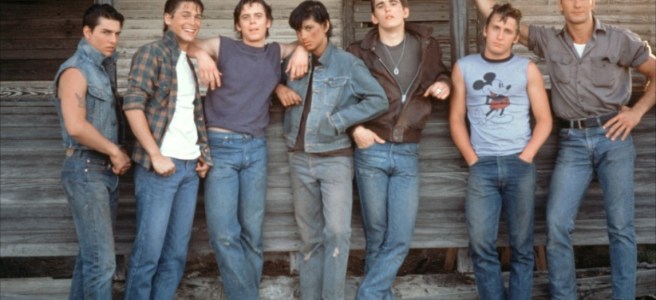
  1. Inspiration – When I was a kid, the first books I ever really fell in love with were The Catcher In The Rye and The Outsiders. I had enjoyed many books as a child, and I had been writing stories for as long as I could remember, but those two books affected me in a way the childhood books had not. I fell into those books and got lost. I fell in love with the characters and saw them as utterly real. I could totally empathise with the feelings, emotions, and scenarios of both books. I loved the style and the voice they were written in. More than any other books I can remember, those two made me want to be a writer. I emulated them in my teens, writing similar stories with similar characters. From that point on I was always searching for books as good as those. I’m still not sure I’ve found any to top them.
  2. Nostalgia – For that reason, YA evokes nostalgia in me. YA books make me remember the surge of enthusiasm and inspiration I got from that genre when I was a teenager. They take me back to that time and remind me of the impact books can have on your life. This I think, draws me towards reading and writing YA. I’m not a rose tinted glasses kind of person by any means, but I do love a bit of nostalgia!
  3. Feeling Young – There is this. Not that I feel old. I really don’t. In my head, I am still a kid, and I always assume people are older than me and certainly wiser. I still feel new sometimes. I still feel like I have so much to learn. I like reading and writing about young people because I still feel like one of them! What I see in the mirror is not what I see in my head. When I read a really good YA book, I can totally recall what it feels like to be that young. I particularly love a good coming-of-age story. I think being a young adult is a totally unique time in your life. Too many people embrace adulthood too quickly and tend to put up walls, separating their generation from the ones below them. (You only have to look at the amount of millennial bashing that goes on!) I think YA books are important for this reason. They remind you of what it is like to be young, conflicted, confused, with those huge highs and lows, mixed with fear, ambition, self-doubt and hope. If you can read YA and feel young again, perhaps it helps build a bridge between generations.
  4. YA is so varied – This is true. YA is a genre with so many sub-genres and I love them all. I’ll even read Romance, if its YA! Horror, dystopian, post-apocalyptic, coming-of-age, historical, thriller… Having young adult characters just seems to make all these genres better.
  5. YA is fast paced – of course, there are exceptions, but generally I find YA books move pretty fast. Not that I mind a slow moving book. I’m not particularly drawn in by the ‘page-turner’ claim, but YA does tend to grip me. I can’t think of too many YA books I’ve read where I haven’t wanted to start a new chapter as soon as I’ve finished the one I’m on. (Michael Grant Gone series and Unwind dystology comes to mind!!)
  6. Gritty, edgy themes – I don’t want to be bored when I read or write. I want subjects I can really get my teeth into. YA has these in abundance. Frightening dystopian futures, post-apocalyptic disasters, family drama, domestic abuse, substance abuse, self-harm, suicide, bullying, running away, sexuality, sexual awakening, poverty, race relations and more, YA is all about tackling difficult issues head on. As a reader and a writer, this is the stuff I yearn for.
  7. Characters that come alive – I struggle with characters in some adult books because I can’t relate to them. Like I already mentioned, I don’t feel like I am nearly 40, so I find it hard to relate to middle aged characters. I consider myself working class, and so much adult fiction is written by and about middle class people. YA offers a wider spectrum of characters who are flawed, still growing, changing and learning. This in itself makes them relatable and interesting. I’m thinking of Holden Caulfield and Ponyboy Curtis, but also Charlie (The Perks of Being A Wallflower), Katniss (The Hunger Games,) Theodore Finch (All The Bright Places) Leisel (The Book Theif) Jonas (The Giver) Todd and Viola (Walking Chaos Trilogy) and so many more! I really struggle to think of a character from an adult book that has stayed in my head…
  8. You are not alone – Reading YA as a teenager is a life saver. Whatever struggles you might be going through, you are going to find a YA character going through the same thing. There is a YA book out there that is going to help you and show you that you are not alone. This is so important when you are young
  9. Packs an emotional punch – The reason I love writing and reading YA books so much, is the emotional journey they take me on. Writing young characters opens up so many possibilities for reaction and action and motivation when you are throwing dramatic situations at them. They don’t just have the plot journey to go on, they have their own inner, coming-of-age journey going on as well, which I find, magnifies the emotions of everything else! YA books tend to pack an emotional truth and are not afraid to venture into dark or emotional territory. I need this when I am reading, and I find this cathartic when I am writing. What can I throw at these young people and how will they react? How will they change and grow and develop as the story unfolds?
  10. Offers hope – YA books may stray into dark waters, but they are never afraid to offer hope. The characters, being young, tend to veer on the optimistic side. They are not tired or jaded by life yet. They are not cynical. They believe things will get better. These books may not all have happy endings, but you can guarantee most will be fuelled by hope…

Over to you folks! What do you think about YA books? Do you have a favourite from your youth? Or have you discovered any great ones in adulthood? (PS – here are 12 of my favourite ones off the top of my head!)

  1. The Outsiders – S.E Hinton
  2. The Catcher In The Rye – J.D Salinger
  3. The Chaos Walking Trilogy – Patrick Ness
  4. The Unwind Dystology – Neal Shusterman
  5. The Gone series – Michael Grant
  6. The Giver (quartet) Lois Lowry
  7. The Book Theif – Markus Zusak
  8. The Hate U Give – Angie Thomas
  9. All The Bright Places – Jennifer Niven
  10. The Perks of Being A Wallflower – Stephen Chbosky
  11. The Shock of The Fall – Nathan Filer
  12. Vernon God Little – DBC Pierre


Dear Newbie Indie Author…

pranam-gurung-116984.jpg

Dear Newbie Indie Author at the start of your journey….Panic not. Though everywhere you turn there are rules, and experts, and advice, and do’s and don’ts. Remember that all those who are further along than you, were once where you are now. If I could give any advice to me when I was a newbie indie author, it would go something like this;

  • Attend a course, workshop or conference. Something that fills you with wisdom and ambition. Something that makes you dream and hope and long to get your words out into the world. Something where dreams are balanced with a hefty dose of reality and an honest account of how hard it is likely to be.
  • Remember that Rome was not built in a day, so neither will your author platform. Be aware of it, learn about it, but don’t panic about it yet. It will grow with you, in time.
  • Be brave. But only when you are ready. There is no rush and no reason to change your personality or try to be something you are not. Tip your toes in the water with a Facebook author page, or a Twitter account. Play around with things, lurking around the edges until it feels right to dive in.
  • Don’t feel like you have to be on every social media site, stretching yourself too thin, whiling away precious hours by attempting to engage with them all. There is simply no point. Choose two or three and make sure one is your blog/website. Give these your attention, and enjoy them. Think of them as your own little projects, little mini businesses. Little acorns that will one day grow into Oak trees!
  • It’s fine if you are just talking to yourself. Everyone starts off like that. It’s not a waste of time! Think of it as practice. You can be uninhibited, knowing that barely anyone is there. Practice your voice, try things out, have a giggle. By the time your audience has grown, you will be far more comfortable in the role.
  • Make your blog whatever you want it to be. Some writers just blog about writing. That’s fine. Some blog about other issues, political, social, personal, and that’s fine too. Some blog weekly, some once in a blue moon. It’s all fine. Do what its comfortable for you. A blog is for your writing and writing should always be fun. If it doesn’t feel fun, don’t force it. Try something else.
  • Don’t compare yourself to others. We’ve all taken different paths. There will always be writers with more money to spend, more contacts to enlist, more gift of the gab, more luck, more everything. But you are the only one who can tell your story in your way. Hold your head up high and try not to play the comparison game with anyone.
  • Don’t get eaten up with jealousy. When you see others succeed, be glad for them and then try to work out how they did it.
  • Don’t expect your family and friends to rush out and buy your book. Don’t expect many of them to understand what the hell you are doing. Find fellow writers to help you through the frustration and elation that is to come.
  • Remember that the only way to succeed is to never, ever quit.
  • Remember that success means something different to everyone, and only you can decide what it means to you.
  • Be prepared to be work hard, to treat writing like a job, to put in the hours, to find time for promotion and writing, to try new things when nothing is working, to feel like giving up, to want to bang your head against the wall, to want to throw your laptop out of the window, to scream at people to just please buy your bloody book and to go to bed and not be able to sleep for the ideas, thoughts, doubts and frustrations whirling in your head.
  • Be realistic. Dream big with your feet still on the ground. Keep your day job and be proud of it. Write because you have to, because the ideas and the words and the characters are too big to contain in just your head alone, and because you want to share them, to let others feel like you do. Write because you love it, because you live it and breathe it, because it excites you and makes you feel like you are living more than one life. Don’t write to get rich. Don’t write to impress anyone. Write because there is no choice not to write.
  • Know that you’ve got to put the work in to see the results. That inevitably and eventually, you reap what you sow. Little steps sometimes take you further than big ones. Sometimes the only way you realise how far you have come is when you stand still and look back to where you started.
  • Don’t spam people. Don’t become a robot hitting everyone who follows you with a buy my book link or plea. Engage with them. Forge relationships. It isn’t all about you. Don’t follow other people just so they follow you back. Think about why you are following them.
  • Don’t play the numbers game. Likes and follows mean nothing if people are not engaged with your voice and your style and what you have on offer. It’s not about the amount, it’s about the quality.
  • Don’t only post an update when you have a book out. Build an audience. Give them something to read, debate, join in with and get excited about. Then ask them to buy your book.
  • Be proud. You’re doing something some people only dream of. Do you know how many people say they would like to write a book, but never actually do it? You’ve done it. You’ve proved yourself and realised a dream. That’s pretty cool. And be proud of going indie. It’s not an easy road. But it is an incredibly creative and innovative one. Who knows where it might lead? Who knows what skills you will require? What contacts you will make? What friends you will find? What effect you will have on those that read your work? Who knows where you will be one year, or five years, or ten years from now? The possibilities are endless so dream big and work hard. Don’t moan, don’t back out, get on with it, and make it happen.

(Credit to Pranam Gurung for the image.)

Please feel free to comment and share. What advice would you give to a new indie author? What do you wish you had known in the beginning? Anything you would do differently?

Author Interview: Emily Williams

Emily Williams has written an endearing and emotional debut novel about the enduring and powerful love between mother and unborn child. Letters To Eloise is a book that had me smiling in recognition, and wiping away the tears. The narrator, Flora, is a student who falls pregnant and begins to write heartfelt letters to her unborn baby daughter, who she names Eloise. The story weaves the past with the present, as Flora deals with an unexpected pregnancy, unsuitable men, and heartbreak. The ending was one I did not see coming and I would highly recommend this charming tearjerker. Emily kindly agreed to an interview, and here she talks about the inspiration for her debut novel, her experience of publishing so far and her plans for the future…

IMG_3343.JPG

1) Can you tell us about your writing and publishing journey so far?

Letters to Eloise has become a very special novel to me. The journey has been a long one and started quite a few years ago. I started the novel when I had the initial idea five years ago, which I jotted down into a notebook and then onto post-it notes. These post-it notes then formed the timeline of the letters for the whole novel.

I choose the epistolary element for Letters to Eloise as I have always enjoyed reading books that contain diary entries or letters so felt this would fit Flora’s situation perfectly. I liked that she had someone real to write to, someone to pour out her emotions. I loved writing every single letter and making sure that the plot linked up through Flora’s narrative.

I was at a time in my life where I desperately wanted a family but wasn’t in a situation where this was possible, so I wrote Letters to Eloise as an outlet to that. The novel took so long to write as, unexpectedly, I also fell pregnant like protagonist Flora. I had just finished the first draft, and when dealing with all things pregnancy related, I found that I couldn’t read or even look at the book so it was put aside!

Luckily, I did return to the novel after my second child, a daughter, last July. I finally completed my long journey to publication; however, my journey isn’t over and now continues with my new projects.

I am very excited about my next two novels.

2) How would you describe your debut novel Letters To Eloise?

I find it hard to describe my own novel! I will combine some of the lovely words from reviews to make a sentence – a heart-breaking yet warm, witty and touching love story.

I like writing things a bit different and enjoyed writing Letters to Eloise in letter format.

3) What has been the hardest part of your publishing journey?

The hardest part has been learning all the formatting and other details that go with publishing an eBook and paperback. I have had to learn everything from scratch, which although hard, I have really enjoyed! The other hard bits have been the marketing side and embracing social media.

Everything is still such a learning curve at the moment.

4) What do you feel has been the best part of your publishing journey?

Each time I read a review, it has all been worth it. I’ve been so lucky to receive such lovely reviews and reading them makes me smile. I am so pleased that others enjoy my writing and have loved Letters to Eloise.

5) Do you have any advice or tips for new writers about to hit publish?

Don’t rush! Before you hit publish, make sure you have been through the novel with a fine toothcomb. Ensure you have rested your book for a while to look at it again with fresh eyes. Hitting publish doesn’t just end the process though, there’s plenty more work to do! I wish I had organised beta readers and blog tours etc earlier, so be prepared well in advance.

6) Tell us about your writing process. How does a typical day go?

During the day, if any ideas come to me, I use the notes app on my phone to jot down any ideas or post-it notes. Then in the evening (when the kids are safely tucked in bed out the way!), I look back through my notes. I have a chapter’s grid, which keeps track of the order of the novel and any chapters I need to add in. With both Letters to Eloise and now with my current novel, I don’t write the chapters in order. I like to pick and choose what to write which helps with writers block!

I then write for a couple hours in the evening or until at least one chapter is finished. I re-read before saving! The next day I will re-read and edit the work and carry on with another chapter!

7) What are you working on right now? What else can we expect from you?

I am working on a charity novel entitled ‘The Subtle Art of Keeping a Racehorse.’ The proceeds from the novel will go to two horse charities, one of which is the Thoroughbred Rehabilitation Centre. The story is a YA book about teenagers, a missing racehorse, secrets, lies and chaos!

I am also working on another adult novel, more of a psychological thriller than a romance, but will be just as emotional as Letters to Eloise.

8) Who are your favourite authors?

Favourite authors would include Cecelia Ahern, who creates amazingly imaginative worlds for her characters that I can picture myself in. Her stories have strong characters with a magical element of fantasy to them. She too has inspired me to think outside the box! Sheila O’Flanagan writes very clearly about the families in her stories and her characters emotions. There are many, many authors who inspire me and all the books I have read as a child have made me the writer and reader I am today.

I was, and still am sometimes, a massive pony book fan and still have all my childhood pony stories, especially Patricia Leitch novels. I am hoping my son and daughter will love reading them too!

9) Tell us about your long-term goals and dreams

I would love to be a full-time writer and live in the countryside with all our animals. We are hoping to move to the country or even to France soon, to run a small business. I hope that my writing can pay the bills!

10) Tell us 3 interesting things about either yourself or your novel

1. I have no funny bones! After a riding accident I had surgery on both my arms which moved the nerve that causes the funny bone sensation! I find writing difficult now so hand-write or use a Dictaphone if they are particularly painful.

2. The protagonist in Letters to Eloise is called Flora, short for Florence. I called my daughter Florence too. I wasn’t allowed to call her Eloise, so Eloise is a pet cockatiel I have in my aviary!

3. I have never ever been to the hairdresser! My hair does need a good chop but I’m still scared to go!

image1.jpeg

Bio; Emily Williams lives by the seaside in West Sussex with her family and a menagerie of small pets. After graduating from Sussex University with a BA in Psychology, Emily trained as a primary school teacher and teaches in a local school. Letters to Eloise is her debut novel.

Links; You can follow Emily on FacebookTwitter

The Story Of A Book

While I await and fully expect a complete set of rejections from the small publishers I have submitted The Tree Of Rebels to, I am not resting on my laurels, not for one moment. I am busy planning my launch for this YA dystopian novel, when I inevitably place it with Pronoun, along with my other books. (If you’re interested in my book launch plan, you can read about it here )

I am hoping for a July, possibly August release. At the moment I am having the cover looked at and having an illustration added to the back of the book. I am also reading the book on my kindle to check for any last lingering typos. It’s all systems go, and if I do self-publish again, I predict the next few months to be both hectic and a lot of fun.

But this all got me thinking about the journey this book has had. From the first seed of an idea to the almost finished and ready to be released product. It’s had more ups and downs than any of my other novels and has been a love/hate project in more ways than one. So for the fun of it, and for those who are interested in how an idea becomes a book, here is the story of a book from start to finish. This book, The Tree Of Rebels.

  • A seed is sown. Sometime in 2014 I became interested in the controversy surrounding companies like Monsanto and the altering and patenting of seeds. I’m not going to go into the details here and now, but after reading, researching and signing all the petitions that came my way, I found a seed had planted itself in my head and was starting to grow. I began to imagine a future world where many of my fears had come true. Where people were even more disconnected from nature, had no idea what or who destroyed the old world, and were all living in blind, grateful happiness for the ‘utopia’ the survivors exist in. Then I imagined a young girl finding something she shouldn’t…
  • A character is born…Having read and enjoyed books like The Hunger Games and The Giver, at this time I was devouring dystopian fiction and so were my daughters. I wanted to write a book that would interest them and I wanted to create a character who they could relate to. Lissie Turner is a rebel at heart, only she doesn’t know it to begin with. I went on a long journey with this kid, getting to know her, draft by draft, watching her develop, and encouraging her to resist and rebel.
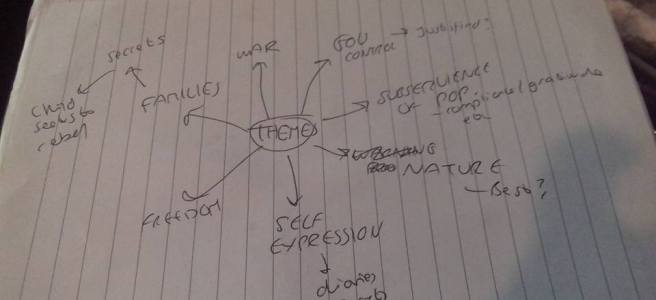
  • A book was plotted…During 2015 I plotted The Tree Of Rebels in a notebook. I arranged a timeline, wrote character bios, decided on themes, and started to write scenes and pieces of dialogue. I also had a ton of research to do…

18402839_1506886719330588_1701810434062864961_n

  • It all began on Wattpad…The very first draft of this book was written straight onto Wattpad, with people reading and commenting as I went. I shared the chapters to social media and tried to stick to a schedule of writing a chapter a day. I even had one lovely reader design a fantastic cover for me, which provided the inspiration for the cover I later had put together.
  • It got hijacked by another book…Just as I was about to start writing The Tree Of Rebels I got an idea for another book. I really did not want this to happen. I was all geared up to write this dystopian adventure that would surely enthral my daughters when a new idea and a very persistent character started knocking. The idea for Elliot Pie’s Guide To Human Nature was so strong, I had to start writing things down instantly. And so began to two-year battle between these two very different novels. With me working on one, only to hand it over to betas and work on the other, then swap around and so on. This was not easy!
  • Every time I thought I was finished, I wasn’t…If you are a loyal reader of this blog (and wow, thank you if you are!) then you will already know how many drafts this novel has had. So many I have lost count. Every time I got to the end, it still didn’t feel right. I ended up leaving it alone for months, while I finished Elliot Pie and started another YA novel set in the present day, and at that time I had no inclination whatsoever to rewrite The Tree of Rebels. I’d had enough of it.
  • When I picked it up again, I realised it was done…Funny, that. After finishing what I hoped was the last draft of Elliot Pie and sending to a final beta reader, and completing the messy first draft of the present day YA novel, I decided to look at The Tree of Rebels again. Was it useless? Did it need an entire rewrite? Would it ever see the light of day? And weirdly, when I read it through, I felt something I had not experienced before with this book. Relief and satisfaction and a sense of letting it go. I amended a handful of typos and left everything else alone.
  • I’m proud of the messages in this book…I am proud of this book. Finally. It’s been a long and difficult slog. I’ve struggled with so many aspects of it. I am currently reading it through and enjoying it. I like Lissie Turner and I think her journey into rebellion is an important one.
  • Nearly there now…All that is left to do is finish the read-through, amend any typos and send the document to the lovely girl who does my formatting for Pronoun. I will also send it to the other lovely girl who does my Createspace formatting. The cover is basically done but we’re just playing around with fonts at the moment, and there will be an extra illustrationo at the back of the book. My launch plan is written and in the next few weeks, I will decide a date for release!

And that’s it. That’s the story of this book. That’s the journey it has had; from an idea that grew while scrolling through my Facebook feed… to something that is almost ready to be released into the world.