Who Is My Reader?

One of the first pieces of advice I recall hearing when I started my indie publishing journey in 2013, was; ‘know your audience.’ It sounds so simple, doesn’t it? Know your audience, know who your reader is. Once you know who they are you can figure out how to find them, where they hang out on the internet, what social media they are likely to be on, what tags you can use to get their attention, who to market your books at and so on.

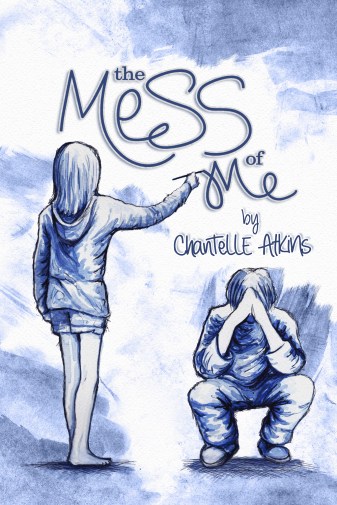
I remember struggling with this at the time though. And I’m still struggling now. Back then, I had written The Boy With The Thorn In His Side, Parts One and Two, but while it was with beta readers, I very quickly churned out The Mess Of Me. The two were written side by side for a while until eventually The Mess Of me won the race and was released first.

The Mess Of Me has a 16-year-old protagonist and is essentially a book about growing up and the many teenage issues that go with it. At the time though, I didn’t think of it as Young Adult or as being aimed at teenagers.  I just listened to the voices in my head, as I always do, and they were young.  I soon figured out that not categorising and marketing The Mess Of me as YA was foolish and ridiculous. I had to get my head around something then. Was I a YA author? Did I just write YA?
themessofme-BLANK (1)

I didn’t have a problem with this as I have never grown out of loving YA books, and although I read a lot of genres, I do frequently return to YA and always feel like I am coming home. The problem was the next book. Though also having a teenage protagonist, and dealing with teenage issues, it was far harder to classify. Partly because the teenage narrator grows up and becomes an adult, and partly because there are two narrators for Parts One and Two, and the second narrator is an adult. In my head, this book was never aimed at anyone. I just had it in my head and wrote it.

I’ve got to be honest, this has mostly been my approach since too. This Is Nowhere features a grown man, but every other chapter dives back into the past to when the character is a young boy and teenager. I always felt like this one was probably better suited to adults though, so I categorised it accordingly.

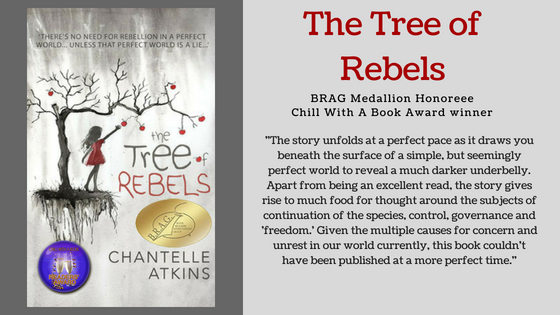
The Tree Of Rebels was the first and only book I wrote with a deliberate audience in mind, and I think I mentioned on here several times while writing it, that this made it the hardest book to write. It sort of altered how I felt about the book. It was like I was trying to write to please someone the whole time.
The Tree of Rebels

Since then, I returned to just writing what I wanted to write and not imagining the reader first. This is fine when writing, but presents all sorts of problems when the time comes to publish the book. What categories and keywords do I choose? How do I market it? What genre is it? How do I find the people who will like this book?

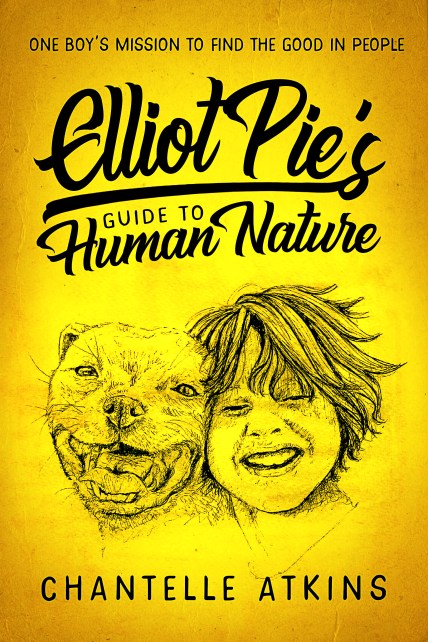
Elliot Pie’s Guide To Human Nature is a classic example of why I am still in such a muddle and still struggling to find my readers. It has a young narrator, but also an adult one. The adult themes, for me, make it more suitable for adults than teens, but Elliot’s day to day life and outlook are something that will more than likely resonate with young people. I still find it hard to describe the genre of this book. Definitely coming-of-age but also contemporary women’s fiction? Maybe even UpLit?
JshHMmZ

With Parts One and Two of the new, revised The Boy With The Thorn In His Side series almost ready to be released, and Parts Three and Four being polished up in the background, my mind has once again returned to my elusive reader. 2019 will continue to be busy as I plan to release YA novel, A Song For Bill Robinson and possibly it’s almost finished sequel, Emily’s Baby. My list of novels is growing longer, but I still don’t know who my audience is. It’s tricky when you cross over so many genres. Most of my books cross into two or more, with psychological thriller, suspense, crime, coming-of-age, mystery and dystopian all regularly showing up.

So, who is my reader? What sort of person reads my books and likes them? I only have a small audience, so it’s hard to speculate. But I suppose really, my reader must be someone quite similar to me. I imagine them as slightly scruffy, or at least not terribly groomed and over bothered with appearances. They probably make an effort when they can, and they probably berate themselves fairly often about sorting out some kind of ‘look’, but it never really feels urgent to do so. They are probably young at heart. Stuck in the past, tinged with nostalgia, reluctant to admit and give in to adulthood. I think they are a music fan. They probably like all sorts. They’re not narrow-minded about it at all. They’ll listen to anything, but they have their favourite era of course, and their favourite songs. They see life in songs. Soundtracks are everywhere.
record-player-1851576_640.jpg

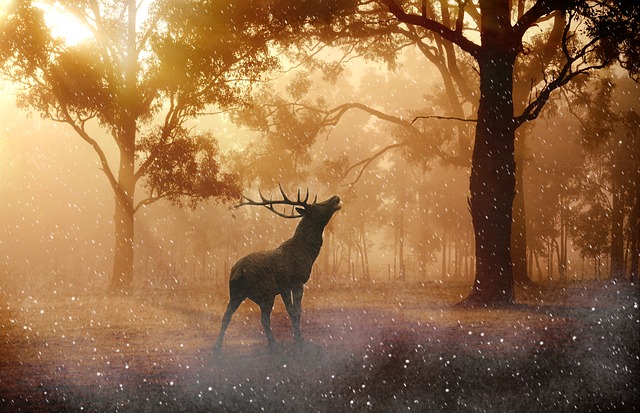
What else? I imagine them as liking animals and nature. Not in a really obsessed, or professional way, just in that seeing a bird or a deer unexpectedly will really make them smile and have a better day. I think they enjoy being outside, all weathers too. Being outside makes them feel more alive.
hirsch-643340_640

I think they are introverted but friendly and warm. A bit cynical and suspicious at times. Prone to the odd dark mood. Likely to panic about once a month about how the world is utterly doomed. But they always brighten up and soldier on. Despite being naturally shy, they are really interested in people, genuinely intrigued by them. They love a spot of people watching and love a character-driven book they can really get their teeth into. They are looking for stories about humans they can relate to and empathise with, and they are looking for characters to fall in love with, characters they wish were real.

They want to disappear inside a book and come out feeling different. They don’t want anything too formulaic or predictable. I think they are a bit of an eccentric at heart. They probably talk to themselves.

This is how I imagine my readers to be and I shall continue to do my best to try to find them. What about you? If you are a writer, do you know who your audience is? If you don’t know, does it make it harder to sell your books? If you’re sure of your audience, tell me about them. What are these people like? If you’re a reader, do you imagine yourself as part of a genre tribe, full of similar and like-minded people all connected by an appreciation of mysteries, or romance, or horror?

Please feel free to comment and share!
Stuck Inside A Story (For 28 years…)

That’s how it feels. That’s what it is. Stuck. Trapped. Held prisoner. I can’t get out. But do I really want to? Evidence would suggest not. Sometimes I wonder what exactly I have done. Created a world, created characters, used some magic and a lot of hard work, an imagination I can’t control, and there you have it, an alternative reality I can’t escape from.

I had no idea this would happen when I started writing as a child. My first attempts were hand-written stories about lost and abandoned animals, heavily influenced by my love of Watership Down and other similar books. I didn’t write my first story about real people living real lives until I was 12 years old. What happened to tear me away from my quaint tales of lost dogs and runaway bunnies? Well, weirdly, this.

download

And this.

45008420_2124373854248535_845460910603501568_o

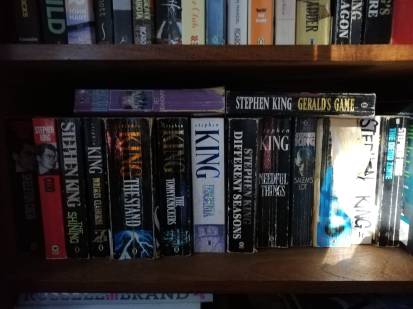
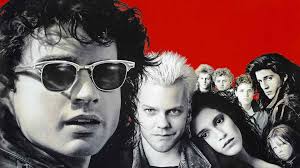
Watching The Lost Boys gave me a few vital ingredients for the story that would go on to hold me prisoner for the next 28 years. It gave me the main idea, the main concept and it gave me some characters. Or at least, it inspired me to create characters who would turn out to be the kind of people I wished I knew in real life. As for Stephen King, it was around this time that I started my collection and was well on my way to becoming a truly obsessed fan. Add to that strange mix, the recent divorce of my parents, the usual teenage angst and rebellion, and I had me a story. Remember the bit in The Lost Boys when the younger brother realises his mother is dating the head vampire? That’s where the idea for The Boy With The Thorn In His Side came from. It wasn’t called that back then. It wasn’t called anything for ages. But I kept thinking…what if your mother was dating a monster? Only not the vampire kind, the real-life kind? And what if no one believed you? And what if you only had yourself and your best friends to try to battle this person? It was a weird mix of asking ‘what if’ questions, my parents’ recent divorce playing on my own fears, a dewy-eyed fascination with the actor Corey Haim, and a love of horror and fascination with the darker side of human nature that spawned this tale.

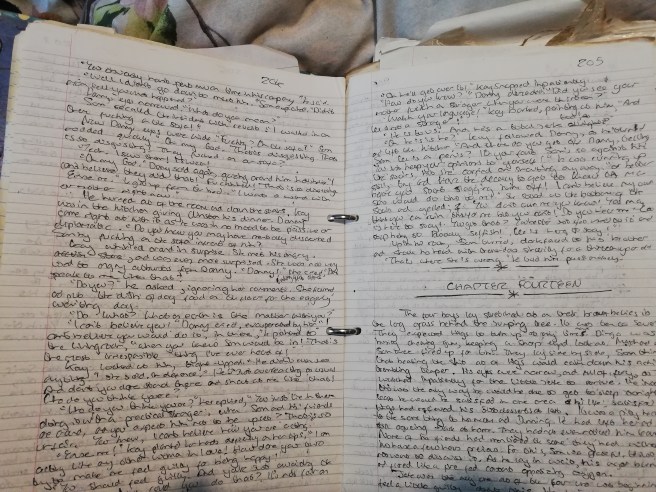
In my mind, my main character Danny, who is 13 at the start of Part 1, looked a lot like Corey Haim, who I was quite a bit in love with at that age. Once I had him in my head, his character started to grow and evolve, and I think I wrote that very early first draft pretty quickly. I remember it was my absolute obsession for a while. I hated to be away from that story. I’d rush home from school and up to my room to pick up my notebook and pen. I’d write endlessly and passionately. I suppose at the time I had no real idea of what I was doing. I was sort of trying to invent friends, I think. People I was intrigued by, people who had drama in their lives. I felt like I was a character in the book too. I was so proud when I finished it. I even started a sequel. I showed my English teacher and she read it and gave me a merit certificate I had to go up in assembly to collect. I remember being embarrassed but happy. The certificate said I had written a novel. At age 12! I don’t think I have the certificate anymore, but here’s the book.


IMG_20181030_100111.jpg

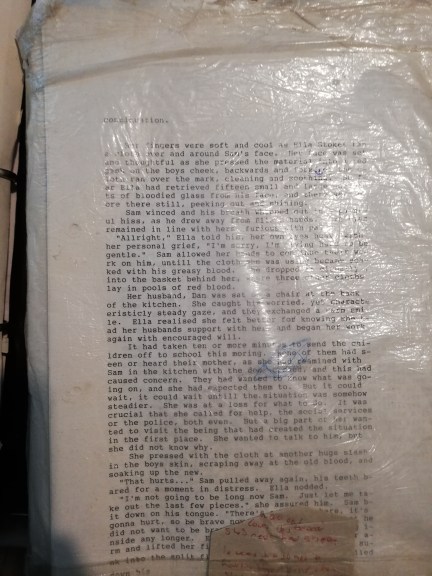
I started rewriting it after that. I had invested in an electronic word processor. It was the most exciting machine in the world to me! I could sit there and tap away and watch my words appear on this mini screen, before hitting print and then holding typed pages in my hands. What also happened to me at that age was that the story crept inside my brain. It kept me awake at night. It was company. I was never, ever bored. I’d look forward to bedtime because I knew I could lie there and think about my story before I fell asleep. I watched the scenes in my head like a movie. I heard them talking and arguing. Inevitably I came up with new ideas and extra bits, but mostly I just let them play it all out, and most of those imagined scenes have never made it into any of the books. It was just me, a fly on the wall of a made-up world, watching them live.

IMG_20181030_100519.jpg

Here’s one of the many pictures I drew of the characters. Only some of these made it into the final version.

IMG_20181030_100420.jpg

I rewrote that book again at aged 16. I’d started and not finished tons of other stories in that time. The book had opened a floodgate, forging a lifelong addiction to writing. But that one story, I couldn’t ever let it go. I rewrote it again at 19. I thought about it constantly during the non-writing years of balancing early motherhood with self-employment. The same story, the same characters always in my head, coming back to me night after night. I was 34 before I finally returned to it. I started writing in notebooks again, just like when I was a kid. Snatching spare moments, writing before bed, suddenly entirely addicted all over again, but this time it had to come out, it had to be finished.

I finally released it in 2013. The Mess Of Me snuck in and was released first because The Boy With The Thorn In His Side was so long and needed so much work. But finally, it was out. A real book I could hold in my hands! I’d done it. So now they would fall quiet, surely? I’d stop thinking about them. I’d stop playing out more scenes.

Well, no, not exactly. Before I knew it I’d penned a sequel, This Is The Day and released that too. That should have been the end of it it, but yet, it still wasn’t. The story itself was so enticing to me, and I was so invested in it, I couldn’t stop imagining other endings, and I guess, truth be told, in my head I did not want it to be over. So the stories went on. Every night, hi guys. What’s happening now?

I wrote an alternative ending in 2016 and included it in Bird People and Other Stories.That was supposed to draw a line under it, but it only made things worse. Now I couldn’t get the thought of other endings out of my head! What if this happened instead? What if? What if? For the fun of it, I started writing a screenplay in a notebook. Brand new material that led on from the original ending of book one, slotting in and delaying the ending, but finishing up before This Is The Day. This was only supposed to be for fun. To get it out of my system. To indulge myself even more than I already had. What the hell, what did it matter? It was for fun. I didn’t have to explain that to anyone!

Except now I do. Because that screenplay became a total obsession. I carried that notebook around with me everywhere. I grabbed every spare moment I had to write into it, getting this new story out. I absolutely loved it. I was so excited about it. I just couldn’t put it down. So eventually, after a lot of thinking and plotting, I came to a decision. I would do it. I would split the book back into two parts and this new material would be part three. Part Four would be This Is The day but it would need some reworking. Then suddenly, parts five and six emerged…

I’ve now accepted the truth. And that is that this story and these characters will never let me go. They are part of me and part of my life and I’m going to leave each book open, just in case I want to revisit it again.

There are new characters introduced in Parts Five and Six, and these also get their own spin-off book or possibly series with characters from both appearing in the others. So, as you can see… this thing could run and run.

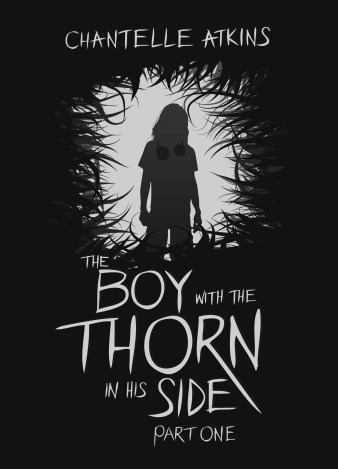
So, if you are interested in reading this story, which began when I was 12, followed me through my life and has now evolved into at least a six-part series, you can start with The Boy With The Thorn In His Side Part One which is available for pre-order on Amazon now and is released on 9th November. This is a reworked, revised edition. The Boy With The Thorn In His Side Part Two is also available for pre-order now and is also released on 9th November. Both at the special introductory price of 99p.

I plan to release the brand new Part Three in January an Part Four in February. By then I hope to be into the second or third draft of Part Five…

And the weird thing about this story is that I wrote it purely for myself, I indulged myself entirely, became utterly lost and absorbed and have still been unable to climb free from it. So I don’t really expect anyone to buy it, and I don’t really mind if they don’t. It feels weird to even try to plug it if I’m honest. Like this one is just for me. Like this is my mind, my imagination, my daydreams and to imagine anyone else wandering around in there is almost unsettling. And if it holds me prisoner for another 28 years? I think I’m okay with that…

theboywith-final-part 1


Bye Bye Book Baby…8 Tips To Survive Launch Day

Books start off as a wholly private thing. An idea, a spark, a what if? A character, a voice, a problem. All in the author’s head. Swirling around, mixing and sloshing, growing and evolving and swelling until finally it all bursts out. Into notebooks, into notes saved on mobile phones, into character bios and storyboards and plot outlines and research. And then, word by word, page by page, into an actual book. By this time you might be sharing bits here and there. You might be talking about the plot with other people, or asking for advice. But in the beginning, it’s entirely private.

Then comes the day you hand it over to carefully picked beta readers. You wait and dread and hope, and then take a deep breath when you start to digest their inevitably and wonderfully critical feedback. You work on it again and again and again.

Until the release day looms. That first spark of an idea, that grew and moulded itself into an actual book, is as perfect as it can be and finally, it’s time to say goodbye. And I always forget just how scary this is. Handing over to beta readers is hard enough, but usually, they are people you know and trust, and you know the book is not finished and still needs more work, so it’s easier to take the criticism.

JshHMmZ

But after release day? The public have your book in their hands! And hopefully, they are going to read it, react to it and possibly review it. Scary stuff. There’s an element of wanting to avoid this, though obviously, we write to reach people, to pass on stories and lives and messages, however, there is no denying it’s hard to say the final goodbye. Good luck out there book baby, you are on your own now.

Here are my top tips for surviving release day;

  1. Whether you’ve arranged a physical launch or an online one, or something far quieter, ensure you’ve done all the hard work days before it kicks off. So blog posts, interviews, early reviews and graphics are all organised and ready to go. You’ll be nervous enough on release day and don’t want to be rushing around putting last minute things together.
  2. Enlist some fellow author friends to help you on launch day. They’ve been there, so know how it feels! You could ask them just to help share and Tweet your book link and reviews, or you could go further and ask them to co-host your event with you. Safety in numbers, plus you might need the moral support!
  3. Have another project on the go. Releasing a book and finally saying goodbye to it can make you feel a bit flat. I like to have another project already on the go to take my mind off the one leaving home. You can spend release day promoting and squeeze some fresh new writing in as well.
  4. It’s never too late to fix typos. Lingering typos are a constant fear. You’re sure you’ve got them all, mopped them all up on the millions of times you’ve gone over your book, but you know full well they can still creep through. But the great thing about indie publishing is that if some kind soul lets you know they found one, you can quickly amend it, republish and no one else need ever know!
  5. It doesn’t have to be goodbye forever. Part of you is so glad to get this book released, to finally have it done and out of the way, but another part of you feels a bit like your baby is leaving home and never coming back. Not true. You’ve still got to promote the book and that lasts forever. You can revisit the characters and the plot any time you want with extra short stories, character interviews and so on. You can even write a sequel or make it into a series…It doesn’t have to be over!
  6. Goodbye to one book makes way for the next. It’s hard to concentrate on the next book when you are waiting for one to move on. Once it’s gone, once it’s fully out there, you can breathe a sigh of relief and start paying proper attention to the next ones waiting to be written!
  7. Make sure you have some wine in to celebrate. Or whatever takes your fancy, Release day can be pretty exhausting, followed by a flat feeling and feelings of anxiety about how readers will react. Take deep breaths and have a drink or two to calm your nerves and celebrate what you have achieved.
  8. Enjoy it! Release day is scary and somewhat emotional, but don’t forget to have fun and allow yourself to enjoy it. It is your special day after all, and one you have worked amazingly hard for!

I’ll be saying goodbye to Elliot Pie on October 5th, but you can pre-order the novel right now here on Amazon, for just 99p! This is a special pre-order price and it will go up on release day! So grab your bargain copy right now and don’t forget to leave a review afterward to let others know what you thought!


Summer Blog-a-day 2018 – Extract from my next release!

I am so sorry I am late putting this up! I agreed to take part in the Summer Blog-a-day 2018, courtesy of the lovely Kay Macleod and today is my day! I’ve decided to post the first chapter of my upcoming release Elliot Pie’s Guide To Human Nature, which will be coming out with Pict Publishing in October. I hope you like it!

1

Elliot


I think the men started it all. My mother going downhill.

She didn’t have much luck with the men, and this was a fact. According to my Nan and Uncle Liam, she kept picking bad ones.

She used to be able to laugh it off.

You live and you learn, she would say, got to kiss a few frogs before you find a Prince.

The more I thought about it, the more I wondered if it had all started with the men. There had been quite a few bad ones in a row, the first being my father, who had not hung around to see me be born.

I scribbled the men into a notebook to help me remember;

-my father

-the one who beat her up downstairs when I was in bed

-the one who came home with her from the pub

-the one who stole her purse

-the one who cheated on her with three other women

I didn’t really know any of them. I hadn’t even seen the one who beat her up. He’d just been a voice in the hallway, murmuring while she giggled.

Then one night, his voice changed. Light and fun turned into husky snarling. High pitched at the end of his sentences, like his voice was snapping into pieces. There were thumps and bumps, gasping and scrabbling. The man spoke to her in a low, mean voice and then slammed the front door behind him. I got out of bed and started across the landing but she called out; No! I’m okay! Don’t come.

The second one wobbled home with her one night after closing time. I’d sat with my back against my bedroom door to listen.

Seen you about. Liked you for ages.

Didn’t think you’d look at me twice!

You’re lovely, you are. All woman!

She broke down on him not long after the glasses clinked.

So bloody fat, aren’t I?

No, no, you’re all right, you’re…

Who am I kidding? Probably had a bet with your mates, didn’t you? Taking the piss out of me!

She went on for a while, having a go at him and accusing him of things. And then he left, quietly.

Next was the one who stole her purse. Apparently, she’d given him her number the night before, so he turned up on the doorstep to try his luck. She came running up the stairs after he’d left. She woke me up shrieking; he’s robbed me! He’s robbed me! That shitting little bastard! She sat with me on my bed, red-eyed and shaking.

‘God, I can’t believe what a bloody idiot I am, Elliot! What a pushover! Robbed my purse! My bloody purse! Jesus Christ, what is wrong with people? Why do they go out with the sole purpose of hurting someone else?’

She left it a few months before she latched onto the next disaster. It went well for a few weeks, until she got a phone call from a woman claiming to be his girlfriend. It all kicked off after that. There was screaming and shouting and things getting smashed. That was the same night I started watching the house opposite ours. The one with the old lady and the two striped cats. It was the cats that caught my attention. Crying and mewling to be let in, day and night. Why didn’t the old lady let them in?

The next morning my mother had come to a decision.

‘I’m giving up men,’ she announced over breakfast. ‘That’s it. That’s final. They’re all the bloody same. I was right all along, wasn’t I? That’s it. No more.’

‘Have you seen that old lady across the street recently?’

Me changing the subject pissed her right off. No, she hadn’t seen the lady, what bloody old lady? Hadn’t I listened to a word she said?

But I couldn’t stop thinking about the cats. That night I could still see them sat on the doorstep waiting to be let in. I watched them for a while before lying back down and picking up my notebook to hold open on my chest.

My bed was under the window and I liked to sleep with the curtains apart and the window wide open. I liked to lie there like that until the cold night air had completely numbed the tip of my nose. I could never fall asleep until the outdoors had drenched me in cold. Once I was cold enough, I got under the duvet, pulled it over my head and fell asleep.

Just then, there was a tap on my door and my mother came in. She shuffled in, tugging the sleeves of her pale blue jumper down over her hands one at a time. I always felt a slight sinking in my belly when I looked at my mother and realised that we were complete opposites.

I was tall for my age, with a shock of thick black hair, and deep brown eyes. My mother was five-foot two and apple shaped. Her hair was pale yellow and when loose, hung limply over both shoulders, where she would often reach up to tug at the ends. I thought she was pretty. Her face was round and flat, her eyes pale blue and framed by blonde eyelashes. Her lips were like a small pink flower. I longed for the smack of them against my cheek, but she had never been a kissy sort of person.

I wished we looked alike. I wished that people would say how like my mum I was, instead of wondering if my dark skin meant I was adopted. I’d never heard anyone say that I had my mother’s eyes, or nose, or lips. It made me sigh when she walked into the room, and as her shoulders slumped with her own sigh, I wondered if she felt the same disappointment and sense of disorientation whenever she looked at me.

Perhaps if I had looked like her just a little bit, then the differences in our personalities would not have felt so obvious either. I forced a smile as she approached my bed, wringing her hands and frowning as if everything perplexed her. I couldn’t help glancing at her short legs, before gazing down at the long ones that emerged from below my barrel chest. My Nan told me I was still growing into myself, and that I was not a finished product yet. I hoped she was right. My long thin arms and legs made my chunky middle look out of place. You’re a beautiful boy, Nan was always telling me, but that’s not what the kids at school said.

My mother spotted the open window and scowled.

‘Close your bloody window! You’ll catch your death!’

‘Mum,’ I sat up. ‘The house across the close has had its lights on for weeks now.’

‘So, what? What are you spying for?

‘Mum, she hasn’t let her cats in either.’

‘What are you on about? What bloody cats?’ She came to the window, crossing her arms over her chest.

I leaned forward on my knees and pointed. ‘There. Look. She hasn’t let them in and her light has been on for two weeks. Maybe longer.’

She shook her head, distracted. ‘Look, I had a phone call…’

‘Do you think something has happened to her?’

‘Elliot, listen to me a minute. I need to talk to you about something.’

But she didn’t sit down, and she didn’t touch me, so I continued to stare at the cats and suddenly I didn’t want to look at my mother at all. She had the same look on her face that she’d had when she told me Uncle Liam’s baby had died. I didn’t want anyone to have died, so I just concentrated on the cats.

‘I’ll go and knock in the morning,’ I said with certainty. ‘Make sure she’s okay. Maybe she went on holiday and someone is supposed to be feeding them but they forgot!’

‘Can’t you even listen to me?’ she snapped then, stalking briskly away from the window. ‘Is it too much to ask? I came up here to talk to you! Do you even care?’

She didn’t give me a chance to answer before she flounced off. I felt bad after that, but at least I could be sure that no one had died. She would have said so, wouldn’t she?

When she was back downstairs, I tried again to put my finger on what was different about her. The red eyes, for instance. She never used to cry as much as she did now. The stalking about and walking away and starting conversations but not finishing them. That was another thing. I gazed at the list in my notebook. Five bad men.

Did it start with the men? Or was there something before that? Maybe I had just not been paying enough attention. And now I needed to help her. I needed to do something. I felt like it was just on the tip of my tongue, at the back of my brain, teasing me.

I wished Uncle Liam was still around to ask for advice. Uncle Liam had moved in with us six months ago, but he’d gone off recently to clear his head. He would be back soon, because we still had his car and his dog Tizer. I decided to embrace the fact that it was going to be up to me alone to work out how to save my mum.