Author Interview with Joel Dennstedt

This week’s blog post comes to you a few days early and in the form of an author interview! I last chatted to indie author Joel Dennstedt around a year ago. Since then he’s been travelling, writing and professionally reviewing books. Here he is talking about his travels, and the inspiration behind his latest release, horror collection, When Dolls Talk

1) Can you tell us where in the world you are right now, and where you are heading to next?

I am back where I began: my hometown of San Diego, California. Five years non-stop trekking through Mexico and Central and South America brought me home to visit family and to re-gear up for 5 more years. I plan to visit Scotland for the Scotch/Whiskey tour, then head to Eastern Europe and across Central Asia into Southeast Asia.

2) Has your travelling inspired any of the books you have written or are working on, and if so, in what way?

Traveling inspired my SF novel,  GuanjoN, , which happens on a planet resembling the Amazon. However, I reached the Amazon after the book was written. So, maybe future thoughts prompted this eerie adventure about Earth natives endangered by indigenous aliens.

3) How has travelling changed you as a person and as a writer?

Oddly, travelling made the authentic me emerge. The true me as a writer. Travelling fulltime gave me the freedom to become myself. Transformation, while challenging, results in total liberation. And travelling is fun.

4) You have a new book out. A horror collection. How did this come about?

This doll spoke to me. Rather, a photo of this creepy doll. She wanted me to write her story. So I did. After that, they just came out of the woodwork.

5) Are you a fan of horror yourself? Who is your favourite horror writer?

Yes, I’m a fan and a follower. My style is inspired by Edgar Allen Poe with a contemporary twist. H.P. Lovecraft has a say for darkness. I worship Stephen King. I never miss a Dean Koontz debut. Overall, I prefer my horror on the literary side, and definitely with a dash of dark humor.

6) Where did the ideas come from for these stories?

Those damn dolls. Actually, I searched out individual creepy photographs to inspire each story. Then I let my fearful imagination go. I’ve posted the photographs on Facebook and in the Bonus Gift Pack that came with every pre-order.

7) I understand you first posted these stories on Wattpad. How useful was that for gaining comments and a potential audience for the book?

Wattpad has a unique audience to itself. They rarely buy the final book. But they keep me encouraged to keep on writing, they offer wonderfully perceptive observations, and they often provide desperately needed Amazon Reviews.

8) Is there a message in this collection? Or in any of your books? Something you wish the world to know? Only to this extent – a

Only to this extent – a marvellous author friend made the following observation about these stories: “So much more depth to them than just scary bump in the night stuff. They’re scary all right, but more about the scary human condition and experience, parables, metaphors, etc.” That is – the real horror in life comes from us humans being human.

9) What can we expect from you next?

Lord, I wish I knew. I want to write a sequel to Guanjo. I plan to write Book 2 of these short horror stories. I need to work on my literary novel, which is still a decade in the making. And I need to keep working on my book of travel short stories based on true events.

10) Is there any genre you would never attempt to write in and if so, why?

I don’t write in genres I don’t read. I don’t read much fantasy. I don’t read hot romance. I wrote a quirky little romance called Hermit, but nothing with muscled men and naked women on the front. But I’m already in trouble with the crowd who says you must pick a genre and stick with it. I cannot do that.

11) How has your journey as an indie writer progressed since we last chatted? Any highs and lows?

It’s a roller coaster; you know that. All highs and lows. More is never enough. The next good thing makes you manic. In the end, it really, truly, MUST be all about the writing. But … it never stays that way. So, I paid my ticket. I’m on the ride. Hanging on.

12) I know you review books professionally. Please give us your top three books so far! What have you read and reviewed that we really don’t want to miss?

That is difficult to answer. I’ll give you my personal favorites, but my taste is not yours. However, I have read many great books by Indie Authors, when I did not expect to do so.

1. Decline – by Jared Kane A perfect little book, a poetic literary

style – understated post-apocalyptic

tale.

2. The Finest Hat in the Whole World – by Colleen Parkinson

Resonates with the feeling and style of

To Kill a Mockingbird. Masterful attention to the details.

3. 602 Brigade – by Musashi Miyamoto

Like Decline, a poetic literary style.

A post-apocalyptic, anti-war tale.

Thanks so much for chatting with me again, Joel!

If you’d like to find out more about Joel, his writing and his travels, here are his links;

Website: http://www.joelrdennstedt.com

Author Page: https://www.amazon.com/Joel-R.-Dennstedt/e/B008VJZ6RE

Independent Book Reviews: https://www.facebook.com/independentbookreviews

Self-publishing; Good times, bad times, and ugly truths

I am writing to you from a place of confusion. I’m unsure about so many things that I feel the need to write them down to make sense of them. The one thing I am sure about is this; I am a writer and I need to write. I will always be a writer and I will always need to write. Everything else is a muddle.

Let me try to explain. When I got back into writing in 2011, I had a decade of wasted years lying behind me. Don’t get me wrong, these years were not wasted in my personal life. I was bringing up small children and earning a wage. I was too exhausted to write. Or so I told myself. The real reason? I was too afraid to take it further. I was too shy, too anxious, too introverted and too protective of my work to send it out to agents and publishers. Ahh, I can breathe a sigh of relief now that’s off my chest!

Once I started writing again, nothing would stand in my way. Not a new job, or a new baby. And at some point in 2013 my attitude towards publishing changed. I got braver. I’d shared some work on here and had some good feedback from a few very early followers. So I started sending the two books I had written, The Mess Of Me and The Boy With The Thorn In His Side out to agents and publishers. I wrote massive lists of both and worked my way through them. It was, of course, depressing and demoralising, but I felt I had to do it. I never expected any of them to like my work, and in many ways, it felt like a rites of passage to go through this.

Self-publishing presented itself to me and appeared to be the answer to all of my problems. I didn’t need to torture myself by waiting for inevitable rejection anymore. I didn’t have to stress over how to word a query or an email. I could take full control and get my books out there on my terms. Brilliant.

philosoraptor-self-publishing-you-say-i-think-this-could-work-out-well

It was exciting to start with. I felt like I had accomplished something. I had realised a dream. I had written and published my books! I wasn’t too fussed about sales or money as that had never been my motivation, and in those early, hazy days, I was just excited.

Of course, reality soon set in, and over the last four years I have had one hell of a bumpy ride and made many mistakes. I’m actually embarrassed now to look back on the early days. I had no idea about front covers. I had no idea about social media, building an author platform or promoting my work. I soon bumped back to earth and started the real hard graft that is the life of an indie author.

Let me tell you the reality of being an indie author.

It’s good and it’s bad. It’s pretty and it’s ugly. I love it and I hate it.

Indie authors do everything themselves. Yes, they may hire editors and front cover designers. If they have oodles of spare money they may pay for adverts and promotions too. There is nothing more evil to me than the saying ‘you have to spend money, to make money.’ That’s the crappest thing ever to say to someone who has no money.

Indie authors offer their work for free. This happens in very few other areas of life. But people expect it now. They expect freebies and offers and giveaways. We expect reviews and recommendations in return but rarely get them. In essence, being an indie is like giving your all, your everything, your blood sweat and tears, and then getting very, very little back. And again, I don’t just mean sales. I keep my books priced low because I want people to be able to afford them. I give free books and stories away with my newsletter and I post free stories on Wattpad and I do the odd giveaway.

Indie authors work extremely hard. They’ll have families, and other jobs, and still keep plugging away, writing more books, building their platform, increasing their content, remaining active on social media, trying new things all of the time in the hope it enables their books to become visible. They don’t want to spam people, they don’t want to beg. They have to learn how to self-promote without getting on people’s nerves. They have to deal with people thinking they are totally wasting their time.

insanity-wolf-buy-my-books-buy-my-books

Let me be clear once again; it’s not about the money. It’s about the connection. I write books because I want people to read them. I love that connection. I love passing my stories on. I love receiving messages about how people related or reacted to the characters.

Right now I feel like I am betraying the indie scene, because I am trying the traditional route again with the next two books. I started the process the other night with The Tree Of Rebels and was instantly reminded of why I hated it so much last time. Ugh. It’s scary. I kept thinking, just self-pub it! Why are you doing this to yourself again? You’ve been here and done this! You’ve moved on! You’ve grown! You’re indie and proud! You know how to do it now, how to get the right cover, the right blurb, the right marketing plan…Yes I do, but I am also, really, really tired. My confidence is at an all time low. I am not making that connection with people. I am banging my head against a brick wall.

So, here I am again. Researching publishers and putting my heart in the firing line. I already had one rejection the day after I started this! I expect many more to come. Maybe I feel I need to do this. Give it one last try. Because I am not succeeding as an indie. I am getting better as a writer, and I am getting better at all the things you need to do to be an indie, but I am not succeeding where I really wish to, which is gaining new readers and forging that connection.

I see other authors getting promoted with their publishers and I want a piece of that action. I admit it. I am envious. I am filled with longing. I am practically drooling for the same number of sales and reviews. I want what they’ve got and I am afraid that my efforts as an indie will never be enough to get it.

So, heart in mouth, I will try the traditional route again.

But no fear, I will self-pub these books if I get nowhere. I promise you. I will self-pub the god damn hell out of them! I will market and promote the holy fuck out of them! I absolutely promise you that. I promise myself that. I will come back harder and faster and stronger.

There is no giving up. Not ever.

Either way, I will keep writing and getting better at it and if I self-pub again I will never give up trying to find more readers. This is not a post about quitting. This is a post about the realities of finding success as an indie. And by success, I mean a growing readership.

It’s just at the moment, I am tired of the indie ups and downs. The good days followed by the bad days. The endless hope that one day it will all be worth it…

And in a weird kind of way, submitting to publishers has already made me appreciate being an indie…it’s already made me feel that surge of pride and passion again about everything indie authors do, and are…I love the indie scene, I really do. I have read countless amazing books, in fact, I rarely read traditionally published books these days, because there is so much talent in the indie pool. It just makes me sad that so many of them are not getting the recognition they deserve.

Over to you. What do you think? Do you love being an indie? Is it what you thought it would be? How do you keep going when times are tough? I would love to hear your thoughts on everything I have talked about today. Join the conversation, have a moan if you need to..and then we will all get back to the writing!

Second Draft Joy

Back in December, I penned this post Why My Favourite Draft Is The Second, while I was busy writing the first draft of a YA novel called A Song For Bill Robinson. I was enjoying the first draft, but also realistic about its ugliness, and I was excited about going back to the second draft for the reasons I mentioned in the post.

Well, three months on, I am now well into that second draft, and enjoying it every bit as much as I said I would! It is easier than the first because the basic framework is there and the hard work has been done getting the story out of my head. I already know I can make it better and I have already listed and made notes of how to do this. The second draft is just fun!

I had to have a think about this earlier. Has this been the case with all my books? And I think the answer is yes. The first draft is the hardest for me. The later drafts are the most tedious because you know the story, and really you want to be writing something new, but you have to polish this thing up, cut bits out, sharpen it and refine it and make it as good as it was when it first appeared in your head. I think of the first and the final drafts as the real hard graft. The second, for me, is much more fun.

can you tell I'mhaving fun-

In many ways, the second is more of a read through than a rewrite or a detailed edit. After a break, I am familiarising myself with the story and getting to know the characters again. I read through each chapter, getting a sense of them and their motivations, making notes and finding my way back into it all. Of course, I fix any typos I come across, and I do a lot of deleting unnecessary and repetitive words or phrases. I tidy it up as much as I can, but at the same time, I know the more brutal cuts, the reshuffles and the changes in direction will all come much later. This is still very early days, and I want to enjoy it. I don’t feel the need to make any major decisions at this point.

At the moment, I am totally addicted to this particular story, which is also how I felt when I first wrote it. I suppose it’s more familiar ground for me as an author and a person. A gritty, contemporary YA drama with lots of dysfunctional family behaviours and social issues thrown in. I feel a passion for it. I want to tell these stories. And there are so many stories in this novel…

It’s fast paced. Which is good. I hope! On later drafts I might feel the need to slow things down a bit, my niggling worry being that it might come across as unrealistic for teens to have a life this dramatic. It’s literally a roller coaster of events, repercussions, consequences and drama. It’s full of highs and lows with plenty of unrequited love, dangerous lust, and familial miscommunication and resentment. Oh and of course, a rather wonderful soundtrack (the male protagonist is a talented singer) which ranges from The Four Tops and The Foundations, to Arctic Monkeys and Jamie T. There is just so much to play around with!

And I know I haven’t got it all right yet. I know I need to keep fleshing out the characters and finding stuff out about them. I know I need to work on the visuals, the environment, such as their homes and bedrooms and so on. I tend to forget about all that stuff on a first draft, knowing that no one else is going to read it for a long time. I just want to get the nitty gritty down first.

But at the moment I am enjoying the ride, and just felt the need to share that with you. Adding bits and cutting bits. Reading it like a reader and bloody enjoying the process. I can’t get enough of it.

I doubt I will feel this way by the time draft ten comes around, so this is why I savour the second draft so much. I know the time will come when I almost come to hate this book. I have been there with The Tree Of Rebels many times, and Elliott Pie reached that point just recently before I sent it out to a second round of betas. I was sick of it. I am sick of it. Diving into this much fresher book has been just what I needed.

So, for me anyway, I give my thanks to the wonderful second draft, with the foundations laid down and the really hard work yet to come. I shall enjoy the party while it lasts.


Message and Themes; What Are You Trying To Say?

When I was at school, English Literature was always my favourite subject. I was a total book-worm who dreamed of becoming an author, so you can kind of see why I adored English Literature. Reading books, talking about books and writing about books was my idea of heaven. Having said that, there was always one part of the subject that annoyed me at times. When analysing a text, the teacher would often ask us to think about what message the author was trying to get across. It was a question akin to the equally confusing one; what are the themes of the novel? I remember thinking, I bet the author didn’t know there was a message or a theme, or that we would try to work one out. I always considered that Shakespeare, Bronte and Steinbeck just wrote books because they had great ideas, great characters, and could string some pretty awesome sentences together.

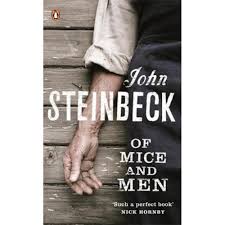
But English Lit demands we find the messages and the themes, and yes, when you pick apart a text and analyse it within a classroom setting, you do tend to find them. But were they intended? I suppose I’m asking, did the author write the book with a theme or a message in mind? Or is it the reader who later determines what the potential messages are? I mean, did Steinbeck write Of Mice and Men because he had something to say about society or human nature? When I was a kid, I thought not. But it turns out I was wrong;

In every bit of honest writing in the world there is a base theme. Try to understand men, if you understand each other you will be kind to each other. Knowing a man well never leads to hate and nearly always leads to love. There are shorter means, many of them. There is writing promoting social change, writing punishing injustice, writing in celebration of heroism, but always that base theme. Try to understand each other.

John Steinbeck in his 1938 journal entry
I remember trying to distinguish the themes of the novel when I was at school. What seemed so obvious to the teacher, had to be pointed out to us. I haven’t read the book since then, but it is on my to-read list as part of a reading challenge I’m undertaking, where one of the books has to be one I read in school. But I think I will see things differently now.
Why? Because I am approaching my fourth decade and I’ve seen enough of life, love, people and society to know that Of Mice and Men is not ‘just a story’ as I once mistakenly believed. It’s a book about dreams and aspirations, loneliness and solitude and the author had plenty to say about all of these things. I am now the writer I hoped I would be, and writing books is a fascinating process, which involves the seed of an idea germinating into an intricate plot full of characters who become real to you and set up camp in your head. But more than that, writing is about what you want to say to the world.
I’ve been thinking about this a lot lately after I received feedback from a beta on my still unfinished novel Elliot Pie’s Guide To Human Nature. One of the things she picked up on was the messages or themes of the book, and in particular, her observation that some of the characters had views very similar to my own. She felt this at times made the narrative somewhat preachy, or at least, it was in danger of heading in that direction.
I had to stop and think about what she meant. None of the characters are me, or based on me, or anyone I know. I plucked them up out of the thin air to build around the character and story of Elliot, who I really did know and believe in.
However, I have to admit that unintentionally, or at least sub-consciously, bits and pieces of the writer and the writer’s viewpoints seep into the writing. I knew what this book was about, and I knew from the beginning what I was trying to say, so as you can see, I have come a long way from my previous scepticism that books did not contain deliberate messages. On the contrary, I have had something to say in all of my books, and I think it very much depends on what is going on in my life at that time. For this book in particular, Elliot and his mother are like the two sides of me. One side is heartbroken and terrified about the state of our world and wants to withdraw from it all, while the other side is perpetually hopeful and joyful, determined to the best in everything.
So is this a good thing or a bad thing? I think my beta was right to point out the danger of appearing preachy in the narrative. I certainly don’t want my books to come across that way. I have to be sure it is the character’s viewpoint being explored, not the author’s. I have to be conscious of what is being portrayed as ‘right’ or ‘wrong.’ So at the moment, I am going through the book again, with the beta’s notes beside me. Sometimes it just needs a tweak, some words rearranged or deleted. Sometimes I don’t need to do anything because I think the character truly believes in what they are saying, and in doing so is remaining true to character.
This brings me to another question, though. Do people pick up books looking for messages or themes? Do most readers notice them, even if they are supposed to be there? I suspect that what one reader picks up as a message or theme, is very different to anothers. Do readers want to be spoken to in this way? I don’t think many people pick up a book looking for clarity or persuasion. I think they pick up books looking for stories. And stories involve people and their messy human lives, and messy human lives contain messages, whether intentional or not. Because they are written by one person, created by one person, and whether they were totally aware of it or not at the time, that person had something to say.
So, what do you think? As a reader, do you choose a book because of the message it seems to be conveying? Do you notice the themes of a novel as you are reading it, or do they become obvious to you afterward? Do you ever feel like the writer is trying to tell you something about the world or about life? Does this every feel like you are being preached to?
And what about you writers? Do you know what you are trying to say before you start to write the book, or does the message reveal itself to you in time? Are you aware of any themes in your book, and again, are these intentional? Do you ever worry that you are trying too hard to get a message across?
Please feel free to join in the conversation!