Reasons To Be Cheerful

It’s a tense time right now in the UK. The nation has felt divided since Brexit and the looming snap election has opened that wound and stabbed it with a dirty stick. My personal Facebook page is an endless landslide of anger, fear and finger pointing. And yes, I’m finger pointing too. I’m as angry as the next person and truly believe our country needs to vote in favour of hope and change. But this is not a political post. Nor a negative one. I need a break from all of that and decided to write a post about the things that make me cheerful. And not just cheerful, but bloody glad to be alive…

Walking barefoot
barefoot-482747_640

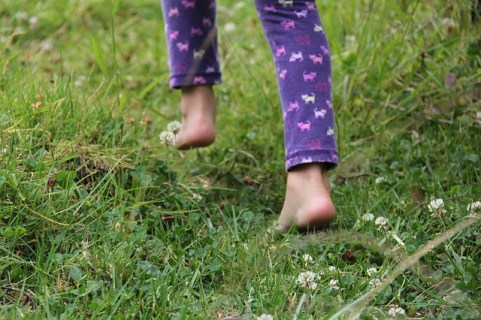
We all did this when we were little kids. We didn’t think twice about it. We had to be reminded and nagged to put our shoes on before we went outside. Now people think you’re weird if they see you walking around without shoes on. But being barefoot makes me feel happy. It makes me feel calm, safe and grounded to feel the warm earth or the wet grass under my toes. It makes me feel somehow looser, sillier, younger and freer. Try it some time. I do it whenever I can. I truly believe in some powerful way it helps you to feel reconnected to the earth and to nature. And we could all do with a bit of that.

Cake
cake-1987326_640.jpg

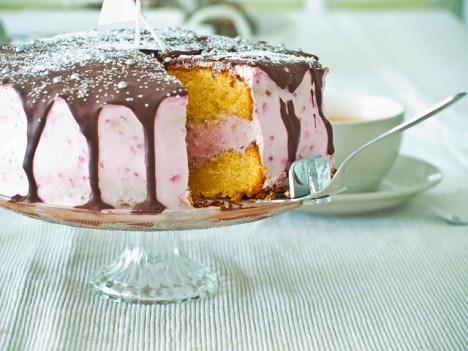
Tea and cake. Coffee and cake. Wine and cake. Take your pick but make sure there is definitely cake. A nice big flat slab of it. Any cake will do. Me, I’m not fussy. (Unless it’s banana, ugh) Apple cake, carrot cake, coffee cake, fruit cake. Every now and then only a big fat squashy chocolate cake will do. The kind you get all over your face while eating. I think cake is another thing that makes me feel like a little kid. The whole act of making one, from cracking the eggs against the side of the bowl, to shaking the flour through the sieve, to sitting on the doorstep to lick the bowl out afterward. Happy times. I find making a cake cheers me up. I find eating cake has the same effect. Win, win.

Watching Children Play

child-1864718_640

I mean the kind that doesn’t involve adults. Just little kids playing like no one is watching. Just totally lost in their own little worlds. Whether it’s building Lego, or pushing cars about, or making little figures move around. I find it spellbinding. I sometimes catch my little one holding two cars or two dinosaurs and making them talk to each other. ‘Hello’ says one, ‘hello’ says the other. There might be a bit more chat before it descends into a language only he can understand. It’s magical to me that he’s totally happy to be alone, to be playing with something he chose, to be directing that play the way his developing mind sees fit, and that it is all totally real to him. Warms me up no end.

Greenery

1470336_992303410788924_5944084606082827220_n

This is one of my photos from the lane I walk down every day. At this time of year from one end to the other, it’s like a tunnel of green. There are Oaks on both sides, gigantic majestic relics of yesteryear, spreading their arms across to the other side, shading the way. Splashes of colour from rhododendron, dandelions, daisies, dead nettles and pink clover. Bees humming through the wild flowers. Pigeons cooing on the telephone wires. Crows flapping past in two’s and threes. And when I turn my head, wherever I look I see a wall of green. So much green. It’s the same in my garden, due to the trees we have and the trees around the area. They are all so huge that my windows are filled with green. It makes me feel like I can breathe easier, just knowing they are there.

Singing Loudly To Music

microphone-1209816_640.jpg

I do this whenever I can and I have the worst voice ever. In the car, once the kids have been deposited and there is no risk of me embarrassing or deafening them, I turn it up loud and sing along. When I’m cooking the dinner, I put on an old CD, turn it up and dance around the kitchen while singing at the top of my voice. The best thing about music is the way it installs memories in your brain that will then later be exploded every time you hear that song. Tastes, smells, sounds, emotions, all will come rushing back in a an overload of nostalgia. Plus, singing and dancing cheer me up. As long as no one is watching or listening!

Night Skies

12829453_1136278233058107_1794700601345978661_o.jpg

I’m lucky that I live in a beautiful place with a beautiful garden, but wherever you are in the world, you can go outside at night and look at the sky. This always cheers me up and calms me down. Like walking barefoot in the day, sitting up to watch the sunset or lying on the ground under the stars, is the best way to feel reconnected to the earth. It just makes me feel steady and still. Sometimes I feel like the day belongs to the people, and the night belongs to the animals. It feels a bit like trespassing to sit and enjoy it with them.

Dreams
campervan-501797_640.jpg

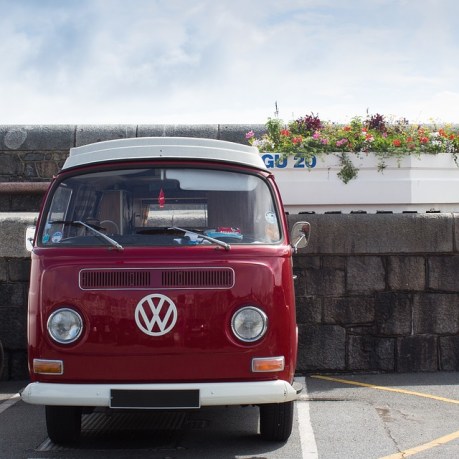
When I was a little kid I dreamed about being a writer. I also dreamed about being a mother and working with animals. All of these dreams have come true. But you never drop dreaming, or at least you shouldn’t. I dream of writing more books and of writing the one that sees me find true success. I also dream of owning a vintage VW Campervan. A real old style hippy bus. I’d like to live in it eventually and leave the house to the kids if they need it. But before that, I want to go travelling. I want to jump in the van every single weekend with the husband the kids and the dogs and go somewhere we have never been before. I want to work our way all around the UK and then move on to Europe. I want it to have crochet blankets and wind chimes and lots of cushions! We’ve been saving up for nearly three years now. It’s a family thing. we’ll get there one day!

I hope you’ve enjoyed my personal reasons to be cheerful list. There are so many more things I could have added it to it, like reading and writing, gardening and going to see live music. How about you? What cheers you up when the world feels like a scary place? What’s on your reasons to be cheerful list? Please feel free to comment and share!
The Story Of A Book

While I await and fully expect a complete set of rejections from the small publishers I have submitted The Tree Of Rebels to, I am not resting on my laurels, not for one moment. I am busy planning my launch for this YA dystopian novel, when I inevitably place it with Pronoun, along with my other books. (If you’re interested in my book launch plan, you can read about it here )

I am hoping for a July, possibly August release. At the moment I am having the cover looked at and having an illustration added to the back of the book. I am also reading the book on my kindle to check for any last lingering typos. It’s all systems go, and if I do self-publish again, I predict the next few months to be both hectic and a lot of fun.

But this all got me thinking about the journey this book has had. From the first seed of an idea to the almost finished and ready to be released product. It’s had more ups and downs than any of my other novels and has been a love/hate project in more ways than one. So for the fun of it, and for those who are interested in how an idea becomes a book, here is the story of a book from start to finish. This book, The Tree Of Rebels.

  • A seed is sown. Sometime in 2014 I became interested in the controversy surrounding companies like Monsanto and the altering and patenting of seeds. I’m not going to go into the details here and now, but after reading, researching and signing all the petitions that came my way, I found a seed had planted itself in my head and was starting to grow. I began to imagine a future world where many of my fears had come true. Where people were even more disconnected from nature, had no idea what or who destroyed the old world, and were all living in blind, grateful happiness for the ‘utopia’ the survivors exist in. Then I imagined a young girl finding something she shouldn’t…
  • A character is born…Having read and enjoyed books like The Hunger Games and The Giver, at this time I was devouring dystopian fiction and so were my daughters. I wanted to write a book that would interest them and I wanted to create a character who they could relate to. Lissie Turner is a rebel at heart, only she doesn’t know it to begin with. I went on a long journey with this kid, getting to know her, draft by draft, watching her develop, and encouraging her to resist and rebel.
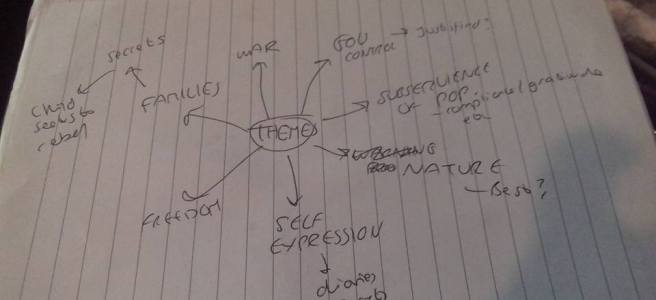
  • A book was plotted…During 2015 I plotted The Tree Of Rebels in a notebook. I arranged a timeline, wrote character bios, decided on themes, and started to write scenes and pieces of dialogue. I also had a ton of research to do…

18402839_1506886719330588_1701810434062864961_n

  • It all began on Wattpad…The very first draft of this book was written straight onto Wattpad, with people reading and commenting as I went. I shared the chapters to social media and tried to stick to a schedule of writing a chapter a day. I even had one lovely reader design a fantastic cover for me, which provided the inspiration for the cover I later had put together.
  • It got hijacked by another book…Just as I was about to start writing The Tree Of Rebels I got an idea for another book. I really did not want this to happen. I was all geared up to write this dystopian adventure that would surely enthral my daughters when a new idea and a very persistent character started knocking. The idea for Elliot Pie’s Guide To Human Nature was so strong, I had to start writing things down instantly. And so began to two-year battle between these two very different novels. With me working on one, only to hand it over to betas and work on the other, then swap around and so on. This was not easy!
  • Every time I thought I was finished, I wasn’t…If you are a loyal reader of this blog (and wow, thank you if you are!) then you will already know how many drafts this novel has had. So many I have lost count. Every time I got to the end, it still didn’t feel right. I ended up leaving it alone for months, while I finished Elliot Pie and started another YA novel set in the present day, and at that time I had no inclination whatsoever to rewrite The Tree of Rebels. I’d had enough of it.
  • When I picked it up again, I realised it was done…Funny, that. After finishing what I hoped was the last draft of Elliot Pie and sending to a final beta reader, and completing the messy first draft of the present day YA novel, I decided to look at The Tree of Rebels again. Was it useless? Did it need an entire rewrite? Would it ever see the light of day? And weirdly, when I read it through, I felt something I had not experienced before with this book. Relief and satisfaction and a sense of letting it go. I amended a handful of typos and left everything else alone.
  • I’m proud of the messages in this book…I am proud of this book. Finally. It’s been a long and difficult slog. I’ve struggled with so many aspects of it. I am currently reading it through and enjoying it. I like Lissie Turner and I think her journey into rebellion is an important one.
  • Nearly there now…All that is left to do is finish the read-through, amend any typos and send the document to the lovely girl who does my formatting for Pronoun. I will also send it to the other lovely girl who does my Createspace formatting. The cover is basically done but we’re just playing around with fonts at the moment, and there will be an extra illustrationo at the back of the book. My launch plan is written and in the next few weeks, I will decide a date for release!

And that’s it. That’s the story of this book. That’s the journey it has had; from an idea that grew while scrolling through my Facebook feed… to something that is almost ready to be released into the world.

Growing Your Own; A Positive Rebellion

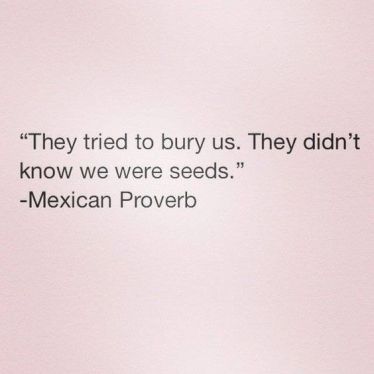
Gardening is a lot like writing. It starts with a seed, and with love, care, attention, commitment and imagination, it grows into something much, much more. For me, gardening and writing are similar because they both involve creating something positive and injecting it into the world. They both make the world brighter and better. They both involve hope, love and rebellion.

seedsproverb

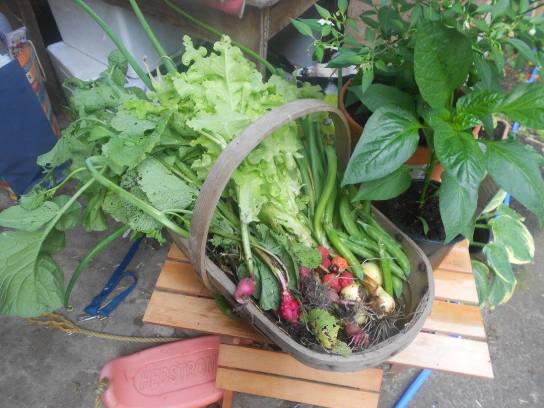
I’ve always been attracted to gardening. My parents grew vegetables when I was a kid, and so did my grandparents. I have fond memories of sitting on cool concrete steps with a plastic bowl on my lap, popping peas from their pods. There is nothing in this world quite as divine as the pungent scent of a full grown tomato plant. As soon as I had my own place, I started growing my own. There is something so deliciously simple and satisfying about planting a seed and growing it into a plant, from which you can pick and eat food. If you’ve never had the pleasure, I can assure you it’s an incredible feeling. Like all is well with the world. Like you’ve just solved all the world’s problems, by tugging out a handful of carrots and shaking the dirt from their roots. It never fails to make me smile, the sight of home grown food, picked and ready to eat. It just makes you want to sit back and go ‘ahh’.

13920054_1231406820211914_1274144773204141057_o.jpg


We live in tumultuous times. There are many days when I want to avoid the news, for fear of what will dismay or horrify me next. I sometimes wish I could turn the clock back for all of us, back to a simpler time, where we all grew our own food, worked the fields, and reaped what we sowed.

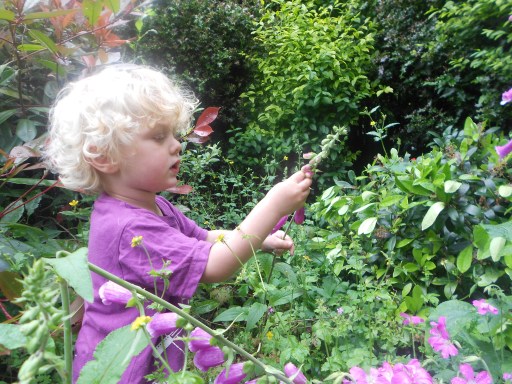
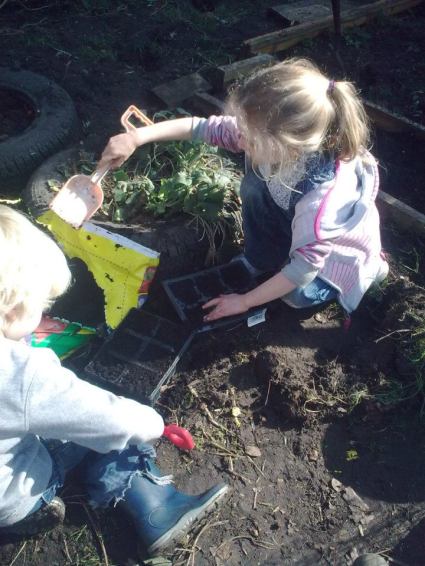
When I am feeling distraught, just like writing, gardening will make me feel better. I forces me to take a deep breath, it forces me to get on with things, to get on with life, and to do something positive. Getting my hands dirty, feeling the soil under my finger nails, pushing seeds into the earth, it all helps me to feel grounded again and more in control. Being outside, kneeling in the dirt, choosing what to plant, putting my back into turning over the earth, it helps me remember where I come from, where we all come from. Gardening is therapeutic; I keep telling people this. I get my little man out there with me, and I want him to feel the earth and take care of the seeds, and tend them and watch them grow. Right now, I can’t think of anything more important for him to know and understand.

dscn3095

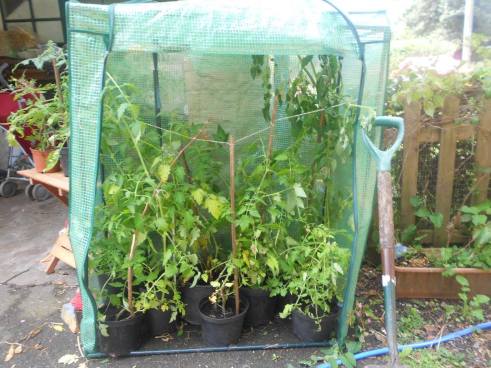
Gardening grounds me, calms me and satisfies me. From the beginning, it is a labour of love and good intentions. I have the old adage of ‘you reap what you sow’ in mind nearly always, for I know I will get back what I put in. The seeds are the hope, you see. Like new life, bursting with potential. A freshly dug and turned over plot is like the womb, spongey and fresh, eager to provide and sustain. It’s exciting from the first moment you plant the seed. When it rears its head, it’s like birth. You care for it, water it, protect it and finally, you are rewarded with food. The cycle of life right there. And around it goes again, the plant itself providing the seeds from which to start the whole process again.

13923592_1231407403545189_8560900702571823766_o.jpg

When I’m in my garden, I’m calmer and happier, but I am also filled with grit and determination. For I am taking back control. Working the land, growing our own food used to be the norm. It was how we survived. But over time the food industry grew into a monstrous thing, delivering us convenience, but taking away so many other things. What have we traded, what have we compromised on in order to be able to do all our shopping under one huge roof? We’ve not only handed over control of the food chain to massive faceless corporations, we’ve compromised on animal cruelty and environmental damage and destruction. We’ve increased waste massively, through packaging, delivery, and distribution. We’ve lost contact with what is put into our food, what it actually is, where it comes from, and what or who has suffered in order for us to have it exactly as we demand it.

When you try to grow your own food, you remember how it used to be, how it could be again, how important it is to get back that control and to reconnect our roots with the earth we walk on. We have no respect for nature when we are removed from it. When all the hard work is done for us, when we have no idea how foods are made or what is in them, or what damage has been done to the planet in order to obtain them. I believe it’s crucial we teach our children where food comes from. Reconnecting them with the earth and their own wild roots is going to become increasingly important.

429116_371518756200729_1266579260_n.jpg

It’s not easy for everyone to grow their own food. Not everyone has the space and barely anyone has the time. But in years to come, I truly believe it’s going to become imperative to learn how. We are going to struggle to feed people on this planet for many reasons. Climate change may be the biggest challenge of our generation, endless war, struggling economies and falling wages will all take their toll. I’m sure I’m not the only one who has noticed that food prices are rising.

Growing your own food, planting a vegetable patch, may be just about the most positive and rebellious thing we can do right now. It’s two fingers up to the establishment, it’s a break away from slavery to the supermarkets, and a refusal to be complicit in animal cruelty, environmental destruction and the taking from those who have less.

Growing your own is saying, go away, I don’t need you, I can do this on my own. I’ve got a new motto this year in my house. It’s ‘I won’t buy it, if I can make it myself.’ Now this only applies to food so far, and is a work in process, but a good intention heading in the right direction. I’m digging my heels in and saying no. I don’t need to buy supermarket naan bread when I make a curry, because I can save the packaging and make my own. I don’t need to buy pizzas, or jam, or pastries or pies, sauces, breads, cakes or biscuits, because I can make my own.

I need to be outside right now. This world is breaking my heart and filling me with terror. I need to be planting things, growing things, nurturing things. I need to be responsible for new life and hope and potential. I need to believe that good things can happen if you are a good person. I need to believe that there is a possibility for a greener, brighter future for my children.

When I am writing or gardening, I am reminded that I still have power.


Interview with Author Harriet Springbett

Last week I read and reviewed a beautiful and unique YA book, called Tree Magic. I came across this book in a Facebook group I am lucky enough to be part of, and the front cover and title immediately caught my eye. It sounded just my sort of thing. (If you follow me on Instagram you might have an idea of how obsessed with trees I am!) You can read my review of Tree Magic here. Author Harriet Springbett kindly agreed to an interview, which you can enjoy below. Tree Magic comes out in paperback on the 1st of March, and is currently only 99p for the ebook on Amazon. Grab it!

Tree magic3

1) Can you tell us what inspired you to write Tree Magic?

I was sitting under a weeping willow tree in my garden, writing the start of a novel about Rainbow, a teenager who didn’t fit in. A recent storm had uprooted a nearby sumac tree and I found myself wishing I could stroke its branches back into shape to rebalance it: we hug trees to make ourselves feel better, but who ever makes trees feel better? I started to wonder what it would be like if someone could communicate with trees and help them in this way. As Rainbow was under my pen, she became the one to be blessed / cursed with this gift.

2) Did the plot come first, or the characters?

Definitely the main character. I’d already written a short story about Rainbow, and a member of Lumineuse, my writers’ group, said she was such a vivid character that she could almost see her beside me. The plot grew organically from Rainbow, her gift and her problems. This was a deliberate approach on my part, because the previous novel I’d written was plot-led and I’d found the writing experience too restrictive.

3) The story is told in both past and present tense – why did you choose this approach, and how difficult was it to pull off?

The tenses are intrinsically linked to the characters of the two protagonists: Mary wants to forget her past so the present tense represents her best, whereas Rainbow is like a tree, with roots into her past. It wasn’t a question of ‘pulling it off’, because it was natural rather than being a storytelling device. I was warned that publishers wouldn’t like the tense-mixing, but I believed it was too essential to change. In fact, my publisher (Impress Books) never questioned the tenses.

4) Are any of the characters based on people in real life?

No! Part of the fun of writing stories is creating characters. I’m a detail hoarder, and I jot down lots of rubbish that amuses or interests me, which may then produce a character (or not). For example, the other day I was running with a friend who’d bought a new pair of trainers. I noticed that the underside of her trainers happened to match the colour of her T-shirt, and found myself thinking about the kind of person who would do this deliberately.

5) Did you have to do much research into trees, or did you already have some knowledge in that area?

I love trees. I grew up on a Dorset farm that had 10 acres of woodland and a stream, and we were always playing in them, making tree houses or fixing rope ladders and swings to them. We had our own trees in the way other children have pets. Tree Magic doesn’t have technical details about trees, so I only needed an everyday knowledge, which my childhood and a tree guide provided. However, I did research details for the habitats and characteristics of certain trees, such as the symbolic silver maple.

6) This is your debut YA novel, can you tell us what is coming next?

I have already finished another YA novel called Red Lies, White Lies. It’s a thriller with a 17-year-old protagonist, set in France, and has no magic realism. A beta reader said she couldn’t put it down – but I really should make time to seriously hunt for an agent. I love the writing part of being an author, but I’m not very good at sending out my work. I must confess that I have begun to write another YA novel when I should really be trying to find a home for Red Lies, White Lies.

7) Do you read a lot of YA yourself? If so, what are your favourite YA books?

I didn’t intend Tree Magic to be a YA novel because I hadn’t read much YA fiction. When it was placed runner-up in a competition, the judge told me that with a little rewriting I could target the YA market. An agent who rejected it mentioned YA too – so I researched the YA market and rewrote it for younger readers. I only really started reading YA a short time ago – and I’m seriously seduced by what I’ve read. There’s a refreshing liberty in YA writing. I loved The Sun is Also a Star for its ‘science versus intuition’ approach (a little like in Tree Magic). I was shocked and impressed by Orangeboy. I adored the protagonist in Wing Jones and thought A Monster Calls was beautifully written. I could go on, but I’d better stop there.

8) Can you tell us about your writing and publishing journey so far? What have been the highs and lows?

The lows were the rejections. I originally sent Tree Magic to about 10 agents, was rejected by all of them and concluded that the story was rubbish. I left it in a drawer for years before learning that this rejection rate was normal, and that small publishers accepted unsolicited manuscripts. Long live small publishers! The highs were firstly getting my manuscript accepted by Impress Books (though I worried for ages that they’d change their minds) and then the whole editing process with them. They are wonderful. The weirdest moment was when I read the blurb my editor wrote. My immediate reaction was ‘that sounds like an exciting book’ and my second was ‘it’s your book, you idiot.’

9) What advice would you give to new writers just about to start the journey into publication?

Don’t be put off by rejections. You must keep searching for a home, but make sure you get readers and other writers to critique your story first. Writers’ groups are invaluable for this. Also, I wish I’d written more short stories before launching into a novel because the experimentation, feedback and rewriting loop takes less time than with novels. Short stories help you to find your voice.

10) What have you learned so far about promoting your book?

I didn’t realise that book promotion and publicity would be so time-consuming. Getting started can be scary, so it’s wonderful if you have a publicist to guide you. If you’re not careful, it will eat into your writing time, so you have to sum up your courage and push yourself to be proactive while still remembering that the writing is what’s most important.

11) Describe an average writing day for you

I exchanged my full time job for part time work in order to have writing time, so this motivates me to sit down every morning and write until lunchtime. Most evenings I run or cycle – this is my problem-solving time, when I run through scenes in my head and visualise characters’ reactions. Of course, my friends don’t believe me when I say I’m working as I run! I don’t write at weekends, because I want to live fully, spend time with my family, do sport, see friends etc. Inspiration comes from interacting with real life, from watching and listening to what’s going on in the world, so it’s important not to shut yourself away all the time. It also means I look forward to getting back to my computer on Monday mornings.

12) Finally, tell us three interesting facts about yourself

This is the most difficult question. OK: when I was 22 I did a Raleigh International expedition in Chile and then hitchhiked 5000km from the south to the north. My ideal holiday is an itinerant trip with a bike, a tent and good company. And I’m (distantly) related to Thomas Hardy.

More about Harriet Springbett…

Harriet Springbett lives in France with her French partner and teenage daughters. She grew up in West Dorset and qualified as a manufacturing engineer before realising she preferred people to machines, and words to numbers. She moved to France in 1995, where she studied French and then worked as a project manager, a freelance feature writer, a translator and an English teacher. She has always written in her free time.

Her debut YA novel, Tree Magic, was published by Impress Books in ebook format in January 2017. The paperback is due out on 1st March. Harriet writes every morning and blogs on writing and cultural events at Harriet Springbett’s Playground of Words and Thoughts. Several of her short stories (Quark Soup, Shingle & Sand, Ami Entends-tu?, Big Bones…) have been placed and shortlisted in competitions or published in magazines such as The French Literary Review.

Links;

Tree Magic page at Impress Books: http://www.impress-books.co.uk/impress/tree-magic/ Tree Magic on Amazon.uk: https://www.amazon.co.uk/Tree-Magic-Harriet-Springbett/dp/1911293001/ref=sr_1_1?ie=UTF8&qid=1485160742&sr=8-1&keywords=9781911293002 My Blog: https://harrietspringbett.wordpress.com Facebook author page: https://www.facebook.com/HarriSpringbett/ Twitter: https://twitter.com/HarriSpringbett