Who Is My Reader?

One of the first pieces of advice I recall hearing when I started my indie publishing journey in 2013, was; ‘know your audience.’ It sounds so simple, doesn’t it? Know your audience, know who your reader is. Once you know who they are you can figure out how to find them, where they hang out on the internet, what social media they are likely to be on, what tags you can use to get their attention, who to market your books at and so on.

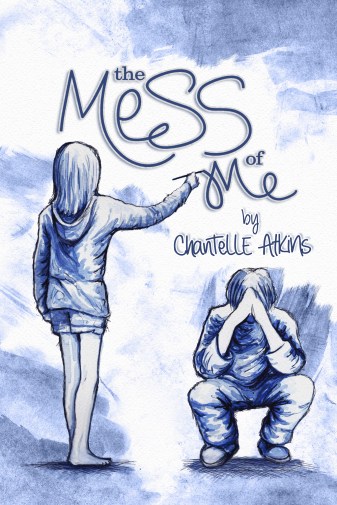
I remember struggling with this at the time though. And I’m still struggling now. Back then, I had written The Boy With The Thorn In His Side, Parts One and Two, but while it was with beta readers, I very quickly churned out The Mess Of Me. The two were written side by side for a while until eventually The Mess Of me won the race and was released first.

The Mess Of Me has a 16-year-old protagonist and is essentially a book about growing up and the many teenage issues that go with it. At the time though, I didn’t think of it as Young Adult or as being aimed at teenagers.  I just listened to the voices in my head, as I always do, and they were young.  I soon figured out that not categorising and marketing The Mess Of me as YA was foolish and ridiculous. I had to get my head around something then. Was I a YA author? Did I just write YA?
themessofme-BLANK (1)

I didn’t have a problem with this as I have never grown out of loving YA books, and although I read a lot of genres, I do frequently return to YA and always feel like I am coming home. The problem was the next book. Though also having a teenage protagonist, and dealing with teenage issues, it was far harder to classify. Partly because the teenage narrator grows up and becomes an adult, and partly because there are two narrators for Parts One and Two, and the second narrator is an adult. In my head, this book was never aimed at anyone. I just had it in my head and wrote it.

I’ve got to be honest, this has mostly been my approach since too. This Is Nowhere features a grown man, but every other chapter dives back into the past to when the character is a young boy and teenager. I always felt like this one was probably better suited to adults though, so I categorised it accordingly.

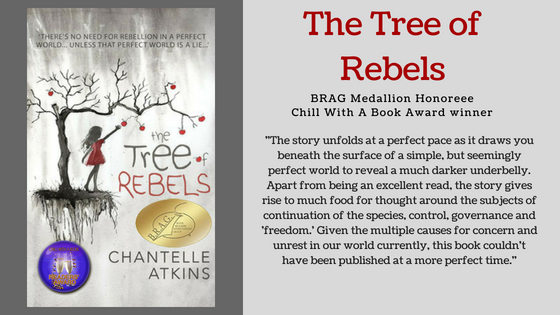
The Tree Of Rebels was the first and only book I wrote with a deliberate audience in mind, and I think I mentioned on here several times while writing it, that this made it the hardest book to write. It sort of altered how I felt about the book. It was like I was trying to write to please someone the whole time.
The Tree of Rebels

Since then, I returned to just writing what I wanted to write and not imagining the reader first. This is fine when writing, but presents all sorts of problems when the time comes to publish the book. What categories and keywords do I choose? How do I market it? What genre is it? How do I find the people who will like this book?

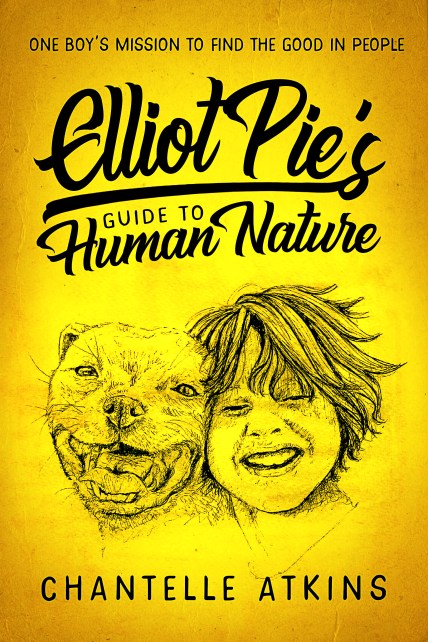
Elliot Pie’s Guide To Human Nature is a classic example of why I am still in such a muddle and still struggling to find my readers. It has a young narrator, but also an adult one. The adult themes, for me, make it more suitable for adults than teens, but Elliot’s day to day life and outlook are something that will more than likely resonate with young people. I still find it hard to describe the genre of this book. Definitely coming-of-age but also contemporary women’s fiction? Maybe even UpLit?
JshHMmZ

With Parts One and Two of the new, revised The Boy With The Thorn In His Side series almost ready to be released, and Parts Three and Four being polished up in the background, my mind has once again returned to my elusive reader. 2019 will continue to be busy as I plan to release YA novel, A Song For Bill Robinson and possibly it’s almost finished sequel, Emily’s Baby. My list of novels is growing longer, but I still don’t know who my audience is. It’s tricky when you cross over so many genres. Most of my books cross into two or more, with psychological thriller, suspense, crime, coming-of-age, mystery and dystopian all regularly showing up.

So, who is my reader? What sort of person reads my books and likes them? I only have a small audience, so it’s hard to speculate. But I suppose really, my reader must be someone quite similar to me. I imagine them as slightly scruffy, or at least not terribly groomed and over bothered with appearances. They probably make an effort when they can, and they probably berate themselves fairly often about sorting out some kind of ‘look’, but it never really feels urgent to do so. They are probably young at heart. Stuck in the past, tinged with nostalgia, reluctant to admit and give in to adulthood. I think they are a music fan. They probably like all sorts. They’re not narrow-minded about it at all. They’ll listen to anything, but they have their favourite era of course, and their favourite songs. They see life in songs. Soundtracks are everywhere.

record-player-1851576_640.jpg

What else? I imagine them as liking animals and nature. Not in a really obsessed, or professional way, just in that seeing a bird or a deer unexpectedly will really make them smile and have a better day. I think they enjoy being outside, all weathers too. Being outside makes them feel more alive.
hirsch-643340_640

I think they are introverted but friendly and warm. A bit cynical and suspicious at times. Prone to the odd dark mood. Likely to panic about once a month about how the world is utterly doomed. But they always brighten up and soldier on. Despite being naturally shy, they are really interested in people, genuinely intrigued by them. They love a spot of people watching and love a character-driven book they can really get their teeth into. They are looking for stories about humans they can relate to and empathise with, and they are looking for characters to fall in love with, characters they wish were real.

They want to disappear inside a book and come out feeling different. They don’t want anything too formulaic or predictable. I think they are a bit of an eccentric at heart. They probably talk to themselves.

This is how I imagine my readers to be and I shall continue to do my best to try to find them. What about you? If you are a writer, do you know who your audience is? If you don’t know, does it make it harder to sell your books? If you’re sure of your audience, tell me about them. What are these people like? If you’re a reader, do you imagine yourself as part of a genre tribe, full of similar and like-minded people all connected by an appreciation of mysteries, or romance, or horror?

Please feel free to comment and share!

Character Interview; Elliot from Elliot Pie’s Guide To Human Nature

Q1 What have you got planned for today?

It’s the summer holidays, so I’m going to go out and about on my bike. Probably call for Finn and Leah and rider our bikes about. Exploring! I’m really trying to explore new areas and not just stay in the same place the whole time. I’m trying to meet new people too. I know they say you shouldn’t talk to strangers, but strangers are actually so interesting!

Q2 Do you have any pets?

I don’t have any pets of my own. But I’m looking after my Uncle Liam’s dog, Tizer, while he’s off getting his head straight. Tizer is a staffy. Some people are scared of them, but Tizer’s such an old softy, he’s nothing to be scared of. He mostly just likes sleeping and snoring.

Q3 Do you have any siblings?

No, I’m an only child. I wish I had brothers and sisters, I really do. I would love it. I wouldn’t mind if they were older or younger, I would just love it. You’d never be alone. You’d always have someone to hang around with. You’d have someone to talk to when Mum is in one of her moods. But Mum said I was a surprise and she never intended on having any kids, so one is definitely enough.

Q4 Who is your best friend and why?

Well, I have two friends, Finn and Leah. I think we’re friends because we live near each other and we walk the same way to school. Also, because none of us are popular. I used to worry that we weren’t real friends, because we didn’t choose to be friends, we just ended up that way. We got pushed together. But we’ve had so many adventures this summer, I don’t worry about that anymore. We are definitely friends! Proper friends! In some ways though, my Uncle Liam is my best friend, because that’s how we’ve always been. Like mates. He always calls me golden, and ruffles my hair and talks to me about Doctor Who and his favourite songs. He’s not around at the moment. Mum and Nan say he had a lot of stress and had to sort himself out. He’ll be back soon though, I know it.

Q5 Who are you scared of?

I’m not scared of anyone, except Spencer Reeves. He’s this stupid boy at school. He’s very well-off and stuck up, and he’s brilliant at football and all the girls fancy him. But basically he’s a massive bitch. He’s just mean, all the time, mostly to me. He calls me Pie-face and other things. I feel a bit sorry for him, because I think he hasn’t been brought up properly, but I hate him too. And he scares me. Because I don’t really understand why he hates me so much. I’m also a little, tiny bit scared of this lady I met. She’s part of my project, and sometimes I think about crossing her off the list, because she can be a bit nasty at times. But I do find that interesting, how honest she is. She never lies, which is very interesting.

Q6 What is your greatest fear?

It’s probably my Uncle Liam not coming back. I’m sure he will, but Mum and Nan sometimes say weird things like, ‘we have to prepare ourselves’. I know they’re more worried about him than they let on, but I don’t know why, because they never tell me anything. They treat me like a baby. My mum has tons and tons of fears. I try not to let them rub off on me. With my project, I’m starting to notice that these days a lot of people are really frightened. Some of them try to look on the bright side of things, like Frank, and then others, like Alex, think the world is doomed and we might as well give up. Mum feels like that too. She gets so upset watching the news. Don’t ever ask her what her greatest fear is…she would keep going for days!

Q7 What are your hopes and dreams?

I hope and dream that Uncle Liam will come back soon. I miss him so much. I know he will make Mum feel better again and everything will go back to normal. I hope and dream that Mum will start going outside again, and she’ll get brave and strong and not be upset anymore. I hope and dream that all the interesting people I am meeting will help me understand things, and one day, I hope I have a job where I get to be outside all day.

Q8 Do you have any hobbies?

I really love Doctor Who, and I really love just riding my bike all over the place, exploring new places. I love being outside and being with nature and stuff like that. And I love writing all my thoughts and finds down in my notebook!

Q9 Describe yourself in one sentence

Curious, excited, adventurous outdoorsy boy who is a geek.

Q10 What is your biggest secret?

My project. I have to keep it secret because Mum would go mental if she knew I was talking to strangers, and she’d have an absolute breakdown if she knew I was going into their houses and stuff! But I’m only doing it to help her. I want to prove to her that not all people are bad and nasty! I want to prove to her that most people are really good and not hurting anyone, and just want peace in life. I’ll tell her one day, when I’ve got enough information and I can explain it to her properly, but until then, it has to stay a secret! From everyone!

The Seeds that Sow a Book…

As launch day for my next book, Elliot Pie’s Guide To Human Nature draws ever closer, (Friday 5th October!!) I thought I would write a post about the various things that inspired this particular novel. As always, it is never just one thing, but rather scattered seeds of ideas that take root and then somehow weave together as the process unfolds. And it was a particularly long process for this book. I worked on it, on and off, for over three years, which is the longest I have ever spent on one novel. I expect that’s another blog post for another day, but for now, here are some of the things that inspired Elliot Pie.

Current state of the world.

I wasn’t so much concerned with dissecting it, or even asking why it is the way it is. I was more interested in the question, is it getting worse? And of course, it’s human beings I’m really referring to, not the actual spinning ball of mud itself. Are people worse? Is human nature crueler and more destructive than it once was? When you look at the issues facing us today, it’s easy to consider that they must be. We have rising homelessness, poverty, increasing inequality, fascism on the rise, endless wars, plastic pollution, and climate change and environmental destruction on a devastating scale. It’s not hard to see why some people think we are simply doomed. That it has all gone too far. That there is no turning this around. End days are upon us. It’s Elliot’s mother Laura who feels this genuine fear in the book, and if I’m honest, I think her character’s fears are exaggerated versions of my own. Like most people, I have days when the fears consume me. It simply feels like the world has never been a more dangerous place. This is a question Elliot asks repeatedly throughout the book. Is this the worst things have ever been? Or have they always largely been the same? Or is it actually not as bad as we think? It was my constant pondering over these questions that inspired the journey Elliot would go on in the story.

Human Nature.

Human nature is something I think about a lot. What makes some people kind and good and gentle, and other cruel and destructive? This is something both Laura and Elliot consider throughout the story. Laura is a cynic. She’s been hurt too many times and has no faith left in people. She genuinely feels that the majority of people are cruel and selfish. She feels utter despair when she watches the news every evening, and can’t understand why other people do not seem to be as upset and depressed as she is by the horror stories. Elliot, on the other hand, is an optimist. Part of this is obviously his young age. At twelve, he has yet to see the worst of human nature, unless you count his increasingly disturbing altercations with Spencer Reeves at school. Elliot is curious about Spencer and wonders what makes him get up in the morning and decide to bully people. He wants to prove to his mother that most people are good and don’t want to hurt you.

Strangers. 

This may have been the seed that started it all. I’m an introvert but I’m endlessly fascinated by people. I always have been. Even as a child, I preferred standing on the edge, listening and observing. I was always watching people and wondering about their lives and their motivations. I didn’t want to talk to people or interact with them. Even now, I probably hold most people at arms length. But I am curious about them, and in particular, those people you never see again. Glimpses through car windows, strangers that pass you on the street. People you speak to in a shop, in the bank, at the park, and then never ever see again. I always wonder about their lives and in the absence of knowing, I make one up for them. It’s this curiosity about strangers and their lives that inspires Elliot’s plan to help his mother. If he can befriend strangers and prove to his mother that not everyone is bad, then maybe he can encourage her to leave the house and start to live her life again.

Family.

To be honest, I think all of my books are inspired by the complexities of family life. It’s another aspect of humanity I find compelling. In this particular book, Elliot is an only child born of a one night stand. His mother, who has never had any luck with men, has now sworn off them for good. She never planned to be a mother and has never found it easy. This is perhaps because she is haunted by the relationship she and her brother Liam had with their father Pat, a man who in death is glorified by their mother Diane, but was a far darker presence in their lives than she will admit. Families are complex structures, simmering with resentments, jealousies, guilt and longing. I often think that at the heart of every human’s insecurities and woes, is the desire to be accepted and valued by their family. If a person never felt either, they inevitably struggle in life one way or another. Laura’s family secrets begin to reveal themselves as the novel progresses, and her attempts to unravel the past and understand it, are part of her own healing process. In truth, she had her own plan to get better all along, but as this is kept from Elliot, he has no idea.

Mental health.

Again, I think all of my books deal with mental health issues one way or another. From eating disorders and self-harm to depression and suicidal thoughts, I think I’ve explored them all at some point. In this book, Laura suffers from agoraphobia, and we eventually discover that her brother Liam, who is missing, once attempted suicide. On the surface, an extrovert and a clown, Liam has his own hidden scars, and at the start of the book, we learn that he has disappeared after a series of tragic events, including the stillbirth of his child. This tragedy has obviously had a huge impact on his mental health and on those around him.

Hope.

This book explores some upsetting topics but Elliot is the optimist, carrying the light. He’s determined to help his mother, find his Uncle Liam, and learn something about human nature as well. He also feels that as a member of the younger generation, he will not give up on this world just yet.

Nature.

This was also a major theme in The Tree Of Rebels, and as these two books were written and worked on during the same time period, it’s no wonder that it crept into Elliot Pie as well. It’s mainly explored through the character of Frank, an elderly man who feels we have all become too far removed from nature. And as Laura locks herself away in her home for safety, Elliot begins to explore the great outdoors, riding on his bike from one area to the next, discovering new places and people. He begins to feel the opposite to his mother, and feels the urge to be outside as much as possible.


So, there you have it. The themes that weave a plot together. The interesting thing about themes and ideas is that you not always aware they’re there until after you’ve written the book. I know one of my earliest thoughts about this book was that I wanted to write a book about a boy who felt intrigued by strangers and wanted to follow them. This obviously led to questions. Why was he so intrigued? What was it about his own life that drew him to strangers? And the rest began to unfold as I wrote it. Funny how all those little seeds get planted along the way and grow into a book.


Bye Bye Book Baby…8 Tips To Survive Launch Day

Books start off as a wholly private thing. An idea, a spark, a what if? A character, a voice, a problem. All in the author’s head. Swirling around, mixing and sloshing, growing and evolving and swelling until finally it all bursts out. Into notebooks, into notes saved on mobile phones, into character bios and storyboards and plot outlines and research. And then, word by word, page by page, into an actual book. By this time you might be sharing bits here and there. You might be talking about the plot with other people, or asking for advice. But in the beginning, it’s entirely private.

Then comes the day you hand it over to carefully picked beta readers. You wait and dread and hope, and then take a deep breath when you start to digest their inevitably and wonderfully critical feedback. You work on it again and again and again.

Until the release day looms. That first spark of an idea, that grew and moulded itself into an actual book, is as perfect as it can be and finally, it’s time to say goodbye. And I always forget just how scary this is. Handing over to beta readers is hard enough, but usually, they are people you know and trust, and you know the book is not finished and still needs more work, so it’s easier to take the criticism.

JshHMmZ

But after release day? The public have your book in their hands! And hopefully, they are going to read it, react to it and possibly review it. Scary stuff. There’s an element of wanting to avoid this, though obviously, we write to reach people, to pass on stories and lives and messages, however, there is no denying it’s hard to say the final goodbye. Good luck out there book baby, you are on your own now.

Here are my top tips for surviving release day;

  1. Whether you’ve arranged a physical launch or an online one, or something far quieter, ensure you’ve done all the hard work days before it kicks off. So blog posts, interviews, early reviews and graphics are all organised and ready to go. You’ll be nervous enough on release day and don’t want to be rushing around putting last minute things together.
  2. Enlist some fellow author friends to help you on launch day. They’ve been there, so know how it feels! You could ask them just to help share and Tweet your book link and reviews, or you could go further and ask them to co-host your event with you. Safety in numbers, plus you might need the moral support!
  3. Have another project on the go. Releasing a book and finally saying goodbye to it can make you feel a bit flat. I like to have another project already on the go to take my mind off the one leaving home. You can spend release day promoting and squeeze some fresh new writing in as well.
  4. It’s never too late to fix typos. Lingering typos are a constant fear. You’re sure you’ve got them all, mopped them all up on the millions of times you’ve gone over your book, but you know full well they can still creep through. But the great thing about indie publishing is that if some kind soul lets you know they found one, you can quickly amend it, republish and no one else need ever know!
  5. It doesn’t have to be goodbye forever. Part of you is so glad to get this book released, to finally have it done and out of the way, but another part of you feels a bit like your baby is leaving home and never coming back. Not true. You’ve still got to promote the book and that lasts forever. You can revisit the characters and the plot any time you want with extra short stories, character interviews and so on. You can even write a sequel or make it into a series…It doesn’t have to be over!
  6. Goodbye to one book makes way for the next. It’s hard to concentrate on the next book when you are waiting for one to move on. Once it’s gone, once it’s fully out there, you can breathe a sigh of relief and start paying proper attention to the next ones waiting to be written!
  7. Make sure you have some wine in to celebrate. Or whatever takes your fancy, Release day can be pretty exhausting, followed by a flat feeling and feelings of anxiety about how readers will react. Take deep breaths and have a drink or two to calm your nerves and celebrate what you have achieved.
  8. Enjoy it! Release day is scary and somewhat emotional, but don’t forget to have fun and allow yourself to enjoy it. It is your special day after all, and one you have worked amazingly hard for!

I’ll be saying goodbye to Elliot Pie on October 5th, but you can pre-order the novel right now here on Amazon, for just 99p! This is a special pre-order price and it will go up on release day! So grab your bargain copy right now and don’t forget to leave a review afterward to let others know what you thought!